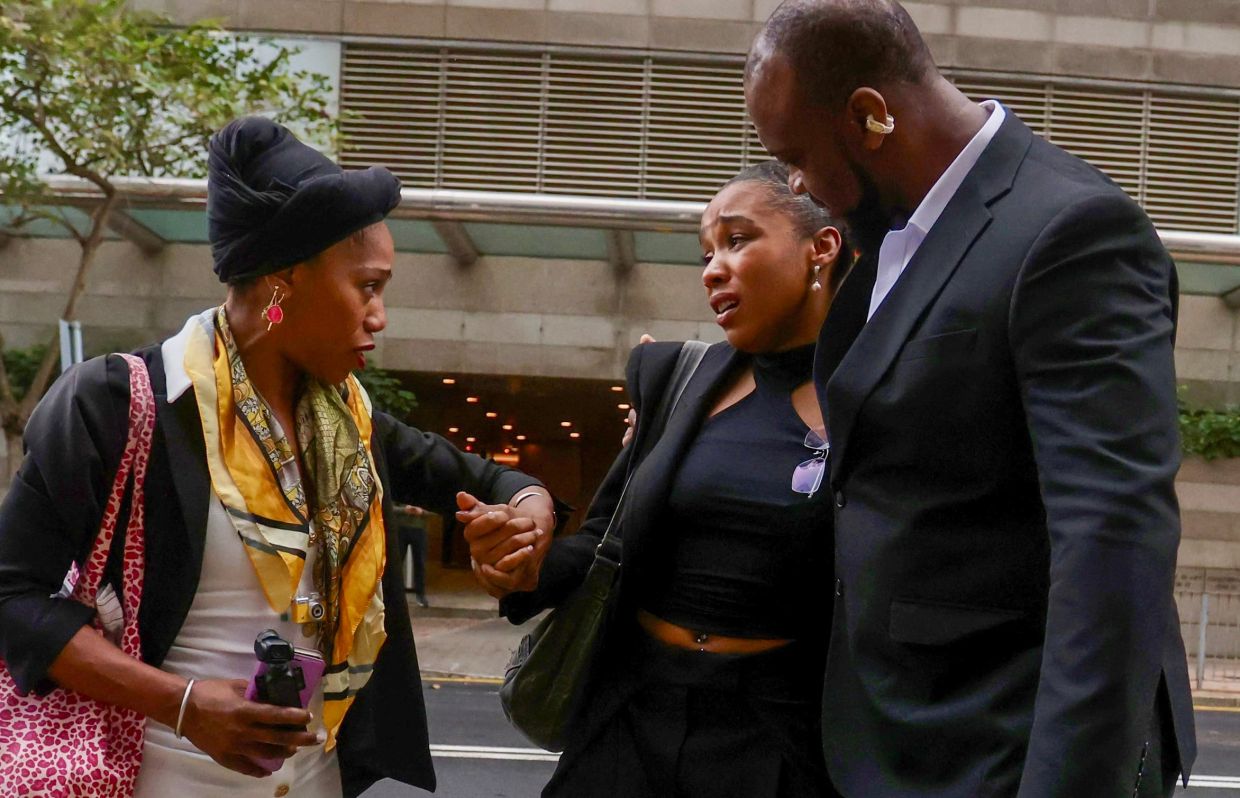
A Hong Kong District Court has handed down a six-year prison sentence to Isabel Anonia Barbra Eudora Rose, a 26-year-old British event management professional, following her conviction on charges of blackmail and perverting the course of public justice. Judge Adriana Noelle Tse Ching delivered the verdict on Wednesday, finding that Rose had orchestrated an elaborate scheme to extract £100,000 from a man she met by falsely accusing him of rape. The case has drawn significant attention in both Hong Kong and the United Kingdom, highlighting the serious consequences of fabricating sexual assault claims while raising broader questions about how authorities investigate such allegations in jurisdictions with different legal standards and judicial approaches.
Rose arrived in Hong Kong on 31 January 2024 to visit a man she had encountered during a vacation to Thailand the previous month. According to court testimony, she claimed he sexually assaulted her on the night of her arrival at his Central residence. However, the judge's findings painted a markedly different picture of events, based largely on communications the pair exchanged immediately after their encounter. These messages, which formed crucial evidence in the case, revealed a narrative inconsistent with Rose's allegation of rape, ultimately becoming the foundation upon which the judge rejected her account entirely.
The message exchanges between the two individuals provided the court with what it considered compelling evidence of Rose's fabrication. When she wrote to him stating "You basically raped me," the man responded that such behaviour was entirely out of character, stating he felt physically ill at the suggestion. Critically, their subsequent discussion about the incident diverged sharply from what one would expect following a genuine sexual assault. The man explained that he had requested oral sex but Rose declined, after which he apologised for misreading her intentions and moving too quickly. Rose's follow-up enquiry about whether he was annoyed by her refusal suggested a tone of negotiation rather than trauma, according to Judge Tse's interpretation of the evidence.
Fortensic evidence presented at trial further undermined Rose's rape allegation. Medical examination identified bruising on her neck but discovered no genital injuries, a finding that Judge Tse cited as inconsistent with penetrative rape. The court concluded that the pair had engaged in intimate physical contact but did not have intercourse. This medical evidence, combined with the conversational tone of their post-incident messages, led the judge to determine conclusively that Rose had fabricated the rape claim from the outset. The decision highlights how Hong Kong courts weigh circumstantial evidence, medical findings, and digital communications in adjudicating contested sexual assault claims.
What followed the alleged assault was a calculated escalation in financial demands. Initially, Rose and the man discussed reimbursement for her accommodation and travel costs, a request that appeared reasonable on its surface. The man agreed to provide £2,000, yet Rose swiftly increased her demand to £5,000. Subsequently, her language shifted to language suggestive of far greater entitlement. In one message, she wrote: "You've given 10 per cent of what I'm owed, 100 per cent of my soul gone," a statement that Judge Tse interpreted as signalling expectations of much larger compensation. Within days of arriving in Hong Kong, Rose had pivoted from claiming victimhood to pursuing financial extraction through implicit threats, according to the court's factual findings.
The evidence demonstrating the £100,000 demand presented unique evidentiary challenges. No record of this specific sum appeared in the text messages presented at trial, leading Judge Tse to conclude that Rose had articulated the demand through messages she subsequently deleted, potentially using disappearing message functions available on modern communication platforms. The man testified that Rose had demanded this sum and made clear she would report him to police unless he paid a specified portion immediately, with the remainder due the following day. Judge Tse found his account credible and accepted that Rose had indeed made this explicit threat, linking financial payment to her silence regarding the false rape allegation.
At sentencing, Judge Tse characterised Rose's conduct as deliberately cruel. The judge noted that Rose had "taken advantage of [the man's] kindness, naivety, friendship and romantic interest" to manipulate and extract money from him. The court found that Rose's primary motivation from the moment she arrived in Hong Kong was financial gain, and she had weaponised both the appearance of romantic involvement and the gravity of rape allegations to achieve her objective. Setting an initial sentencing starting point of five years for the blackmail charge, Judge Tse then imposed an additional consecutive year for the charge of perverting the course of public justice, the offence arising from her false police report filed on 3 February 2024, bringing the total sentence to six years.
The perverting justice conviction carried particular weight in the judge's reasoning. Rose had reported the alleged rape to police, triggering an investigation that resulted in the man's arrest and questioning. Only when officers began investigating her account more thoroughly did they uncover evidence suggesting the rape claim was false, at which point Rose herself was arrested and subsequently charged. Judge Tse described Rose's false report as "vengeful and wicked behaviour," noting that she had "punished [the man] for his audacity to defy her demand for payment." The judge's language reflected the court's view that Rose had exploited the serious nature of rape allegations as a leverage tool, thereby undermining the credibility of genuine victims who come forward to report sexual assault.
Rose's response following the March guilty verdict revealed her struggle to accept the court's findings. She wept in the dock and was remanded in custody, remaining imprisoned pending sentencing. In a subsequent interview with the South China Morning Post, she expressed disbelief at the outcome, stating "I reported the rape. But within 24 hours, there was no rape any more." She suggested that police had shifted their focus to investigating her for blackmail rather than treating her rape claim seriously, implying she had been treated unfairly by the authorities. Her comment that officers said they would prioritise the blackmail investigation suggested confusion or disagreement about how the case had been handled and how police had transitioned from treating her as a victim to treating her as a suspect.
The case presents particular relevance for Southeast Asian jurisdictions, where the balance between protecting genuine rape victims and preventing false accusations remains a sensitive and contested issue. Hong Kong's approach, as demonstrated in this case, emphasises evidence-based adjudication and permits judges to scrutinise the coherence of complainants' accounts alongside physical evidence and digital communications. For victims of sexual assault in the region, such judgments underscore the importance of maintaining consistency in their accounts and managing expectations around evidence that courts will find persuasive. For accused individuals facing allegations, the case illustrates how modern digital communications can provide exculpatory evidence when properly preserved and presented.
The broader implications extend to how young British nationals abroad perceive their legal protections and how they navigate disputes with other expatriates in foreign jurisdictions. Rose's case demonstrates that claiming victimhood, even in matters as serious as rape, does not guarantee immunity from prosecution if authorities uncover evidence of fabrication. The severity of the sentence—six years imprisonment—reflects Hong Kong's view that weaponising rape allegations for financial gain constitutes a grave offence deserving substantial punishment. For British nationals and expatriates throughout Southeast Asia, the case serves as a cautionary reminder that misrepresenting criminal conduct can result in lengthy incarceration and that digital evidence, particularly messaging records, can decisively undermine false claims within days of their being made.
Rose remains in custody following her sentencing, with her case having concluded at the trial stage unless she pursues appeals. The case closed a chapter in Hong Kong's judicial system but opened broader conversations about how rape allegations are investigated, how false claims are distinguished from genuine ones, and what consequences should attach to those who fabricate such serious accusations. These conversations resonate particularly within Southeast Asia, where expatriate communities are substantial and where disputes between foreign nationals sometimes escalate into criminal proceedings involving sensitive allegations. The judgment reflects a judiciary willing to make determinate findings about credibility and intent, even when doing so means rejecting the account of someone claiming to be a sexual assault victim.

