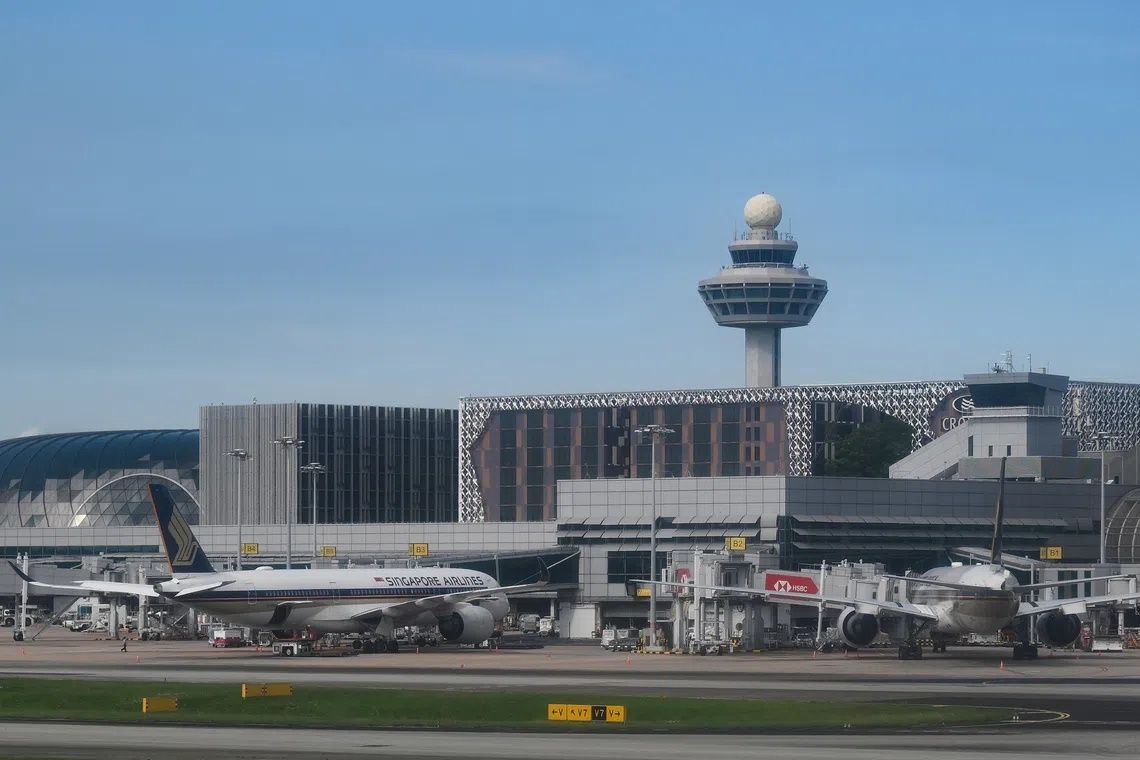
A 25-year-old British national is facing multiple charges in Singapore following a disruptive incident at Changi Airport Terminal 1 that forced a 45-minute flight delay and left an airline employee injured. The man, who was intoxicated, is expected to appear in court on August 12 on three separate counts relating to the July 20 incident, marking another concerning case of passenger misconduct at one of Southeast Asia's busiest aviation hubs.
According to police statements released on Tuesday, August 11, officers received a report at approximately 4.05pm on July 20 regarding disruptive behaviour at a boarding gate serving a flight bound for Kuala Lumpur. The accused man had reportedly been creating a disturbance through loud and aggressive speech, subjecting other passengers to abusive language and disorderly conduct throughout his time at the gate. Witnesses described how his behaviour escalated from mere annoyance to outright intimidation of those around him, with flight staff eventually determining that his condition posed a safety risk.
When airline personnel attempted to address the situation by approaching the man and requesting compliance with boarding protocols, his response was immediate and hostile. He directed vulgarities at the staff members who confronted him, according to the police account, making clear that he had no intention of cooperating. This initial confrontation led the airline to make the difficult decision to remove him from the flight entirely, citing his intoxicated state as the primary reason for denying him passage. Such removals, while necessary for passenger safety, often escalate tensions rather than defuse them.
What followed demonstrated precisely why airlines and airport authorities take such precautions seriously. Upon receiving notification that he would not be permitted to board, the man's behaviour became significantly more aggressive. Rather than accepting the decision, he allegedly pushed through airport staff in an attempt to forcibly board the aircraft, breaching secured areas of the terminal in the process. During this physical confrontation, one female staff member was knocked to the ground, sustaining injuries to her left arm and wrist that required medical attention. The incident highlighted the physical risks that airport employees face when managing unruly passengers.
The situation continued to deteriorate as the man persisted in his aggressive demeanour, directing additional vulgarities and threatening language at airport security personnel who had been called to restore order. His refusal to cease disruptive behaviour and comply with lawful instructions from airport authorities created a cascading effect that rippled through airport operations. The resulting 45-minute flight delay affected not only the passenger manifest on that particular flight to Kuala Lumpur but also had potential knock-on effects for subsequent flights using the same aircraft and gate.
Singapore's authorities have responded decisively to the incident by pursuing charges across three distinct legal violations. The first charge addresses causing annoyance while intoxicated in a public place, a provision designed to address the particular dangers and inconveniences created when inebriated individuals cause disruption in spaces used by the general public. The second charge focuses on his threatening, abusive, and insulting language and behaviour directed at staff members. The third and most serious charge relates to his unauthorised entry into a protected area of the airport, a security-sensitive matter given Singapore's stringent aviation safety standards.
The potential penalties reflect the seriousness with which Singapore views such conduct. A conviction on the intoxication-related annoyance charge could result in a fine of up to SGD 1,000, imprisonment for up to six months, or a combination of both sanctions. The charge regarding abusive and threatening behaviour carries a maximum fine of SGD 5,000, designed to deter verbal aggression in public spaces. The unauthorised entry charge carries the most substantial penalty structure, with possible fines reaching SGD 20,000, imprisonment of up to two years, or both, underscoring how seriously Singapore treats breaches of airport security protocols.
This incident arrives at a moment when regional aviation authorities are grappling with increased passenger misconduct. Airlines across Southeast Asia, including those operating flights between Singapore and Malaysia, have reported rising numbers of disruptive passenger incidents in the post-pandemic period. The region's two major aviation hubs—Changi Airport in Singapore and Kuala Lumpur International Airport—serve as critical nodes in one of the world's busiest air corridors, making their security and operational integrity essential to regional economic activity.
For Malaysian readers with connections to this incident, the case demonstrates how quickly a flight between two neighbouring nations can be compromised by individual misconduct. The route from Singapore to Kuala Lumpur represents one of the most frequently travelled segments in Southeast Asian aviation, and any disruption carries implications for thousands of passengers and complex logistical arrangements. The incident also underscores the vulnerability of airline staff, who in this case suffered physical injury while attempting to maintain professional standards and passenger safety.
The broader context reveals an ongoing tension between passenger rights and operational security in contemporary aviation. While most travellers conduct themselves responsibly, the behaviour of intoxicated or aggressive individuals creates cascading problems that affect entire flight schedules and impose significant costs on airlines and airports. The fact that this incident occurred between two of the region's most developed airport systems suggests that no facility, however sophisticated its security infrastructure, can entirely prevent such disruptions without passenger cooperation.
As Singapore's courts prepare to examine this matter, the case will likely serve as a reminder to travellers in the region about the serious legal consequences of misconduct at airports. Beyond the immediate penalties, a conviction could have lasting implications for the defendant's ability to travel internationally and his standing in Singapore and other jurisdictions. For airport operators and airlines throughout Malaysia and Singapore, the incident reaffirms the necessity of maintaining robust protocols for identifying and managing disruptive passengers before situations escalate to the point of physical confrontation.

