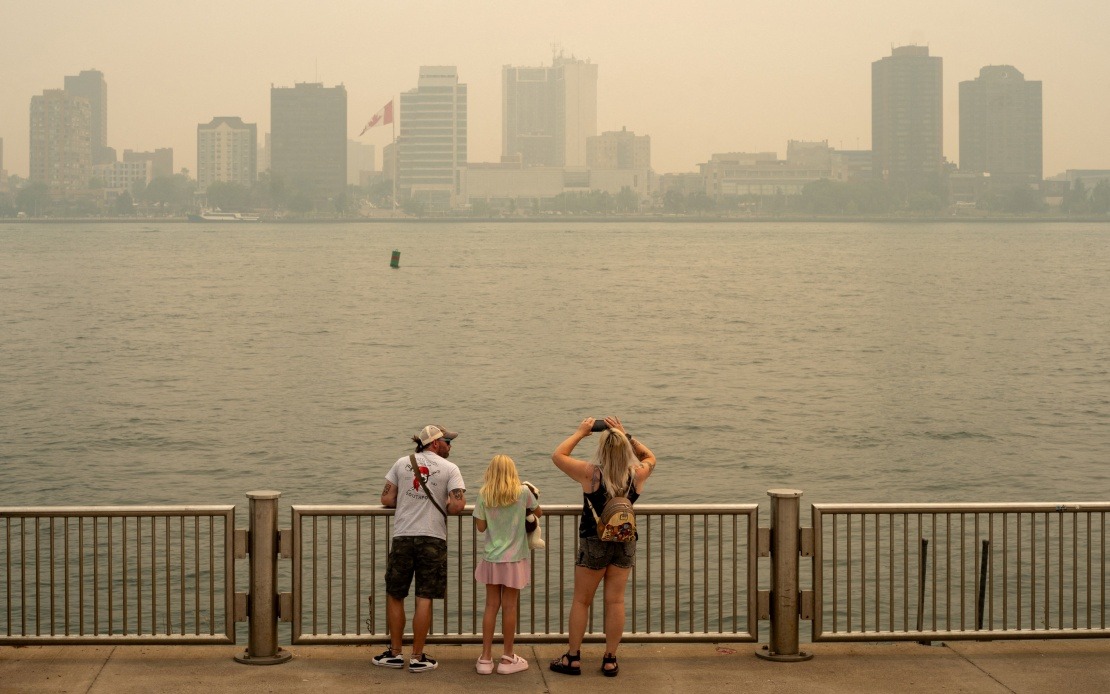
A sprawling wildfire engulfing British Columbia has expanded to cover more than 100 square kilometres, forcing approximately 20,000 residents to abandon their homes as the blaze continues its destructive march across the province. Despite remaining uncontained as of Sunday, authorities reported encouraging signs that the fire's rate of advancement is beginning to slow, a development that provides some relief to evacuation efforts and emergency response operations throughout the affected region.
The severity of the crisis is underscored by the scale of human displacement and property threatened. Around 10,000 properties across the affected area face potential destruction, with entire communities bracing for the fire's approach. Emergency responders have concentrated their protective efforts on Summerland, a town of approximately 12,000 people situated in the fire's path, where crews are working to shield homes on the town's perimeter from advancing flames.
One critical turning point came when the fire front reached Okanagan Lake, a geographical feature that has begun to slow the fire's progression. This boundary appears to be providing the containment strategies employed by firefighters with greater effectiveness than earlier in the crisis. The psychological and operational significance of this development cannot be understated—every hour that the fire's spread decelerates allows evacuation teams to work more systematically and gives firefighting crews improved opportunities to establish defensive lines.
The human toll of the disaster emerged in dramatic rescue operations, with emergency services airlifting more than 50 people trapped by the advancing flames via helicopter. The incident highlights the unpredictability of wildfire behaviour and the dangers faced by residents in rapidly deteriorating conditions. Separately, authorities are investigating a potential fatality related to the fire, though confirmation remains pending. These human costs underscore why evacuation orders affecting thousands remain in place with heightened urgency.
Weather conditions continue to complicate firefighting endeavours substantially. Persistently hot and dry atmospheric conditions combine with dense smoke to hinder visibility, aerial operations, and ground-based containment activities. Such meteorological factors represent some of the most intractable challenges facing emergency coordinators, as they fundamentally constrain operational capacity regardless of resource availability or personnel dedication.
Recognising the magnitude of this provincial emergency, the Canadian federal government has mobilised support mechanisms to assist affected populations. Minister of Emergency Management Eleanor Olszewski announced on social media platform X that a request for assistance from the provincial government has been approved, with federal support encompassing accommodation arrangements for evacuated residents. This coordinated approach between provincial and federal authorities reflects the established disaster response protocols within Canada's federalised system of governance.
The emergency response has also transcended national boundaries, demonstrating how severe natural disasters prompt international solidarity. Firefighting contingents and support teams from Mexico, Australia, and New Zealand have deployed to assist British Columbia's overwhelmed emergency services. This multinational coordination represents both the gravity of the situation and the established relationships between Commonwealth and neighbouring nations for mutual aid during catastrophic events.
The provincial government's declaration of a state of emergency on Saturday formalised the crisis response, enabling expedited decision-making and resource mobilisation across bureaucratic structures. This administrative step preceded the acknowledgement that the region faces not merely a single isolated fire but rather a conflagration event of exceptional scale and distribution. Recent assessments documented over 100 active wildfires across British Columbia, with nearly half remaining outside operational control—a staggering metric that illustrates the systemic fire threat overwhelming the province.
British Columbia's wildfire crisis exists within the broader context of Canada's exceptional fire season. Other major provinces, including Ontario and Quebec, have simultaneously battled significant wildfires throughout the year, suggesting climate-driven conditions are fostering dangerous fire behaviour across multiple regions. This geographical dispersion of severe fire activity stretches Canada's emergency management infrastructure and highlights the compounding nature of climate-influenced disaster patterns across the nation's fire-prone territories.
For Southeast Asian observers, British Columbia's crisis offers sobering lessons in climate vulnerability and disaster preparedness. Malaysia and its neighbours experience distinct tropical fire challenges, particularly in peatland regions and during drought episodes driven by El Niño phenomena. The scale of international resources deployed by Canadian authorities, the coordination mechanisms activated, and the evacuation protocols implemented provide instructive models for regional emergency management frameworks. Furthermore, the involvement of Australian and New Zealand firefighting expertise underscores how fire-prone nations develop mutual assistance networks—a structure that Southeast Asian countries might strengthen as climate variability increases fire risks.
The trajectory of this wildfire remains uncertain. While the deceleration of the fire's advance constitutes positive progress, containment requires sustained operations under challenging conditions. The interplay between meteorological patterns, topographical features, and human intervention will determine whether the fire front stabilises further or experiences renewed acceleration. Until full containment is achieved, thousands of British Columbians remain displaced from their homes, and the region's recovery will extend far beyond the moment flames are finally extinguished.

