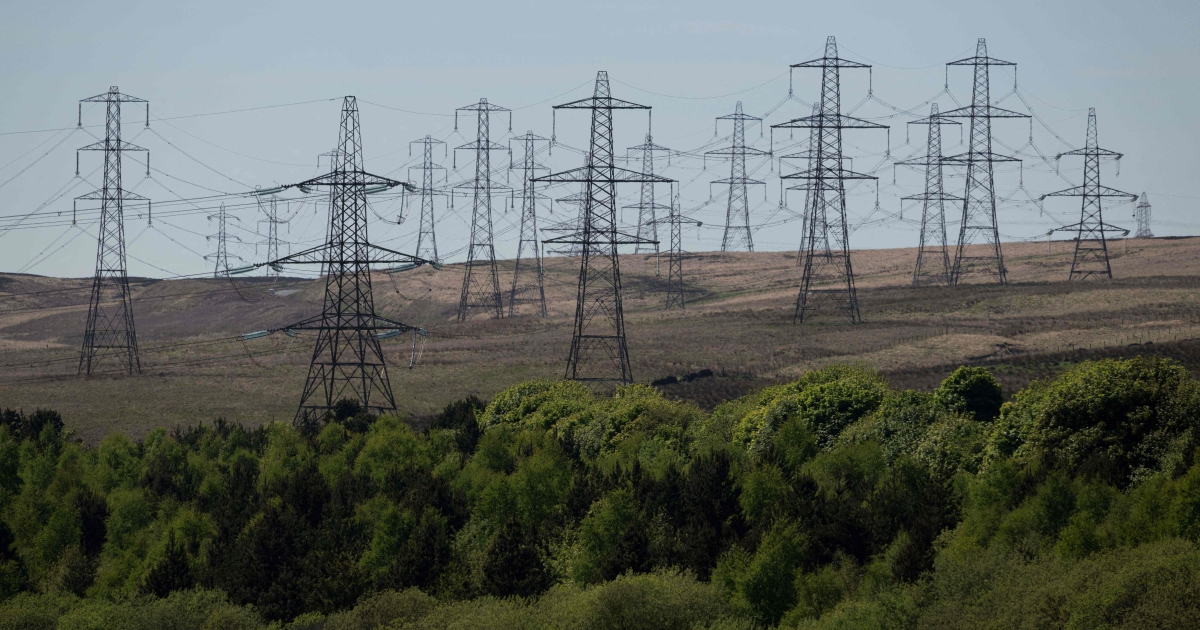
Fresh from taking office, British Prime Minister Andy Burnham has signalled his government's intention to cut taxes levied on electricity bills, according to an official statement released by Downing Street on Tuesday. The initiative represents a direct response to widespread economic hardship affecting households across the United Kingdom, where energy costs have remained a significant burden on family budgets for over a year.
The tax reduction on power consumption forms part of Burnham's broader agenda to address the cost-of-living emergency that dominated the recent election campaign. By targeting one of the most visible monthly expenses for British households, the new administration aims to provide immediate relief to voters while simultaneously demonstrating its commitment to translating electoral promises into concrete policy action.
Energy costs in Britain have been a persistent political issue since 2022, when Russia's invasion of Ukraine sent global commodity prices soaring. Although wholesale prices have since moderated, household energy bills remain elevated compared to pre-pandemic levels, and the tax burden on electricity has continued to weigh on disposable income. For many families already struggling with inflation across groceries, housing, and transport, even modest reductions in utility costs provide meaningful breathing room.
The electricity tax cut announcement comes amid broader discussions within government about how to structure relief measures that deliver tangible benefits without creating unsustainable fiscal commitments. Energy taxation represents a significant revenue source for the UK Treasury, so any reduction requires careful calibration to balance household support against the government's fiscal consolidation objectives during a period of elevated national debt.
Electricity duty currently applies at a relatively modest rate compared to other European nations, yet it remains a politically sensitive component of energy bills because it appears as a distinct line item that consumers can readily identify. By targeting this specific levy rather than pursuing broader subsidies, the government can demonstrate fiscal responsibility while still providing visible relief that households will notice when they next receive their utility bills.
For Malaysian observers, Britain's approach to energy affordability offers instructive parallels to persistent regional challenges. Like several Southeast Asian countries, the UK faces tension between maintaining affordable energy access for lower-income households and encouraging conservation through appropriate pricing mechanisms. The Burnham administration's willingness to intervene through targeted tax cuts reflects a political consensus that some government involvement in energy markets remains necessary even as Britain pursues broader market liberalisation.
The timing of this announcement carries significance beyond immediate policy. Burnham inherits an economy facing multiple headwinds including sluggish growth, persistent inflation in services sectors, and wage stagnation affecting skilled workers. By delivering visible wins on cost-of-living pressures early in his tenure, he seeks to rebuild public trust in government after years of economic turbulence and political instability under previous administrations.
Energy poverty remains a serious concern across Britain, with millions of households unable to adequately heat their homes during winter months. The Institute for Fiscal Studies and other think tanks have warned that without sustained interventions, energy costs could remain a drag on living standards throughout the decade. Electricity tax reduction, while helpful, represents only one component of a more comprehensive solution that many analysts argue must also include investment in home insulation, renewable energy infrastructure, and long-term improvements to grid resilience.
The electricity tax initiative will require parliamentary approval and faces potential scrutiny regarding its cost to the exchequer and its distributional impact across income groups. Opposition parties may argue that tax cuts alone fail to address underlying structural issues in Britain's energy market, including aging infrastructure, investment gaps in renewable capacity, and vulnerability to volatile global commodity prices. Labour-aligned commentators counter that immediate relief for struggling households takes precedence while longer-term reforms are developed.
For international investors monitoring British economic policy, the tax-cutting announcement signals the new government's pragmatic orientation toward managing near-term economic challenges despite long-term fiscal constraints. Unlike some previous administrations, Burnham's approach emphasises targeted intervention in specific sectors rather than comprehensive stimulus, suggesting an attempt to balance electoral promises with fiscal discipline.
The broader energy transition adds another dimension to this policy debate. As Britain accelerates its shift toward renewable power generation and electrifies transport and heating systems, electricity demand is projected to rise substantially. Carefully calibrating tax policy now becomes essential to ensure that relief measures today do not create distortions that undermine investment incentives for the clean energy transition tomorrow.
Regional variations in energy costs across Britain mean that tax relief will benefit different communities in different ways, depending on local energy infrastructure and consumption patterns. Rural areas with limited renewable generation capacity and aging transmission networks may benefit differently from urban centres served by modern grid infrastructure. Burnham's government will need to monitor whether the tax cut translates into equitable relief across all regions or whether it inadvertently widens existing disparities in energy affordability between developed and peripheral areas.

