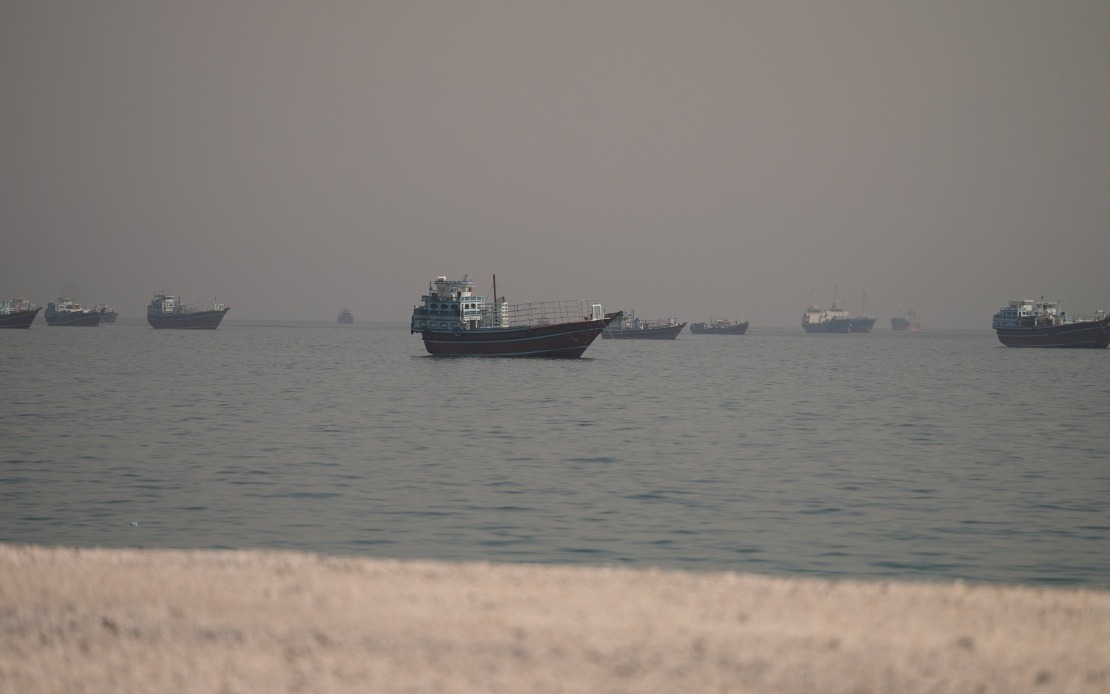
Britain and France have signalled their intention to establish a multinational military presence aimed at protecting maritime traffic through the Strait of Hormuz, one of the world's most critical shipping corridors. The announcement, made jointly by British Prime Minister Keir Starmer and French President Emmanuel Macron on Friday, underscores European determination to maintain freedom of navigation through the waterway despite vigorous opposition from Iran, which views such external involvement as a threat to regional sovereignty.
The Strait of Hormuz remains indispensable to global economic stability, serving as the conduit for roughly one-third of seaborne traded oil. Any disruption to transit through this narrow passage between Iran and Oman has immediate ripple effects across international energy markets and supply chains worldwide. The joint statement from London and Paris emphasises this economic imperative, framing the mission as essential not merely for European interests but for global commerce and stability. This framing is significant because it attempts to present the initiative as a matter of universal concern rather than a Western imposition on the Middle East.
A notable development is Oman's agreement to cooperate with both European powers on maritime security operations within Omani territorial waters. Oman's role as a willing partner lends legitimacy to the proposed mission by positioning it as coordinated with a regional state rather than purely external intervention. The sultanate's involvement is diplomatically crucial, as it provides a geographic foothold and local credibility that purely external powers would struggle to achieve independently. For Malaysia and other Southeast Asian nations dependent on stable energy supplies, Oman's cooperation represents a stabilising factor that could prevent disruptions affecting regional economies.
The European initiative reflects deeper anxieties about Iranian assertiveness in the Persian Gulf. Recent years have witnessed a pattern of tensions, including Iranian seizures of commercial vessels and attacks on shipping, which have prompted international concern about maritime safety. The proposed multinational force appears designed to deter such actions and reassure the international shipping community that transit through the strait remains viable and protected. For Malaysian shipping companies and energy importers, the establishment of credible security arrangements would reduce insurance costs and operational uncertainties.
Iran's consistent rejection of foreign military presence in the strait complicates this European strategy significantly. Iranian officials have maintained that security of the waterway is exclusively the responsibility of littoral states—those whose territories border the strait directly. From Tehran's perspective, the introduction of distant powers into what it considers its regional sphere represents an unacceptable encroachment on sovereignty. This ideological position, rooted in historical grievances about foreign intervention in Iran and the broader Middle East, makes negotiated compromise difficult.
The timing of this announcement reflects broader geopolitical tensions that extend beyond maritime security. The declaration comes amid escalating regional conflicts and shifting power dynamics in the Middle East. Britain and France are attempting to position themselves as custodians of international order and rules-based governance, particularly as the United States faces domestic political distractions. This European initiative may also be understood as an effort to maintain relevance in Middle Eastern affairs and project power beyond their traditional spheres of influence.
For Southeast Asian nations including Malaysia, the implications are multifaceted. A stabilised Strait of Hormuz benefits the region's energy security and maritime commerce significantly. However, the confrontational approach risks further destabilising the region if Iran responds with escalatory measures. Malaysia's historical policy of non-alignment and emphasis on dialogue makes this situation particularly pertinent—the country has traditionally advocated for peaceful resolution of regional disputes through ASEAN mechanisms and international law rather than military posturing.
The concept of a multinational force also raises questions about operational command structure, rules of engagement, and the potential for unintended escalation. How such a force would interact with Iranian naval assets, what circumstances would trigger active intervention, and how disputes would be resolved remain undefined. These ambiguities create space for miscalculation that could have severe consequences for global shipping and energy markets.
Moreover, the success of this initiative depends substantially on maintaining international consensus and participation. A force perceived as exclusively Western might struggle to gain legitimacy in regional eyes or secure cooperation from non-aligned states. Recruiting participation from Gulf Cooperation Council members, Southeast Asian nations, or other stakeholders could expand the mission's credibility but also complicate decision-making and operational coordination.
The broader context involves ongoing negotiations and diplomatic efforts to manage Iran's nuclear programme and regional behaviour. Military deployments by Western powers must be carefully calibrated to avoid derailing such diplomatic channels entirely. For Malaysia and other regional states seeking stability, the balance between deterrence and dialogue remains delicate. Excessive military posturing risks triggering Iranian counter-moves that destabilise shipping and energy markets, ultimately harming the very global commerce the mission aims to protect.
The declaration by Starmer and Macron signals European resolve to maintain influence in strategically vital regions, yet it also highlights the complexities of security governance in areas where regional powers have legitimate claims to primacy. How this multinational initiative develops will significantly influence maritime security, energy markets, and geopolitical stability throughout 2024 and beyond—concerns that resonate directly with Malaysia's interests as a trading nation dependent on secure international waters.

