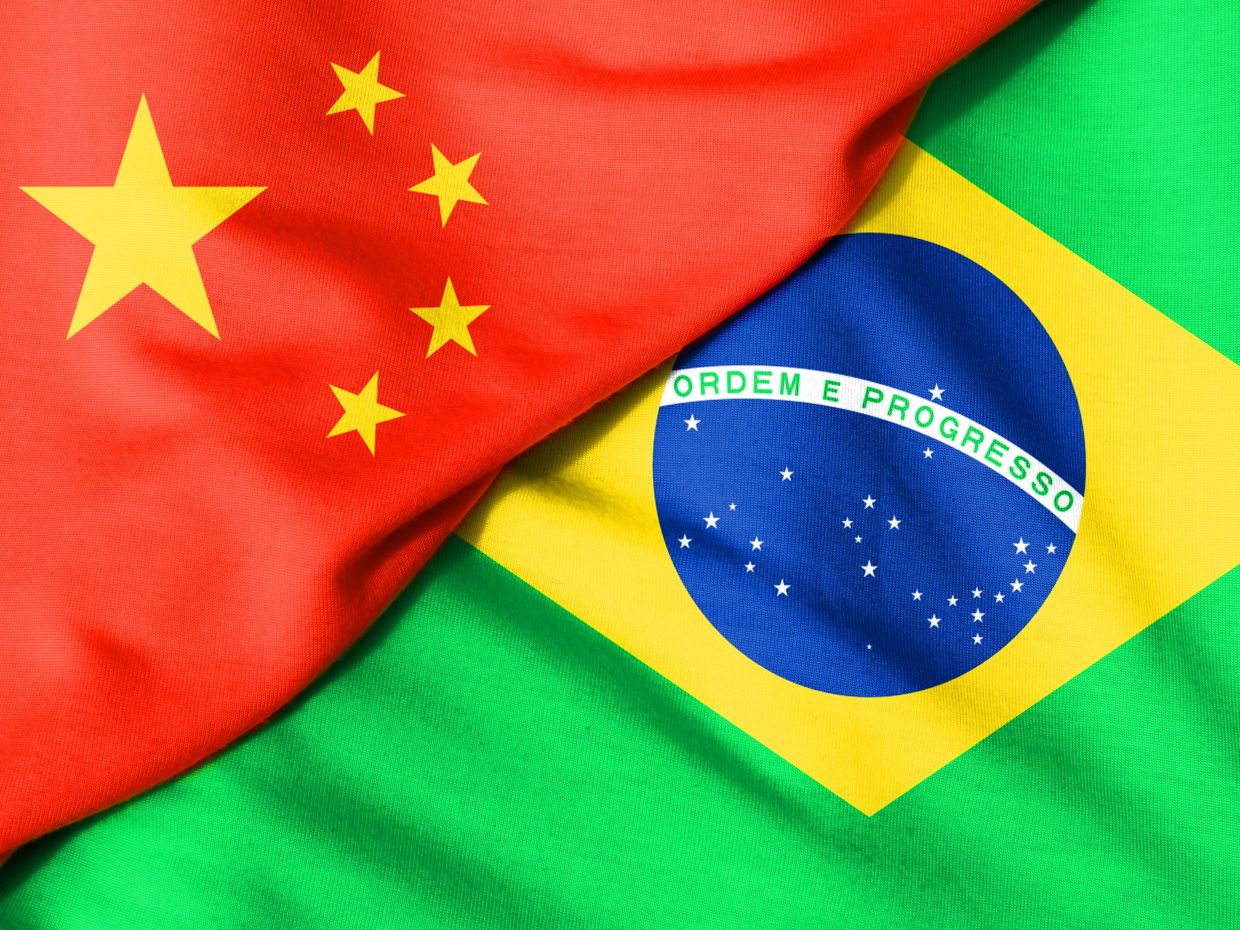
Brazil's Treasury has signalled its intent to enter the Chinese yuan bond market imminently, marking a significant pivot towards deepening financial ties with Beijing. The debut issuance is expected within months, though officials have deliberately kept the scale modest—acknowledging that the transaction represents a strategic opening rather than a major funding requirement. With external debt comprising just four per cent of the federal government's total borrowing stock, the urgency stems not from fiscal necessity but from a calculated effort to establish what treasury insiders call a "qualitative" foothold in Asia's fastest-growing financial hub.
Francisco Segundo, deputy secretary for public debt at Brazil's National Treasury, articulated the government's philosophy during a recent webinar discussion. The official emphasised that while yuan borrowing offers attractive terms—Chinese issuers currently price at around 1.97 per cent coupon on average, against four to five per cent for comparable dollar debt—the real prize lies in unlocking investor access. This signals a strategic patience that contrasts sharply with short-term yield-chasing; Segundo stressed that Brazil must commit to regular issuances, returning to Yuan markets "once, twice, three times" annually to build institutional relationships and establish itself as a reliable borrower in Chinese eyes.
The application process moved forward when Finance Minister Dario Durigan formally handed a letter of intent to People's Bank of China governor Pan Gongsheng in June, receiving explicit confirmation that the central bank stands ready to facilitate the transaction. What remains are procedural hurdles, including engagement with a Chinese rating agency that has never previously assessed Brazilian sovereign creditworthiness—a technical but symbolic requirement that underscores how new this relationship genuinely is. Notably, neither the finance minister nor other officials have provided clarity on the final issuance size, with conflicting statements suggesting somewhere between five billion yuan and ten billion yuan, creating uncertainty about whether Brazil will set a new regional record or follow Indonesia's recent precedent.
Indonesia achieved a milestone on 23 July when it raised seven billion yuan in its inaugural sovereign panda bond—currently the largest debut on record. Brazil's target range therefore carries geopolitical weight, signalling either confident ambition or, conversely, cautious conservatism depending on which figure ultimately prevails. Neither approach has been formally justified, leaving market participants and analysts to speculate about the Treasury's confidence level and the underlying demand signals from Chinese institutional investors. The tenor and end-use of proceeds remain undisclosed, further mystifying the transaction's precise mechanics.
Underlying this initiative lies a more sophisticated economic logic grounded in comparative financial history. Segundo pointed to European precedent, noting that Brazil's euro borrowing curve has grown distorted by long periods of inactivity, creating scarcity value that distorts pricing. The Treasury concluded that sporadic, widely-spaced issuances actually harm rather than help capital market development. By committing to annual yuan issuances, Brazil hopes to replicate a different model—one where consistent sovereign presence establishes liquid benchmarks that Brazilian companies can subsequently use as reference points for their own offshore fundraising.
This theory rests on an empirical observation supported by banking executives active in the space. Alexandre Lowenkron, who heads Bocom BBM, a Chinese-controlled Brazilian bank, argues that the historical data confirms this dynamic: following government sovereign issuances, corporate bond offerings from the same jurisdiction spike sharply, with over fifty to sixty per cent of activity clustering in the post-issuance window. The mechanism works through investor psychology—funds require anchor points to establish confidence in a given credit story, and a government bond establishes both pricing and implicit quality validation.
Suzano, a major pulp producer, exemplifies how this dynamic unfolds in practice. The company became the first non-financial, non-government enterprise in the Americas to issue panda bonds, subsequently raising 2.6 billion yuan across three tranches since 2024. Its inaugural green bond priced at 2.8 per cent, representing more than fifty basis points below what Suzano's dollar curve would have commanded, even after currency conversion costs. Emilio Yeh, the company's chief financial officer for Asia operations, recalled that Chinese investors consistently pressed during negotiations about when the Brazilian government would issue its own yuan bonds—suggesting that sophisticated institutional players view sovereign issuance as a prerequisite for expanding corporate allocations.
Yet a structural obstacle complicates Brazil's ambitions. All three major rating agencies classify Brazil as sub-investment grade, a designation that automatically excludes the country from many large institutional portfolios constrained by mandate restrictions. This creates an asymmetry where Vale, the mining giant, carries a credit rating two notches superior to its own sovereign, while Suzano similarly trades at a premium. Petrobras faces tighter constraints, held to the sovereign rating despite Fitch's private assessment that the oil company merits investment-grade status on standalone fundamentals. This rating gap—a direct consequence of Brazil's sovereign downgrade—means that Brazilian firms must appeal to investors willing to look beyond headline ratings or to investors specifically targeting Chinese opportunities at any credit level.
The yuan market itself operates under different institutional logics than dollar markets. Chinese investors, according to banking sources, screen prospective issuers across three primary dimensions: absolute scale of the borrower, credit rating, and what practitioners colloquially term "China flavour"—meaning some operational or commercial connection to China that justifies allocating capital domestically versus investing elsewhere. Brazil as a nation sits beneath the threshold for many conservative funds, lacking that direct China linkage. This explains why Durigan, in June conversations with Reuters, framed the initiative partly as a response to Brazilian companies' explicit requests for government help in accessing yuan markets, where their own operational presence provides the missing "flavour" that a sovereign borrower cannot supply.
The broader context reflects deeper trends reshaping global capital flows. As the United States maintains elevated interest rates and as geopolitical tensions complicate dollar-denominated financing, emerging market governments increasingly view yuan issuance as a hedge against over-reliance on Western financial infrastructure. For Brazil specifically, the initiative aligns with growing trade ties to China, which absorbs roughly a quarter of Brazilian exports and provides critical imports across sectors from machinery to technology. Managing currency volatility becomes a genuine corporate concern when bilateral trade operates at such scale, making access to yuan funding economically rational rather than merely adventurous.
Brazil's Treasury has not provided guarantees regarding 2024 completion, with Segundo cautiously noting that while "the objective is yes," procedural delays could easily slip timelines into 2025. The application itself received clearance, removing the most substantial bottleneck, but final execution hinges on hiring arrangements and Chinese regulatory sign-offs that remain opaque to outside observers. What seems certain is that Brazil's entry into yuan markets, whenever precisely it occurs, represents not a one-off transaction but the opening of a longer strategic relationship. The insistence on recurring issuances reflects a mature understanding that capital market development requires patience, consistency, and institutional commitment—precisely the qualities China has historically valued in bilateral financial partnerships across Asia and now, increasingly, across the emerging world.

