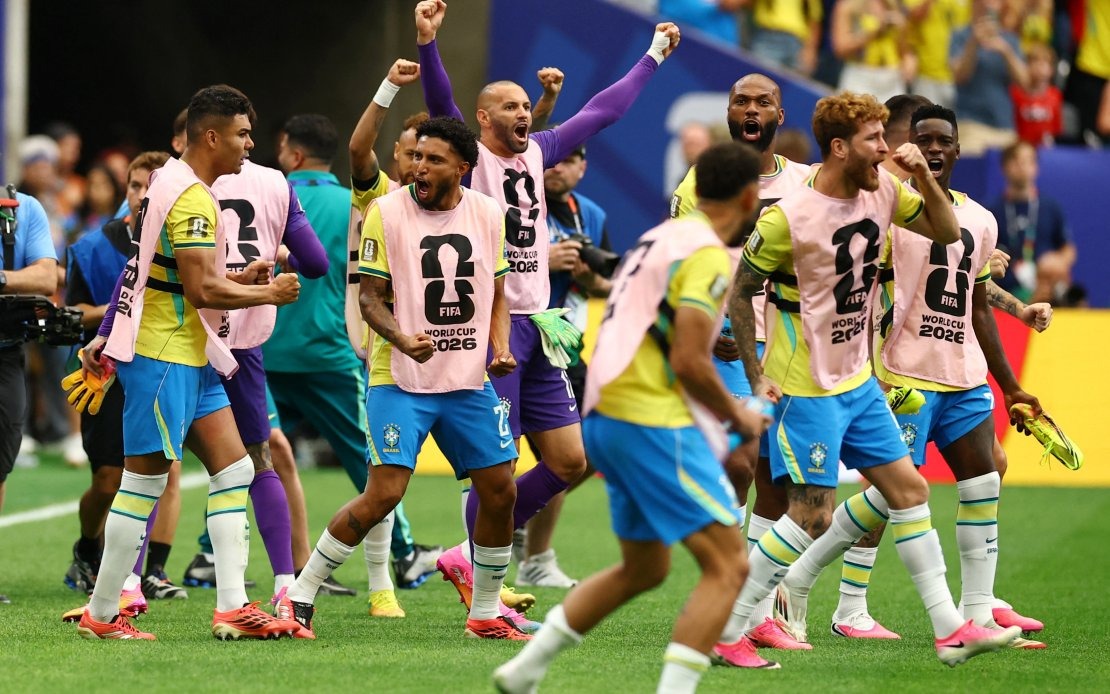
Brazil recovered from a deficit to defeat Japan 2-1 in their World Cup knockout encounter at Houston on Monday, securing a spot in the competition's last 16 round through a Gabriel Martinelli goal deep into injury time. The five-time world champions showed their characteristic resilience, turning a match that looked to be slipping away into a convincing victory that sets up a next-round confrontation with either Cote d'Ivoire or Norway.
Both sides arrived at the Estadio BBVA with unblemished group-stage records, having successfully navigated their respective pools without defeat. Brazil topped Group C with seven points accumulated from their pool fixtures, demonstrating the consistency that has made them tournament favourites. Japan, meanwhile, finished as runners-up in Group F, securing their position through a single victory complemented by two draws, a testament to their disciplined defensive approach that has surprised many observers in this tournament.
The historical context of this matchup reveals Brazil's traditional dominance over the Japanese side. When these nations last met in World Cup competition, Brazil prevailed decisively by a 4-1 scoreline, emphasizing the gap between the two football cultures at the highest level. However, recent form suggested the narrative might be shifting. Japan's squad, boosted by confidence from their 3-2 victory over Brazil in a non-competitive friendly last year—which came after overturning an initial deficit—arrived in Qatar sensing an opportunity to upset the established order.
Brazil controlled the early exchanges with characteristic attacking intent, forcing Zion Suzuki into a one-handed save as Matheus Cunha tested the Japan goalkeeper in the 14th minute. The South American team's dominance of possession suggested they would inevitably break through, yet football's unpredictability was on display when Japan struck against the run of play. In the 29th minute, Kaishu Sano capitalized on a defensive lapse when Danilo misfired a pass. The Japanese midfielder seized possession and drove forward past Casemiro before unleashing a powerful strike that evaded Alisson to hand Japan a stunning lead.
Despite their territorial advantage, Brazil struggled to convert their opportunities into clear-cut chances, with Suzuki remaining largely untroubled for extended periods. The five-time champions' attacking play lacked the clinical finishing that has defined their best performances, prompting concern among their technical staff as the first half progressed. Yet the tournament's narrative had already demonstrated Brazil's capacity to respond to adversity, and this scenario was no different as they regrouped at the interval with tactical adjustments on the agenda.
The second-half adjustment proved decisive, with Brazil recalibrating their approach to break down a resilient Japanese defence. Casemiro atoned for his earlier mistake by meeting a Bruno Guimaraes cross with a well-placed header in the 56th minute, restoring parity and energizing the Brazilian contingent both on and off the pitch. Minutes later, Vinicius Jr provided a flash of individual brilliance, his weaving run showcasing the type of attacking flair that has captivated audiences throughout the tournament, though his eventual strike cannoned against the post rather than finding the net.
Brazil's dominance intensified as the match entered its closing stages, their pressure mounting as Japan retreated into a more compact defensive shape. The breakthrough came not from open play but through the precision of Guimaraes' final pass, finding an unmarked Martinelli in the penalty area deep in stoppage time. The Brazilian winger maintained composure in a one-on-one situation, calmly dispatching his finish past a stranded Suzuki to seal a dramatic turnaround that showcased Brazil's tournament credentials.
Japan pressed desperately for a late equalizer in the closing moments, sensing a potential upset was slipping away, but they could not penetrate Brazil's organized defence or generate the necessary quality of chance to extend the contest further. The defeat, while disappointing for a side that had performed admirably throughout, ended Japan's run in the tournament and underscored Brazil's experience in high-pressure knockout encounters. For Malaysian and Southeast Asian observers, the result reinforces Brazil's status as one of the tournament's elite teams while highlighting the narrow margins that separate success from elimination at this level of international football.

