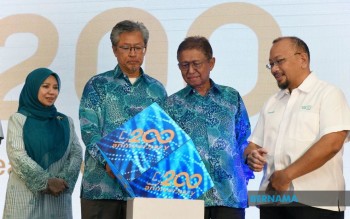
Boustead Holdings Bhd is charting an ambitious transformation that would see the conglomerate expand its annual revenue to RM30 billion over the next five years, a significant leap from its current RM12 billion base. The trajectory reflects a fundamental strategic pivot for a company that began as an agricultural trader dealing in coconuts and warehousing services two centuries ago. Today, the company is repositioning itself at the intersection of national security and economic development, anchoring Malaysia's emerging defence industrial base while simultaneously capitalising on property development and commercial opportunities.
The restructuring initiative targets three primary business verticals: defence manufacturing and technology, property development, and commercial services. This focus represents a deliberate response to government priorities articulated through the National Defence Industry Policy, which was formally launched in January. Group Managing Director Datuk Dr Ahmad Sabirin Arshad emphasised that the company has been entrusted with critical responsibilities by both shareholders and the Defence Ministry to position Malaysia as self-sufficient in key defence capabilities. The strategy recognises that developing domestic defence capacity requires not merely acquiring equipment but building an entire ecosystem of suppliers, manufacturers, and technology integrators.
A cornerstone of Boustead's expansion strategy involves fostering a robust defence supply chain by cultivating approximately 400 vendors across the defence industry ecosystem. This vendor development initiative carries broader economic significance beyond immediate defence procurement, as it aims to establish new wealth-generating industries and skill clusters within Malaysia. By nurturing local suppliers and encouraging technology adoption, the company positions itself as a catalyst for industrial diversification in regions dependent on traditional manufacturing. The initiative aligns with regional economic diversification trends across Southeast Asia, where countries increasingly seek to reduce dependence on consumer electronics and establish higher-value defence and advanced manufacturing sectors.
Local content requirements embedded in Boustead's expansion targets underscore the government's commitment to building genuine domestic capability rather than simply acquiring foreign systems. The company has committed to achieving at least 30 per cent local content in defence industry technology products by 2030, a threshold that incentivises partnerships with Malaysian suppliers and research institutions. This approach differs markedly from pure defence procurement, which typically sees money flow to foreign contractors. Instead, Boustead's model promises to retain intellectual property, manufacturing expertise, and associated economic benefits within Malaysia while building a competitive advantage in the broader region.
The company has assumed leadership responsibility for four flagship defence projects that exemplify this domestic-first approach. These initiatives—satellite development, rolling chassis for armoured vehicles, light weapons production, and Combat Management System development—represent capabilities that Malaysia previously had to source externally. Each project requires developing technical expertise, establishing supply chains, and creating supporting infrastructure. Success in these domains would enable Malaysia to support its own defence modernisation independently and potentially position itself as a regional supplier for allied nations with similar requirements.
Beyond defence manufacturing, Boustead is pursuing the substantial Batu Cantonment strategic development project in partnership with the Armed Forces Fund Board. This initiative involves relocating nine military camps to consolidate operations, then developing the released land into a modern commercial hub within the capital. Such urban redevelopment projects generate significant economic returns through commercial leasing, retail operations, and value appreciation. The project demonstrates how defence restructuring creates ancillary commercial opportunities—a model that other Southeast Asian countries are increasingly exploring as they modernise military infrastructure.
The company's emphasis on technology transfer through international strategic partnerships reflects sophisticated industrial policy thinking. Rather than attempting to develop all capabilities entirely domestically, Boustead will collaborate with established defence contractors to acquire advanced technology while ensuring knowledge flows into Malaysia through local employment, training, and supplier integration. This partnership approach is pragmatic, acknowledging that certain sophisticated capabilities require decades of development experience. The selection process for international partners will be critical, determining whether technology transfer materialises as intended or remains merely contractual language.
Boustead's transformation carries particular significance for Malaysian investors and defence personnel. General (Rtd) Tan Sri Abdul Aziz Zainal, serving as chairman, framed the restructuring as ultimately serving the Malaysian Armed Forces and their superannuation funds, which hold substantial stakes in the company. This alignment of interests—where defence modernisation directly benefits service members' financial security—creates powerful incentives for execution. The accountability and governance standards demanded for managing these assets signal that Boustead faces heightened scrutiny as it navigates substantial capital commitments in defence development.
The conglomerate simultaneously intends to maintain and strengthen existing subsidiaries in tourism and insurance sectors, ensuring revenue diversification beyond defence. This portfolio approach hedges against concentration risk, as defence spending can fluctuate with political priorities and budgetary cycles. Tourism and insurance operations provide stable, recurring revenue that can absorb short-term variations in defence procurement patterns. Such diversification distinguishes Boustead from pure defence contractors that depend entirely on government spending decisions.
Boustead's bicentennial celebration in 2028 coincides symbolically with the maturation of its transformation strategy, marking two centuries of operation and the emergence of a fundamentally reconceived enterprise. The five-year revenue target of RM30 billion represents aggressive but plausible growth if defence projects proceed on schedule and property development gains traction. Achievement would position Boustead among Southeast Asia's more substantial defence-industrial enterprises, with capabilities that extend beyond manufacturing into systems integration and project management—domains requiring sustained technical excellence.
For Malaysian stakeholders and regional observers, Boustead's trajectory signals serious governmental commitment to building defence industrial capacity rather than treating defence spending as mere foreign procurement. Success would establish precedent for defence industrialisation across the region, demonstrating that emerging economies can develop sovereign capabilities through systematic investment and strategic partnerships. Conversely, delays or setbacks would reinforce conventional wisdom that defence manufacturing remains the preserve of established industrial powers. Either way, the next five years will substantially determine whether Malaysia's defence industry reaches maturity.

