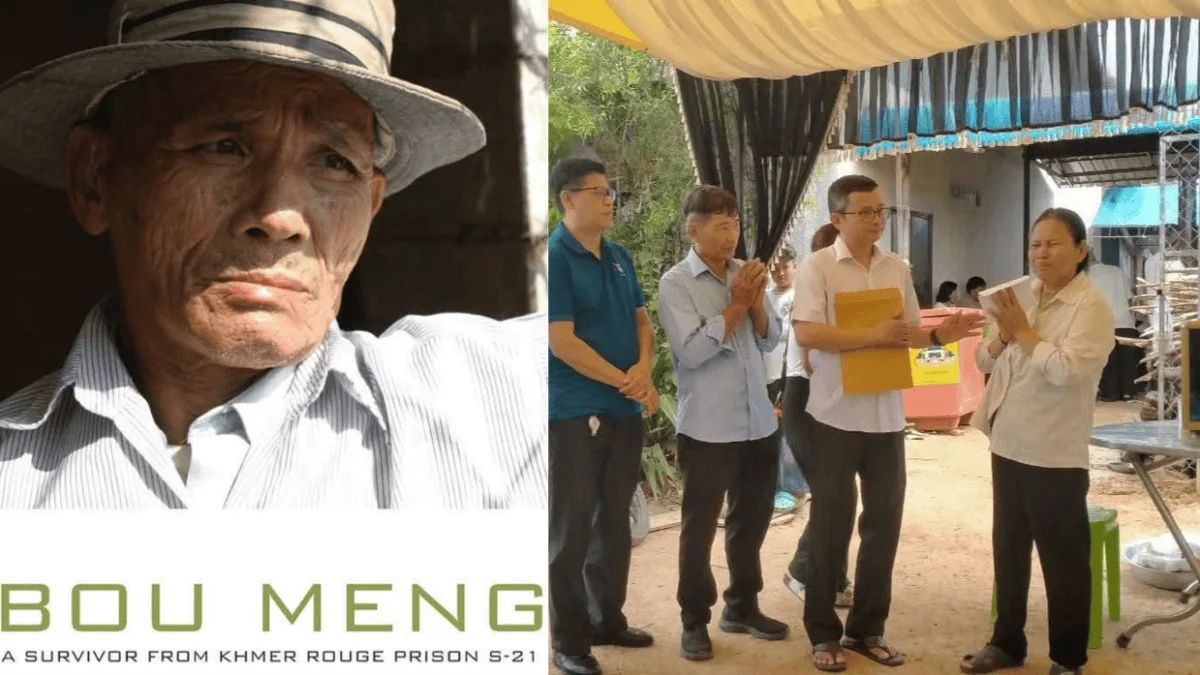
Cambodia has lost a crucial voice documenting one of humanity's darkest chapters. Bou Meng, who miraculously survived the Khmer Rouge's notorious Tuol Sleng detention facility, died on Friday, August 14, 2026, at the age of 85. The Tuol Sleng Museum announced his passing, marking the end of a life dedicated to bearing witness to atrocities that claimed nearly two million lives between 1975 and 1979.
Tuol Sleng—known internally as S-21—functioned as the Khmer Rouge's primary interrogation and execution centre during their brutal reign. An estimated 17,000 people were processed through its gates, yet only seven are known to have survived the systematic torture, starvation, and murder that characterised the facility. Bou Meng's survival placed him among an extraordinarily small group whose testimonies remain irreplaceable historical records. The museum's statement acknowledged this irreplaceability, describing him as "a crucial historical witness to the crimes that the Pol Pot genocidal regime committed against the Cambodian people."
Meng's personal story encapsulates the tragedy that befell countless Cambodian families. In 1977, he and his wife were imprisoned at S-21 while their children were separated and sent to labour camps. He would never see his wife or children again—a loss repeated across Cambodia as the regime systematically dismantled family structures and targeted intellectuals, professionals, and perceived enemies. The psychological weight of such losses, carried throughout a survivor's lifetime, cannot be easily quantified, yet it shaped the testimony Meng provided to judicial authorities decades later.
His survival itself rested on a cruel irony. While most prisoners faced certain death, Meng possessed a skill that temporarily spared him: he was a painter. The Khmer Rouge regime, despite its ideological hostility toward intellectuals, occasionally exploited technical abilities for its own purposes. Meng's artistic talents kept him alive long enough to witness the regime's eventual collapse in 1979 when Vietnamese forces invaded and toppled the Cambodian government. This narrow escape from what should have been certain death transformed him into a living repository of knowledge about S-21's operations, hierarchies, and daily horrors.
Decades after his liberation, Meng became instrumental in seeking justice through Cambodia's judicial system. He testified at the Extraordinary Chambers in the Courts of Cambodia (ECCC), the hybrid tribunal established to prosecute senior Khmer Rouge leaders. His evidence proved particularly significant in the trial of Kaing Guek Eav, known as Comrade Duch, who served as S-21's commandant. Duch's case represented a landmark moment in post-genocide justice, as one of the first high-ranking perpetrators to face international criminal proceedings specifically for crimes committed at the facility. Meng's firsthand accounts provided irreplaceable corroboration of torture practices, administrative structures, and the deliberate nature of killings that occurred under Duch's command.
Beyond courtroom testimony, Meng dedicated his final decades to educational work at the Tuol Sleng Museum, which occupies the former prison's physical space. Rather than withdraw from the trauma site, he chose to confront visitors with his narrative, transforming personal suffering into pedagogy. Museum visitors—Cambodian schoolchildren, international tourists, researchers, and policymakers—encountered Meng as a living embodiment of survival and resilience. His presence among the museum's stark photographs, torture implements, and documentary evidence lent an irreplaceable human dimension to historical abstraction.
For Southeast Asian and Malaysian audiences, Meng's life and death carry particular significance. Cambodia's genocide remains one of the region's defining traumas, yet it is frequently underestimated in contemporary discourse. Survivors like Meng serve as bulwarks against historical revisionism and forgetting. In Malaysia, where ethnic and religious tensions have periodically threatened social stability, the Cambodian case offers sobering lessons about how ideological extremism, combined with weak institutions and international indifference, can enable mass atrocity. Meng's willingness to testify despite the personal cost demonstrated a commitment to accountability that transcends national borders.
The passing of such witnesses raises urgent questions about memorial responsibility and knowledge transmission. As first-generation survivors age, societies must grapple with how to preserve their testimonies, amplify their voices, and ensure that subsequent generations grasp the lived reality of atrocity. Video archives, written memoirs, and museum programming become increasingly vital. Meng's death underscores the finite window for direct testimony—once survivors pass, societies depend entirely on recorded materials, institutional memory, and the interpretations of historians and curators.
His absence from the Tuol Sleng Museum also represents a symbolic transition. For visitors accustomed to encountering Meng in person, his death transforms S-21 from a place where survivors actively shared their experiences into purely a memorial space. This shift, while inevitable, renders the museum's interpretive mission more challenging. The museum's statement indicates that Meng's contributions to justice-seeking and historical documentation will be remembered, yet memory alone cannot replicate the emotional and moral authority that living survivors possess.
Cambodia continues to grapple with the aftermath of genocide. While the ECCC has convicted several senior leaders, many perpetrators remain unpunished or deceased. Bou Meng's testimony contributed significantly to establishing accountability, yet broader questions about reconciliation, restorative justice, and how society should relate to perpetrators remain contested. His death marks the end of an individual life but also signals the closing of one chapter in Cambodia's long reckoning with its traumatic past.

