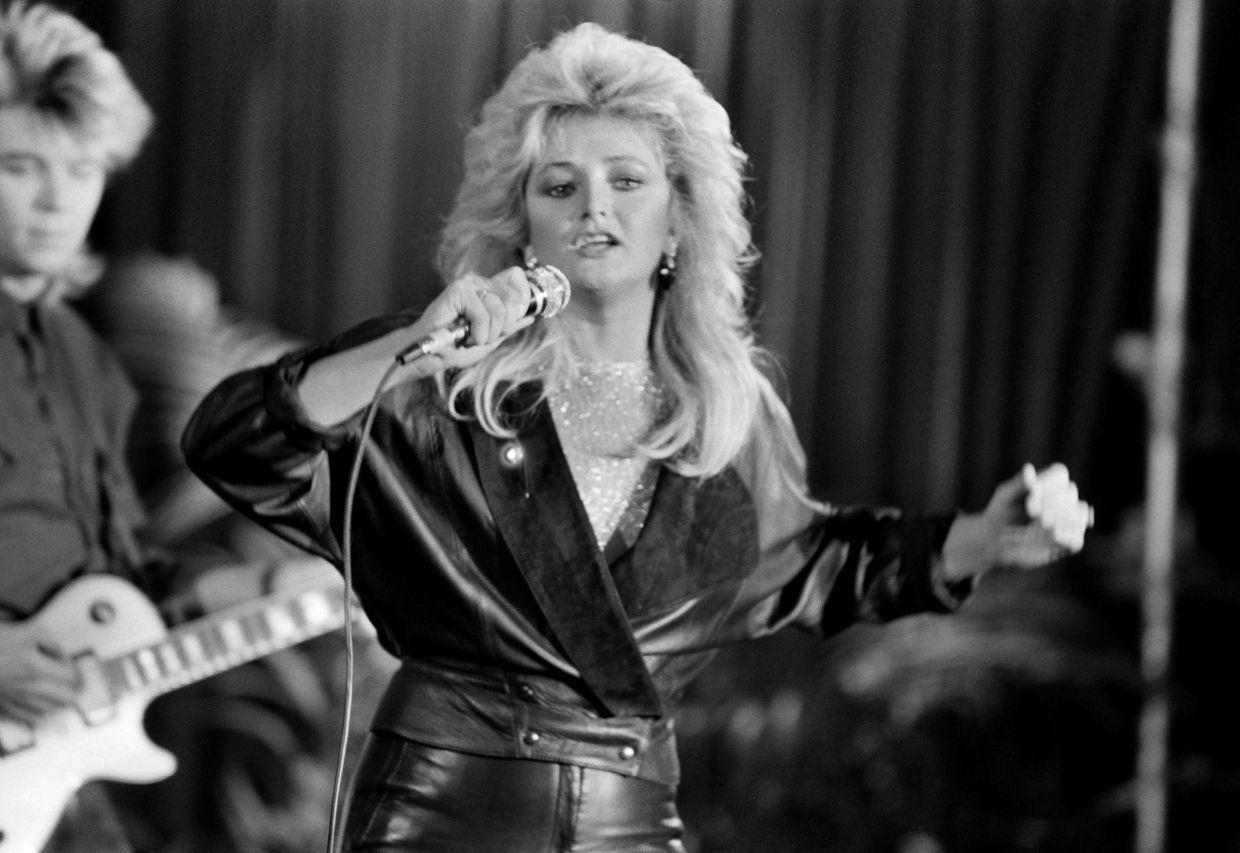
Bonnie Tyler, the distinctively husky-voiced Welsh pop artist whose 1983 power ballad 'Total Eclipse of the Heart' became one of the most recognisable songs in modern music history, has passed away at the age of 75. The Grammy-nominated performer died unexpectedly at a hospital in Portugal, where she had been undergoing treatment for an undisclosed illness, according to a statement released by her family on Thursday through her official website.
Tyler had been hospitalised in May at a facility in Faro, Portugal, where she maintained a home, for emergency intestinal surgery and subsequently spent time in an induced coma. Her passing marks the end of a career that spanned nearly five decades and transcended the boundaries of popular music, reaching audiences across multiple generations through the enduring appeal of her signature composition. The circumstances surrounding her final months underscored the personal struggles that accompanied her public success, though details remained limited at the time of her death.
The impact of 'Total Eclipse of the Heart' cannot be overstated in understanding Tyler's legacy and cultural significance. Released as the lead single from her fifth studio album 'Faster Than the Speed of Night', the Jim Steinman-penned composition achieved extraordinary commercial success, spending four weeks at number one and accumulating more than one billion streams across digital platforms. The accompanying music video, filmed in a gothic former psychiatric asylum in Surrey, became a cornerstone of early MTV programming, featuring elaborate production elements including dancing ninjas, swimming-goggled dancers, and elaborate set design that seemed to anticipate modern music video aesthetics by years.
What distinguished 'Total Eclipse of the Heart' was its cyclical resurgence in popular culture, particularly surrounding astronomical events. During the solar eclipses of 2017 and 2024, younger audiences discovered or rediscovered the song, propelling it back into streaming charts and viral social media moments. This phenomenon reflected how the track's apocalyptic imagery and emotional intensity transcended its original 1980s context, acquiring new relevance with each generation that encountered it. The song's one billion-plus views on YouTube and its regular appearance in films, television shows and popular culture references maintained its visibility in ways that eluded most contemporary pop recordings.
Tyler's professional achievements extended well beyond this singular hit, though 'Total Eclipse' inevitably defined her career trajectory. She earned three Grammy nominations throughout her professional life and represented the United Kingdom at the 2013 Eurovision Song Contest in Sweden, where she placed 19th with the country-influenced ballad 'Believe in Me'. In 2023, Queen Elizabeth II honoured her with an MBE in recognition of her contributions to music, a distinction that underscored her enduring significance within British cultural life despite the decades that had passed since her peak commercial period.
Her artistic journey began in the working-class industrial landscape of Skewen, Wales, where she was born Gaynor Hopkins, the daughter of a coal miner. Growing up in public housing with limited amenities, she developed an early passion for music through artists including Janis Joplin, Nina Simone, Tina Turner, and Otis Redding. These influences shaped her musical sensibility, contributing to the soulful quality that would characterise her vocal delivery throughout her career. A formative period of her adolescence involved recording episodes of 'Top of the Pops' on rudimentary equipment and transcribing lyrics, activities that crystallised her commitment to pursuing music as a professional ambition.
The surgical removal of throat nodules in 1976 proved a transformative moment, imparting the distinctive gravelly timbre that would become her vocal trademark. This involuntary alteration proved fortuitous, as the resulting rasp differentiated her voice within the competitive landscape of 1980s pop music. Under the stage name Sherene Davis initially, she performed with soul bands until talent scout Roger Bell facilitated her introduction to London's recording industry. RCA Records subsequently signed her, releasing her debut album 'The World Starts Tonight' in 1977, which produced the chart hit 'Lost in France' and an award nomination at the BRIT Awards.
Her collaboration with producer and songwriter Jim Steinman proved decisive in her career arc. After witnessing Meat Loaf perform 'Bat Out of Hell' on the BBC, Tyler specifically requested to work with Steinman, recognising his talent for creating emotionally intense, dramatically orchestrated compositions. Steinman drew upon material from his own earlier work, including his 1969 student musical 'The Dream Engine' at Amherst College in Massachusetts, to craft 'Total Eclipse of the Heart'. The final recording featured contributions from Bruce Springsteen's E Street Band members Roy Bittan on piano and Max Weinberg on drums, lending additional instrumental gravitas to the composition. Tyler's vocal performance captured the song's lamentation of romantic loss with particular poignancy, articulating lines such as 'Once upon a time there was light in my life, But now there's only love in the dark' with characteristic emotional intensity.
While Tyler never replicated the stratospheric commercial heights achieved by 'Total Eclipse of the Heart', she remained professionally active throughout the 1980s and beyond. Her soundtrack contributions included 'Holding Out For a Hero' from 'Footloose' in 1984, maintaining her visibility within popular culture whilst reaching audiences who might not have engaged with her traditional pop releases. Her recorded output demonstrated artistic adaptability, encompassing rock ballads, country-influenced material, and duet collaborations with established artists including Rod Stewart, Cliff Richard, and Francis Rossi of Status Quo on her 2019 album 'Between the Earth and the Stars'.
Tyler's later career demonstrated sustained commitment to musical performance despite diminishing commercial returns. She participated in a Vatican Christmas concert before Pope Francis in 2019 and continued touring internationally, maintaining connections with audiences in Europe and beyond. Her 2013 venture into country music, the Nashville-recorded album 'Rocks and Honey', represented her willingness to explore new musical territories, though such experiments failed to achieve significant chart recognition. This trajectory reflected the common experience of artists whose early success, however monumental, proved difficult to equal or exceed across subsequent decades.
The loss of Tyler removes a significant figure from British pop history, notwithstanding the way her legacy will inevitably centre upon a single composition. 'Total Eclipse of the Heart' occupies an unusual position within the popular music canon, simultaneously representing 1980s excess in its production values whilst transcending the period through its emotional authenticity and melodic sophistication. The song's endurance in cultural consciousness, refreshed periodically by natural astronomical events, suggests that Tyler's artistic contribution will maintain relevance for audiences encountering her work for the first time. Her passing concludes a remarkable journey from a Welsh mining town to international recognition, a trajectory shaped as much by fortune and circumstance as by genuine artistic talent and determination.

