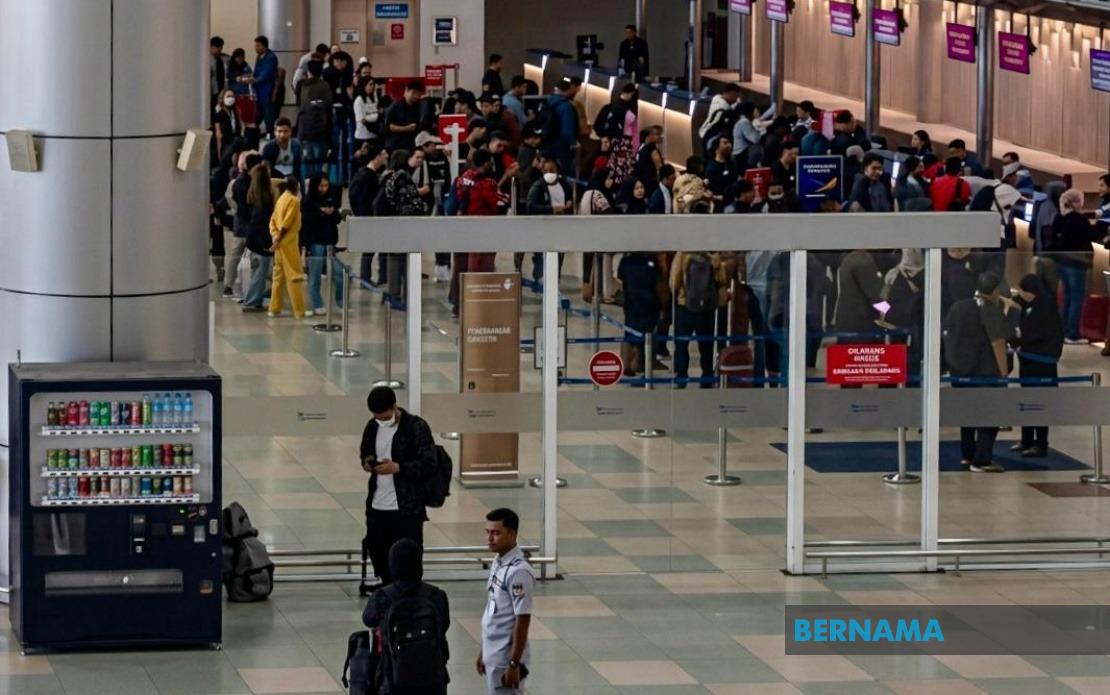
Labuan Airport suspended runway operations on June 26 after authorities discovered explosive devices positioned approximately 150 metres from the active airfield, prompting the Royal Malaysian Air Force to issue a Notice to Airmen at 5pm that day. The temporary closure affected all takeoffs and landings, creating immediate disruption across the airport's flight schedule and forcing swift coordination between military and civilian aviation authorities to ensure public safety and operational security.
The joint inspection team comprising RMAF personnel and airport management established strict protocols before any resumption of normal traffic flow. Officials committed to reopening the runway only after comprehensive safety assessments had been completed and formal clearance documentation issued, reflecting the seriousness with which authorities approached the incident. This cautious approach, though operationally costly, prioritised passenger security and crew safety above scheduling pressures.
The timing of the discovery created significant ripple effects across Sabah and Sarawak's air transport network. Scheduled services connecting Labuan with Miri and Kota Kinabalu faced outright cancellation, while additional flights heading toward Kuala Lumpur encountered delays or operational rerouting. By early evening, at least five departure slots—scheduled for 4.05pm, 5.15pm, 6.05pm, 6.15pm and 7.25pm—had been directly affected, with aircraft either grounded or redirected to alternative airports.
The discovery underscores ongoing security challenges within Malaysia's aviation infrastructure, particularly at regional airports serving Malaysia's eastern territories. Labuan, positioned strategically in the Federal Territory between Sabah and Brunei, handles significant domestic traffic and serves as a critical transit point for business travellers, offshore workers, and tourists. The incident demonstrates vulnerabilities that extend beyond major international hubs, raising questions about perimeter security protocols and surveillance capabilities at secondary airports across the country.
Passengers faced immediate uncertainty regarding their travel plans, with airlines scrambling to communicate revised schedules and rebooking options. The airport authorities issued public advisories urging all travellers to contact their respective carriers directly before heading to the terminal, recognising that fragmented information could lead to additional congestion and confusion. This communication strategy, while practical, highlighted the challenges passengers face when unexpected disruptions occur at airports with limited alternative transport options.
For Malaysia's aviation sector, such incidents carry broader implications for operational costs and system resilience. Unscheduled closures disrupt cargo movements, delay business-critical personnel transfers, and create cascading delays across interconnected route networks. The offshore industry particularly depends on reliable air access to Labuan, making security-related shutdowns economically significant beyond mere scheduling inconvenience. Regional airlines operating in the Sabah-Sarawak corridor already contend with weather-related disruptions; security incidents add another layer of unpredictability to an already challenging operational environment.
The RMAF's involvement signified that authorities classified this as a serious security matter rather than a routine maintenance concern. Military involvement in civilian airport operations typically indicates threat assessment at a level requiring defence force expertise. This partnership model, established across Malaysian aviation infrastructure, enables rapid response capabilities when conventional civilian security frameworks require supplementation by military resources and technical capabilities.
Labuan's infrastructure serves diverse stakeholder groups—commercial operators, government agencies, and private sector users—making comprehensive security protocols essential for maintaining confidence in the airport's operations. The Federal Territory status grants special administrative authority that can facilitate rapid decision-making during emergencies, though it simultaneously places responsibility on federal authorities to maintain standards exceeding those at state-level airports.
The incident occurred against a backdrop of heightened regional security consciousness in Southeast Asia's maritime zone. Labuan's proximity to international waters and its role as a financial centre make it subject to multifaceted security considerations beyond typical domestic airport concerns. Authorities approached the situation with clear recognition that lapses in vigilance could carry implications extending beyond aviation operations into broader regional stability considerations.
Reopening timelines remained uncertain pending completion of the safety inspection process. The absence of specific estimated recovery timeframes reflected the precautionary approach authorities adopted—prioritising absolute confirmation of safety clearance over optimistic projections that might require subsequent revision. Passengers connecting through Labuan toward their final destinations faced uncertain arrival times and the prospect of overnight accommodation, with airlines' duty-of-care obligations becoming increasingly complex as disruptions extended beyond initial estimates.
The incident reinforced the importance of security investment in regional airports. As Malaysia's aviation network expands to accommodate growth in business travel and tourism throughout East Malaysia, maintaining robust security infrastructure becomes increasingly critical. Labuan Airport's experience demonstrated that secondary regional airports require equivalent commitment to protective measures as major international facilities, particularly when they serve strategic locations and critical economic sectors.
Authorities committed to providing updated information as the situation developed, recognising that transparency would assist passenger planning and reduce anxiety during the operational suspension. This communication approach contrasted with previous incidents at other facilities where information delays had compounded passenger frustration. The measured response signalled institutional learning regarding crisis communication best practices within Malaysia's aviation management framework.

