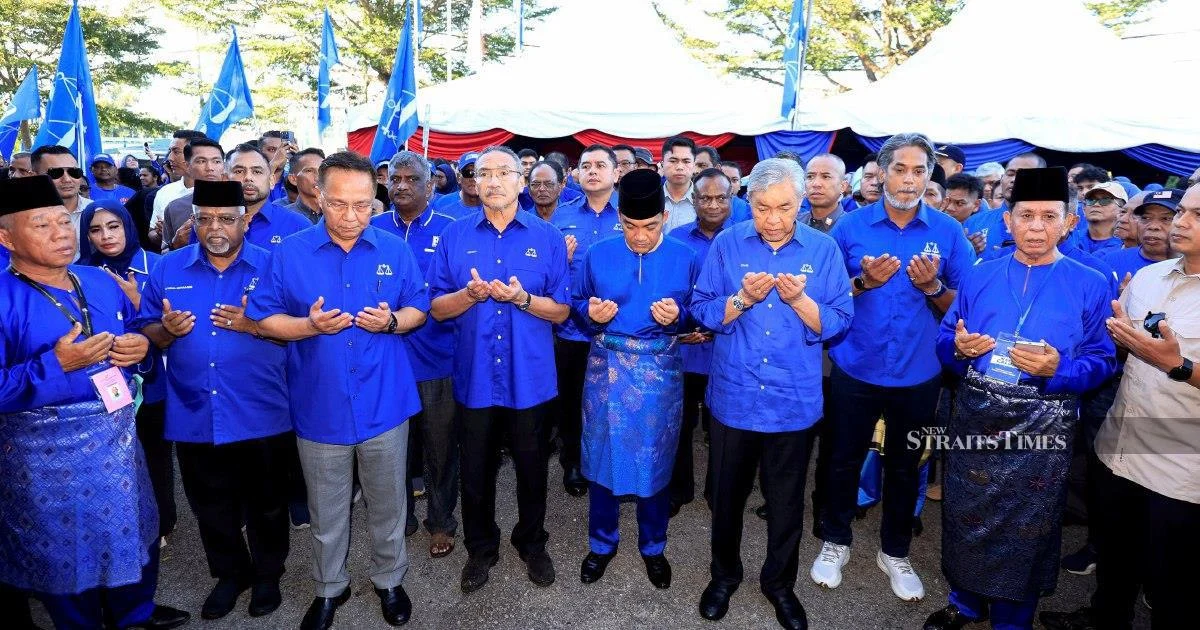
The arrival of Barisan Nasional's senior hierarchy at Simpang Renggam District Council underscored the coalition's determination to project a consolidated front as the Johor state election enters its critical phase. Datuk Onn Hafiz Ghazi, the incumbent Chief Minister, received a tangible show of confidence from party bigwigs whose presence at the morning event conveyed a message of organisational unity at a moment when political momentum matters considerably.
This gathering represents a calculated deployment of BN's most prominent figures, a strategy designed to energise the party machinery at grassroots level whilst simultaneously broadcasting to voters that the coalition maintains robust internal cohesion. In Malaysian politics, such demonstrations of leadership solidarity often translate into electoral messaging, reassuring party members and sympathetic voters that internal fractures—if any—remain manageable and that the coalition's direction remains steady under Onn Hafiz's stewardship in Johor.
The Simpang Renggam event carries particular significance given Johor's historical weight within Malaysian politics. The state has consistently served as a critical testing ground for national coalitions, and electoral performance here frequently foreshadows broader trends at the federal level. BN's decision to concentrate senior firepower in support of its Johor chief minister reflects the stakes involved and the coalition's recognition that maintaining control of this strategically important state depends upon projecting strength and conviction.
Onn Hafiz himself has navigated a complex political landscape since assuming the chief ministerial post, balancing internal BN dynamics whilst managing relationships with federal authorities. The explicit backing from party heavyweights functions as an endorsement of his leadership record and provides him with enhanced credibility when campaigning across the state's various constituencies. For supporters within the party apparatus, such visible support from the upper echelons validates their continued commitment to the coalition's agenda in Johor.
The timing of this show of force carries operational implications beyond mere symbolism. Election campaigns in Malaysian states demand sustained energy and coordination across multiple levels of party organisation. When national-level leaders physically appear in support of a state-level figure, they inject momentum into campaign machinery, signal to party workers that resources and attention from headquarters remain focused on the state contest, and demonstrate to local communities that the state administration enjoys backing from the broader national structure.
BN's coalition composition itself gains relevance in this context. The gathering of multiple party heavyweights—rather than a single senior figure—suggests a broad-based commitment across BN's constituent parties and factions. This becomes important in Johor, where multiple BN component parties maintain significant grassroots presence and where internal coalition management has historically required careful calibration. The unified turnout communicates that various party interests have aligned behind Onn Hafiz's continued leadership.
For opposition parties and political observers, such displays often prompt tactical recalibrations. When a ruling coalition demonstrates internal solidarity and senior leadership engagement, it complicates opposition strategies of targeting disaffection or exploiting perceived weaknesses within the ruling structure. The Simpang Renggam event thus functions partly as a preemptive political move, establishing narrative control before opposition forces can characterise BN as fragmented or lacking conviction.
Johor's electoral complexities extend beyond simple BN-versus-opposition dynamics. The state encompasses diverse demographic constituencies, economic concerns ranging from manufacturing to agriculture to services, and longstanding community organisations that political parties must navigate carefully. BN's heavyweight deployment in Simpang Renggam serves partly to confirm the coalition's attentiveness to various district-level concerns and to demonstrate that party leadership—not merely local representatives—remains invested in addressing them.
The Chief Minister's position in Johor carries weight that extends beyond the state itself. Johor's significant economic contribution to national GDP, its geographic proximity to Singapore, and its role as a manufacturing and logistics hub mean that state-level governance receives attention from federal authorities and international observers. The BN leadership's public backing of Onn Hafiz signals confidence in his administration's management of state affairs and his capacity to continue stewarding Johor's relationship with federal policymaking and regional economic dynamics.
Looking forward, this consolidation of BN support establishes a foundation for the election campaign phase. With senior leaders having publicly demonstrated confidence in Onn Hafiz's direction, the coalition enters subsequent campaigning with its internal narrative largely settled. Party representatives at all levels can now campaign with clarity regarding their leadership's position, reducing the likelihood of contradictory messaging that might confuse voters or embolden opposition critics.
The broader Southeast Asian context adds another dimension to this gathering. As regional democracies grapple with coalition politics and the challenge of maintaining electoral dominance amid changing voter preferences, BN's approach in Johor offers instructive lessons about internal cohesion strategies. The deliberate presentation of unified leadership reflects understanding that modern voters assess not merely policy positions but also the apparent stability and conviction of ruling structures.
Ultimately, the Simpang Renggam gathering functions as both tactical campaign manoeuvre and strategic positioning statement. By concentrating senior leadership presence in support of Datuk Onn Hafiz Ghazi, Barisan Nasional communicates its commitment to retaining Johor whilst simultaneously reinforcing internal party discipline and messaging consistency. Such orchestrated displays of solidarity have become routine elements of modern Malaysian electoral politics, yet their effectiveness in translating into votes remains a subject of ongoing analysis and adjustment as voter expectations and media dynamics evolve.

