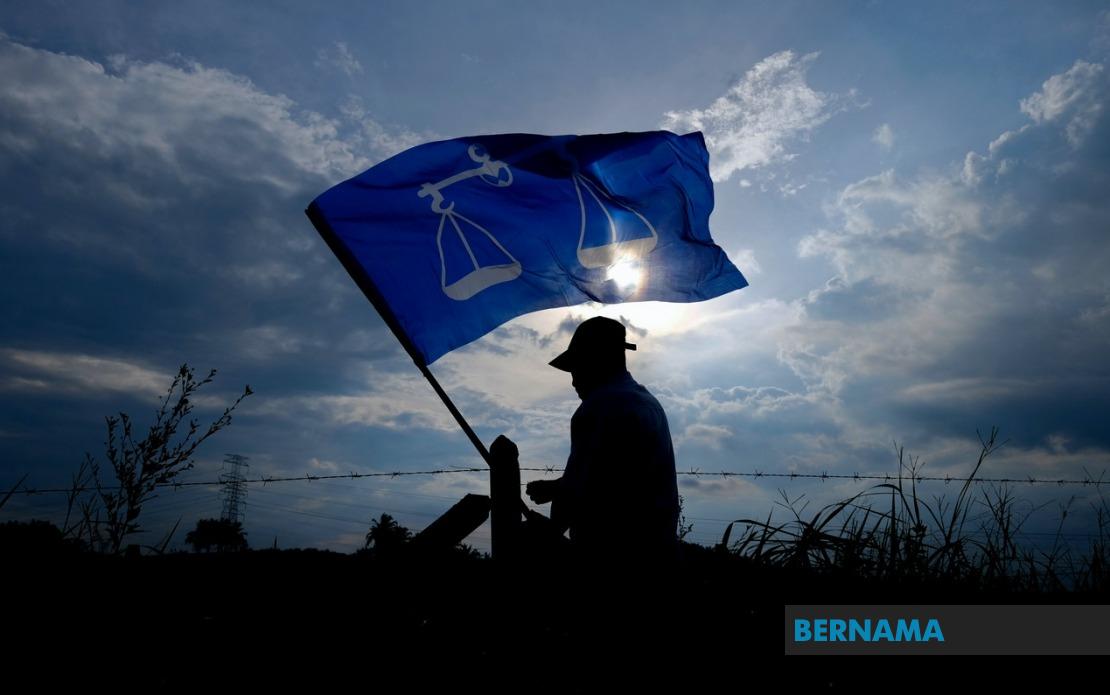
Barisan Nasional intends to fine-tune its approach for the forthcoming Negeri Sembilan state election by accounting for the state's particular demographic makeup and established voting trends, according to BN chairman Datuk Seri Dr Ahmad Zahid Hamidi. The Deputy Prime Minister underscored that a one-size-fits-all strategy would prove inadequate given Negeri Sembilan's distinct characteristics relative to other Malaysian states, both in terms of legislative representation and population composition. This targeting methodology reflects a broader shift toward data-driven political strategy across major coalitions in Malaysia, where understanding granular variations between state-level electorates has become increasingly critical for maintaining electoral competitiveness.
Ahmad Zahid elaborated that the configuration of Negeri Sembilan—encompassing its specific number of state assembly seats, population structure, and established patterns of voter behaviour—necessitates a customized formula distinct from BN's approaches in other jurisdictions. The party leadership plans to unveil its slate of candidates during the current week, signalling the culmination of internal deliberations on seat allocation and individual nominations. This methodical approach contrasts with historical practices where state-level strategies often mirrored federal blueprints without substantial local adaptation, suggesting BN's recognition that electoral success increasingly depends on responsiveness to localized conditions and constituency-specific dynamics.
The announcement emerged during a public engagement where Ahmad Zahid attended a briefing involving the Rural and Regional Development Ministry's contingent preparing for the WorldSkills Shanghai 2026 competition. The setting underscored the interconnection between BN's electoral positioning and its broader governance messaging, with the party leveraging developmental initiatives to reinforce its administrative credentials during a politically sensitive period. Deputy Rural and Regional Development Minister Datuk Rubiah Wang's attendance reflected the coalition's coordinated messaging strategy across multiple political and economic fronts.
BN's confidence in its strategic realignment appears buoyed by its recent performance in the Johor state election, held the previous Saturday. Ahmad Zahid attributed that victory to the coalition's organizational resilience and capacity for creative problem-solving throughout the campaign period. The Johor result, widely interpreted as validating BN's resurgence under current leadership, provides a template that the coalition evidently intends to adapt for application in Negeri Sembilan's distinct political landscape, though without assuming wholesale transferability across state boundaries.
Regarding coalition dynamics, Ahmad Zahid downplayed expectations of imminent formal arrangements with PAS concerning the Negeri Sembilan Menteri Besar position or broader electoral cooperation. He emphasized that discussions with the Islamic party remain preliminary, characterized by mutual understandings rather than binding commitments. This cautious framing appears designed to preserve BN's negotiating flexibility while avoiding premature public announcements that might constrain leadership options or provoke internal party dissension. The distinction he drew between informal dialogue and formalized agreement reflects a deliberate rhetorical strategy to manage expectations among both coalition partners and the broader electorate.
The BN chairman's comments carry particular weight given ongoing discussions about power-sharing arrangements within Malaysia's coalition architecture. Negeri Sembilan's electoral dynamics—traditionally influenced by both peninsular Malay-Muslim demographics and the state's specific institutional arrangements—require careful calibration of seat distribution and candidate selection to maintain internal coalition cohesion while maximizing overall competitive advantage against opposition forces. The emphasis on demographic and voting pattern analysis suggests BN has invested in sophisticated electoral analytics to guide its decision-making processes.
When pressed regarding calls for Housing and Local Government Minister Nga Kor Ming's resignation—the DAP deputy chairman facing criticism from various quarters—Ahmad Zahid adopted a notably reconciliatory tone. He contended that inflammatory political rhetoric, while acceptable within opposition contexts, becomes counterproductive when coalition partners share governing responsibility. His assertion that he and Nga maintain friendly relations and his stated intention to meet with him reflected efforts to publicly demonstrate Unity Government cohesion despite underlying tensions over specific policy positions and ministerial conduct.
The broader context surrounding Ahmad Zahid's remarks involves sustained pressure on the Unity Government from multiple directions. Opposition forces continue attempting to erode coalition solidarity through targeted criticism of individual members, while internal coalition dynamics require constant management to prevent individual grievances from escalating into structural threats to the governing arrangement. Ahmad Zahid's insistence that Unity Government leadership maintains professional relationships and operational coordination suggested deliberate signalling to both internal constituencies and external observers that the coalition remains functional despite recurring controversies.
For Malaysian political observers, Ahmad Zahid's statements illuminate the sophisticated calculus now governing BN's electoral strategy. Rather than applying standardized approaches across all state contests, the coalition increasingly recognizes that success requires appreciating how demographic variables, historical voting patterns, and localized political configurations create distinct opportunities and constraints in each jurisdiction. This analytical sophistication, if executed effectively, could enhance BN's competitiveness in Negeri Sembilan and potentially establish a replicable model for future state-level campaigns, contingent upon the coalition's ability to translate demographic insights into effective candidate recruitment and campaign execution.
Looking forward, the timing of BN's candidate announcement and the specific composition of its slate will reveal how thoroughly the party has internalized demographic considerations into its decision-making processes. The Negeri Sembilan election represents a significant test of whether BN's evolving strategic approach—combining sophisticated voter analytics with adaptive coalition management—can sustain the electoral momentum generated by its recent Johor success. For regional observers and Southeast Asian political analysts, the contest will provide valuable indicators regarding whether major Malaysian coalitions have fundamentally upgraded their electoral strategies or merely adjusted rhetorical framing around traditional power-sharing arrangements.

