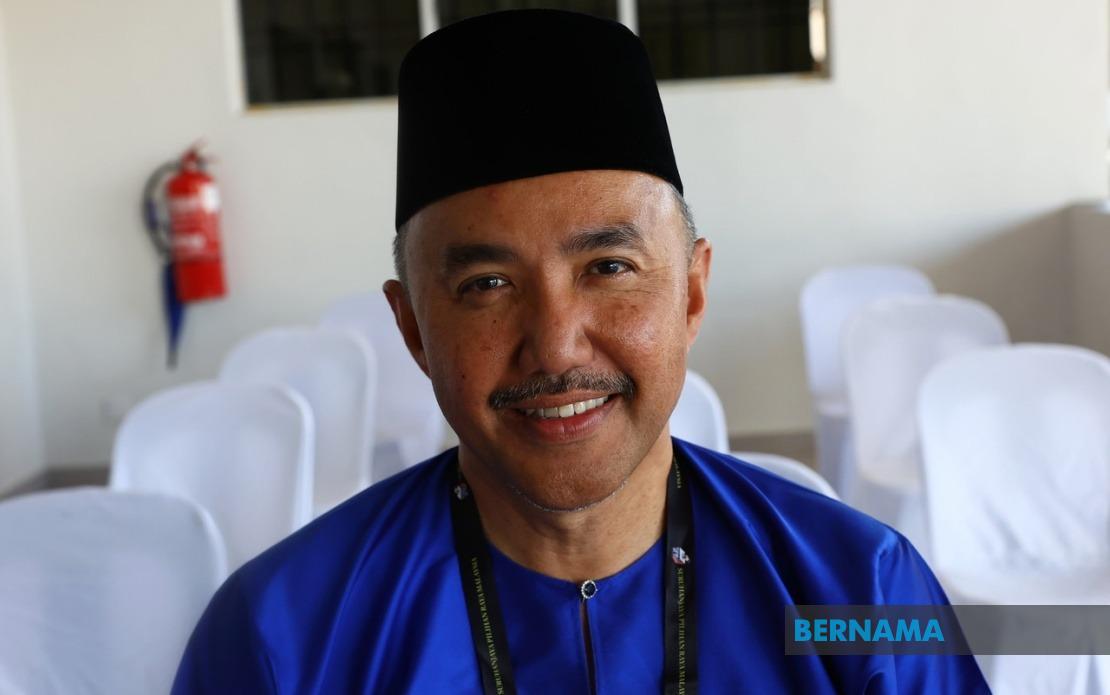
Barisan Nasional is projecting confident gains among Federal Land Development Authority voters in Kulai ahead of the 16th Johor state election, signalling that targeted welfare initiatives and land title resolutions have strengthened the coalition's standing in traditionally important rural constituencies. The optimism centres on four FELDA settlements spanning multiple state seats within the Kulai parliamentary constituency, where nearly 7,000 registered voters hold potential sway over electoral outcomes in a state where rural constituencies carry considerable political weight.
Datuk Mohd Jafni Md Shukor, who chairs the BN machinery in Kulai and is defending his own seat of Bukit Permai, outlined the rationale for his coalition's confidence during a campaign visit. The three state constituencies of Bukit Permai, Bukit Batu, and Senai together encompass FELDA Taib Andak, FELDA Inas, FELDA Bukit Permai, and FELDA Bukit Batu, representing a concentrated pocket of swing voters whose allegiances have shifted significantly over recent electoral cycles. The 2018 state election proved particularly punishing for BN across FELDA areas, a pattern that subsequently improved somewhat in the 2022 federal polls, suggesting the community's voting preferences remain fluid and responsive to policy interventions.
Jafni attributed the anticipated turnaround to what the Johor state government frames as a deliberate, multi-year commitment to FELDA communities under Menteri Besar Datuk Onn Hafiz Ghazi. This framing carries particular resonance in Malaysian electoral politics, where FELDA settlers historically represented a cornerstone of rural BN support before erosion began in the early 2010s. The coalition has channelled educational assistance through the Johor Education Foundation, targeting FELDA children whose families often face income constraints that place tertiary education beyond reach. Such targeted welfare measures serve dual purposes within electoral strategy: they address genuine grievances whilst simultaneously creating visible touchpoints through which the government claims credit.
A signature achievement the state government highlights involves resolving protracted land title disputes affecting FELDA settler families. According to Jafni, ownership applications have now been processed at a 99.9 per cent settlement rate, eliminating a source of long-standing frustration that had become symbolically important within FELDA communities. For many settlers, property disputes represented not merely administrative inconvenience but challenges to generational security and inheritance rights. The resolution of such issues often carries disproportionate electoral weight, as beneficiaries view government intervention as directly consequential to family welfare.
The Kulai contest itself presents a four-cornered fight reflective of Johor's increasingly fragmented political landscape. Jafni faces challengers from Muhammad Aidil Riduan Mohd Yusof representing Parti Bersama Malaysia, Mohamad Shafwan Ani from Pakatan Harapan, and M. Lina Manoh of Perikatan Nasional. This configuration mirrors broader shifts in Malaysian politics, where the traditional BN-versus-Opposition binary has fractured into multiple competing coalitions. For FELDA voters particularly, the proliferation of choices creates unprecedented opportunities to shift allegiances without necessarily defaulting to established opposition blocs, potentially benefiting whichever coalition successfully articulates the most compelling development narrative.
The timing of Jafni's campaign messaging reveals a calculated strategy to frame this election as a mandate for continuity rather than change. He emphasised that four years of state government development programmes remained insufficient to complete planned initiatives, positioning a second-term victory as prerequisite for sustained progress. This narrative acknowledges implicit criticism that BN's initial term delivered unevenly distributed benefits whilst simultaneously offering the prospect of accelerated delivery should voters grant fresh legitimacy. For rural constituencies like those within Kulai, such framing proves particularly potent, as infrastructure and welfare expansion remain ongoing priorities rather than settled achievements.
Johor's electoral dynamics have evolved considerably since BN's difficulties in 2018, when the state government fell into Pakatan Harapan's hands for the first time in Malaysian history. The subsequent reversion to BN control in 2022, facilitated by internal opposition fragmentation and strategic crossovers, provided the coalition with renewed opportunity to reshape rural voting patterns. However, consolidating gains requires sustained engagement rather than mere administrative competence. FELDA communities, having shifted loyalties in recent elections, remain available to opposition efforts should BN governance falter or competing coalitions offer credible alternative programmes.
The electoral calendar provides minimal margin for error, with early voting scheduled for July 7 and the main polling day on July 11. This compressed timeframe constrains field operations and limits campaign dynamics compared to longer electoral campaigns. For BN, leveraging existing administrative machinery and welfare programme visibility becomes particularly crucial when campaign windows narrow. FELDA settlers, accustomed to direct government engagement and familiar with welfare distribution mechanisms, may prove more responsive to ground-level mobilisation than to broader rhetorical appeals.
Looking beyond Kulai specifically, FELDA voting patterns across Johor carry implications for the coalition's statewide performance. If BN successfully consolidates FELDA support as current messaging suggests, the coalition would shore up its rural flank and secure constituencies typically more resistant to opposition breakthrough strategies. Conversely, sustained defection from FELDA areas would signal that welfare initiatives and administrative improvements remain insufficient to reverse accumulated grievances or overcome the effects of political fragmentation. The 4,755-vote majority that Jafni secured in 2022 provides a buffer but hardly guarantees success against a divided opposition pool. Malaysian electoral mathematics increasingly reward coalitions capable of sustaining broad support networks, and FELDA communities' electoral trajectory has become a key indicator of whether established parties can adapt to voters' shifting expectations.

