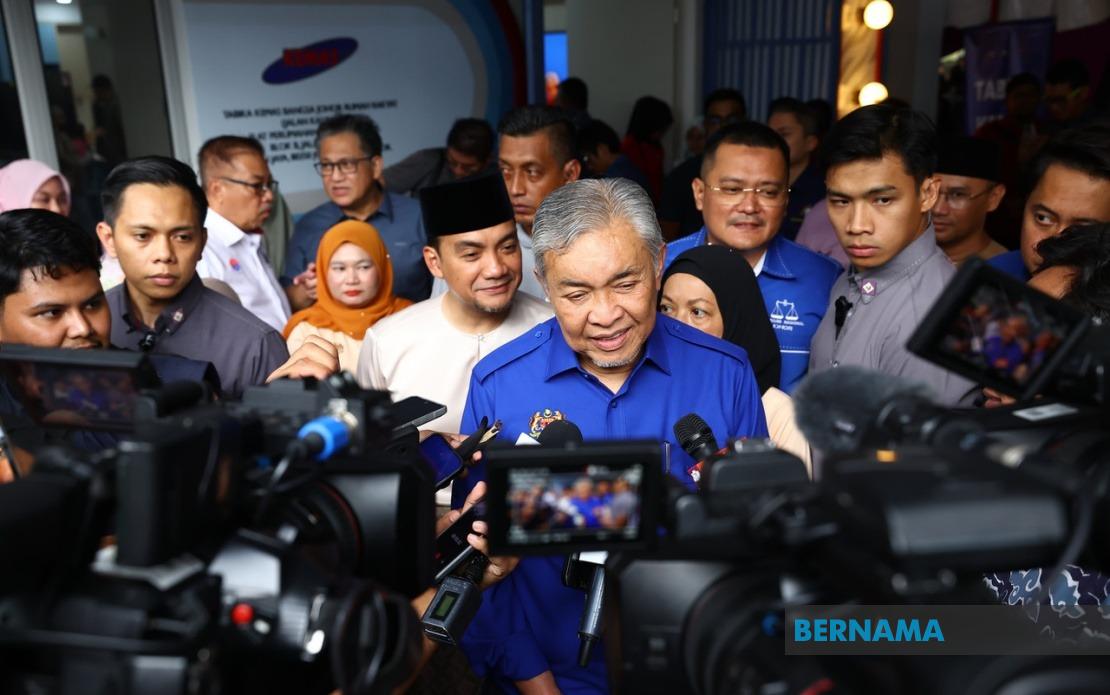
Barisan Nasional has signalled a measure of political civility ahead of the Johor state election by publicly acknowledging the merits of its main rival's campaign promises. BN chairman Datuk Seri Dr Ahmad Zahid Hamidi made the statement after reviewing Pakatan Harapan's election manifesto, which was unveiled on the campaign trail in the southern state. The Deputy Prime Minister's remarks underscore how Malaysia's major political coalitions continue to engage with one another's policy platforms, even as they compete intensely for voter support in state-level contests.
Ahmad Zahid's acknowledgement reflects the expectations of a mature democratic system where competing parties can respect the electoral process whilst maintaining robust partisan disagreement. Speaking to reporters during a community engagement session in Johor Bahru, he noted that as a democratic nation, BN welcomes substantive proposals from all parties participating in the election. This framing positions BN as a coalition comfortable enough in its political standing to acknowledge opposition ideas without fear of appearing weak or indecisive.
Packatan Harapan's manifesto, launched on the same day, comprises ten pledges aimed at addressing voter concerns across multiple areas. The opposition coalition has promised a dedicated Johor Health Scheme to improve healthcare accessibility, assistance with housing deposits for first-time buyers—a particularly relevant commitment given Malaysia's escalating property prices—and a RM500 million fund earmarked for youth development initiatives. Additional commitments centre on strengthening the education sector, an evergreen issue in Malaysian politics where parents across all socioeconomic backgrounds demand better school facilities and teaching standards.
In contrast, BN is positioning its campaign around demonstrated delivery rather than new promises. Ahmad Zahid emphasised that BN's manifesto draws legitimacy from the state government's previous term, during which it fulfilled more than 90 per cent of its commitments. This claim, if substantiated, represents a significant political asset in an environment where voter cynicism about unfulfilled promises runs high. By tying its current manifesto to concrete achievements, BN attempts to differentiate itself as a coalition with a proven track record of converting campaign rhetoric into actual policy implementation.
The coalition's manifesto itself claims comprehensive coverage across all life stages and demographic groups. According to Ahmad Zahid, BN's programme extends benefits from expectant mothers through to elderly citizens, encompassing children in early education, school pupils, university students, and single parents. This broad-based approach reflects a deliberate strategy to counter accusations that BN favours particular communities, instead presenting itself as a government that delivers tangible support to anyone residing in Johor regardless of background or identity.
Ahmad Zahid, who holds the additional portfolio of Rural and Regional Development Minister, also offered a commitment to continued investment in Johor's infrastructure and development projects. His dual role as both federal minister and prominent national BN figure underscores how state elections in Malaysia remain intertwined with national political dynamics, with senior national leaders regularly campaigning and making development commitments on behalf of their respective coalitions. This integration of national and state politics often means that voters in state elections are effectively evaluating both local governance capacity and confidence in the national administration.
The political context of the Johor election extends beyond the immediate rivalry between BN and Pakatan Harapan. Johor has traditionally been considered a BN stronghold, though opposition parties have made incremental inroads in recent years. The state election thus carries implications for both local governance and national political momentum, particularly regarding which coalition can demonstrate electoral strength heading into potential federal-level contests. For Malaysian political observers, state elections serve as bellwethers for shifts in voter sentiment and emerging policy priorities across different regions.
The electoral mechanics underscore the competitive scale of the contest. The Johor state election encompasses 172 candidates competing across 56 state seats, with early voting scheduled for July 7 and election day set for July 11. This distribution of candidates reflects the fragmentation of Malaysian politics beyond the two main coalitions, with smaller parties and independent candidates also participating. The outcome will partly depend on whether BN can consolidate its traditional voter base whilst defending its record, or whether Pakatan Harapan can convert its policy proposals into actual electoral gains.
For Malaysian voters and political observers, the election represents an opportunity to evaluate how effectively both coalitions translate campaign promises into policy reality. In a state like Johor, with its significant urban-rural divide and economically diverse population, delivering on pledges concerning healthcare, housing, education, and youth opportunity will test the governance capacity of whichever coalition emerges victorious. Ahmad Zahid's public acknowledgement of opposition ideas, whilst asserting BN's superior track record, exemplifies how Malaysian political competition increasingly turns on questions of competence and delivery rather than purely ideological difference.
The broader significance of Ahmad Zahid's remarks extends to tone-setting within Malaysian electoral competition. By respecting opposition proposals whilst confidently asserting BN's advantages, the deputy prime minister models a form of partisan engagement that acknowledges legitimate policy debate. As Malaysia navigates a period of relative political fragmentation and coalition realignment, such gestures toward democratic civility may help maintain public confidence in electoral processes, even as fundamental disagreements between political camps remain sharp and substantive.

