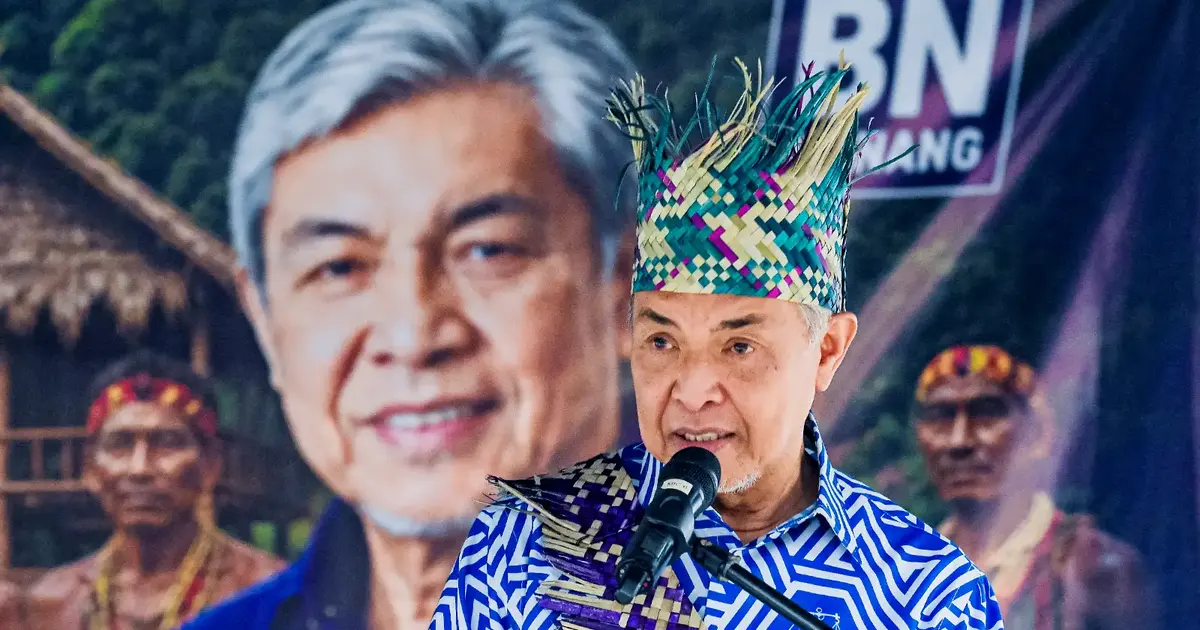
Barisan Nasional's leadership has committed to creating a dedicated officer position to oversee Orang Asli matters in Negeri Sembilan, with party chairman Ahmad Zahid Hamidi asserting that such a post could be operationalised through standard administrative channels should the coalition return to power. The initiative signals BN's attempt to strengthen its engagement with Malaysia's indigenous communities ahead of forthcoming electoral contests in the state, a demographic that has historically held substantial electoral influence across multiple constituencies.
The proposed post would be housed directly within the menteri besar's office, positioning Orang Asli concerns at a senior level of state governance rather than relegating them to peripheral departments or subcommittees. This structural placement reflects a recognition that indigenous affairs require executive-level attention and direct access to the state's chief administrator. According to Zahid Hamidi's statements, the position could be established without requiring legislative amendments or constitutional modifications, instead utilising existing administrative frameworks that grant the menteri besar discretion in staffing arrangements.
Orang Asli communities in Negeri Sembilan have long advocated for greater representation and dedicated institutional mechanisms to address their specific needs, ranging from land rights and resource access to education and healthcare delivery. The Orang Asli population, comprising several distinct groups with unique linguistic and cultural identities, face persistent marginalisation in terms of economic opportunities and government service provision. Establishing a specialised officer position would theoretically create a focal point for policy formulation and implementation tailored to indigenous concerns rather than addressing them as secondary considerations within broader state administration.
BN's pledge appears strategically calibrated to resonate with Orang Asli voters who have demonstrated growing political engagement and increased willingness to shift their voting patterns based on concrete policy commitments. In recent electoral cycles across Malaysia, indigenous communities have become increasingly discerning political actors, withdrawing support from coalitions perceived as indifferent to their grievances. The coalition's promise to formalise this position suggests an assessment that indigenous voter blocs represent a meaningful swing factor in Negeri Sembilan's competitive political landscape.
The administrative feasibility of implementing such a post without legislative hurdles presents an advantage for BN, as it sidesteps procedural delays that might delay delivery of campaign promises if the party returns to power. Zahid Hamidi's emphasis on administrative implementability indicates confidence that the proposal could move from campaign rhetoric to operational reality relatively swiftly, potentially demonstrating tangible commitment to indigenous communities within months rather than years of a new government assuming office.
Historically, Orang Asli representation in Malaysian governance structures has been fragmented, with responsibility distributed across multiple agencies and hierarchical levels. The Land and Native Titles Division, forestry departments, and various ministry-level offices all claim jurisdiction over different aspects of indigenous affairs, frequently resulting in policy incoherence and diluted implementation. A centralised officer reporting directly to Negeri Sembilan's chief executive could theoretically coordinate these disparate efforts and provide indigenous communities with a single, identifiable point of contact within state government.
The timing of this announcement carries significance as Malaysian politics enters a phase of uncertain electoral schedules and shifting coalitional dynamics. Various states face pending elections, and political parties are aggressively competing for constituencies where voter preferences remain volatile. Indigenous communities, whose collective electoral participation can swing results in mixed demographics constituencies, have become target audiences for explicit policy commitments. BN's promise represents the type of differentiated, community-specific undertaking designed to capture attention and demonstrate policy sophistication beyond generic campaign slogans.
Implementing such a position effectively would require careful attention to operational parameters, including the officer's scope of authority, budget allocation, and relationship to existing state institutions. Without clarity on these structural details, even administratively established positions risk becoming ineffectual sinecures rather than meaningful mechanisms for advancing Orang Asli interests. The success of BN's pledge would ultimately depend on whether the appointed officer possesses genuine decision-making authority or functions merely as an intermediary without substantive influence over state resource allocation and policy direction.
For Malaysian observers tracking indigenous affairs and state governance, this announcement provides a window into how political coalitions are attempting to reconstruct electoral support through targeted institutional offerings. Whether such promises materialise into functional governance structures or remain unfulfilled campaign rhetoric will significantly shape indigenous communities' future political engagement and electoral participation patterns across Negeri Sembilan and potentially influence similar constituencies throughout Malaysia.

