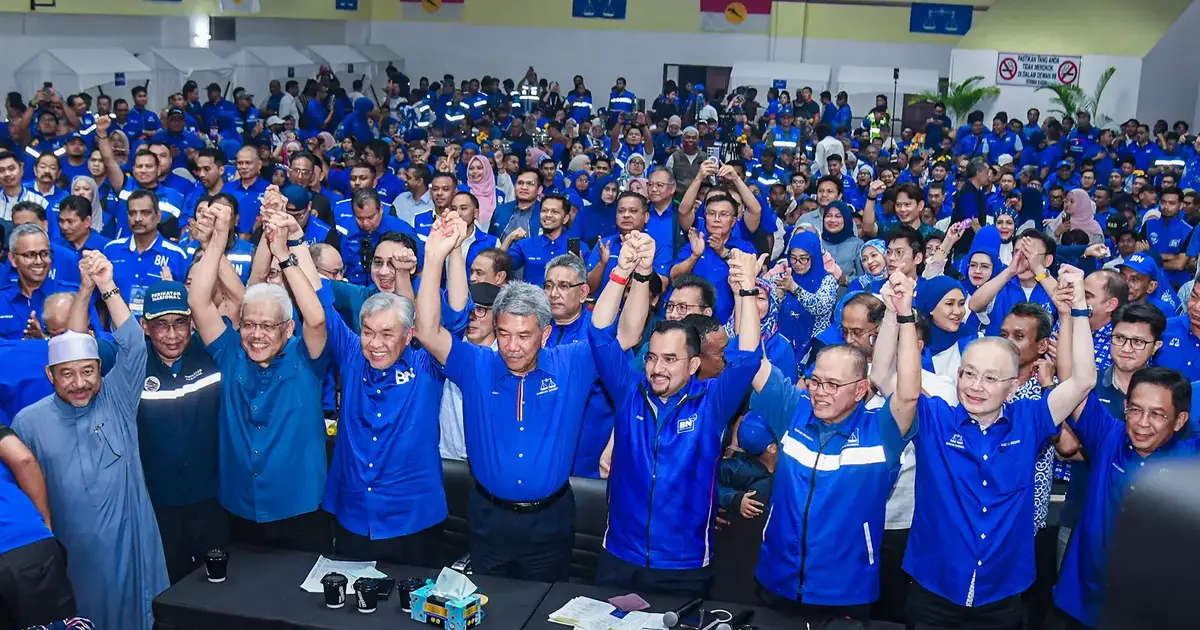
The proposed strengthening of ties between Barisan Nasional and Perikatan Nasional hinges critically on settling contentious seat-sharing arrangements and selecting a prime ministerial candidate far earlier than conventional timelines suggest, according to political observers monitoring the coalition's trajectory.
Analyst Tawfik Yaakub emphasises that the alliance cannot afford drawn-out negotiations over electoral mechanics, particularly given the administrative and logistical demands inherent in orchestrating a nationwide poll. The complexity of coordinating candidates across multiple states and constituencies—not to mention navigating the competing interests within and between two sprawling political coalitions—demands early consensus on foundational issues that typically remain unresolved until weeks before nomination day.
The timing imperative reflects deeper structural challenges confronting both blocs. Barisan Nasional, traditionally composed of UMNO and MCA alongside smaller component parties, has rebuilt its parliamentary presence since the 2022 general election. Perikatan Nasional, anchored by PAS and Bersatu, emerged as a formidable opposition force following the 2022 contest and has consolidated considerable support in certain constituencies. Merging these two entities into a coordinated electoral machine requires unprecedented alignment on strategic matters.
Seat allocation represents perhaps the most intractable negotiation point. Both coalitions will demand high-value constituencies where their respective parties enjoy entrenched support bases. UMNO, as BN's largest component, will resist any proposal perceived as disadvantageous relative to its electoral expectations. Similarly, PAS and Bersatu within PN will calculate their potential gains rigorously. Early agreement prevents last-minute brinkmanship and allows party machinery to mobilize behind unified candidates without internal sabotage or lukewarm campaigning.
The selection of a prime ministerial candidate carries equal significance. Coalition partners must determine whether the premiership defaults to BN's UMNO—reflecting the bloc's historical dominance—or whether PN's leadership warrants the position. This decision carries profound implications for party hierarchies, ministerial portfolios, and policy direction. Deferring this choice until the eve of an election invites fractious disputes and creates uncertainty that opposition parties will exploit mercilessly.
Analysts note that Malaysia's electoral landscape has grown substantially more volatile in recent years. The 2022 general election produced a hung parliament, demonstrating that voter preferences no longer guarantee clear mandates. A poorly coordinated BN-PN campaign risks fragmentation, with local party leaders potentially running as independents or making tactical agreements with other blocs if national coalition terms prove unfavourable. This scenario could devastate the combined alliance's parliamentary representation.
International precedents offer cautionary lessons. Coalition partners elsewhere have foundered on seat disputes, with junior partners withdrawing from arrangements if their expectations were unmet. Malaysia's political history includes numerous examples of coalition fractures triggered by perception that negotiations were conducted asymmetrically or that smaller parties were excluded from meaningful consultations.
The preparatory work extends beyond mathematics. Campaign messaging requires coordination to prevent competing narratives that alienate voters. Regional variations in messaging strategy demand discussion: what resonates in urban Selangor differs markedly from rural Kelantan or Sabah's electoral dynamics. Unified positioning on critical issues—economic policy, religious matters, federal-state relations—must be hammered out beforehand to project coherence.
Furthermore, the alliance must establish transparent dispute-resolution mechanisms. Political coalitions inevitably encounter friction over candidate nominations, with multiple aspirants contesting selection processes. Pre-established protocols for resolving these conflicts spare the partnership from public acrimony that would undermine its credibility with voters. Clear guidelines on intervention by federal party leadership versus state autonomy prevent contradictory directives that paralyse campaign operations.
For Malaysian voters and the broader political system, early coalition consolidation offers tangible benefits. It reduces uncertainty, allowing citizens to understand their electoral choices clearly rather than confronting shifting alliances throughout the campaign period. It encourages substantive policy discussion over procedural intrigue, elevating the quality of public discourse. It also provides security to investors and market participants who value political stability and predictable governance frameworks.
The regional dimension merits consideration as well. Southeast Asian observers and Malaysia's international partners monitor coalition stability as a barometer of institutional robustness. A well-organized, coherent BN-PN alliance signals effective democratic functioning, whereas chaotic negotiations broadcast governance weakness and invite external actors to scrutinize Malaysian political developments more intensely.
Ultimately, analysts contend that the window for productive BN-PN negotiations narrows continuously as general election dates approach. Setting seat allocations and nominating a PM candidate during comparatively calm periods allows adjustments and confidence-building measures. Attempting similar work amid campaign fever and media frenzy virtually guarantees acrimony. The coalition's capacity to demonstrate discipline and forward-planning at this nascent stage will shape not merely its electoral prospects but also its credibility as a governing vehicle.

