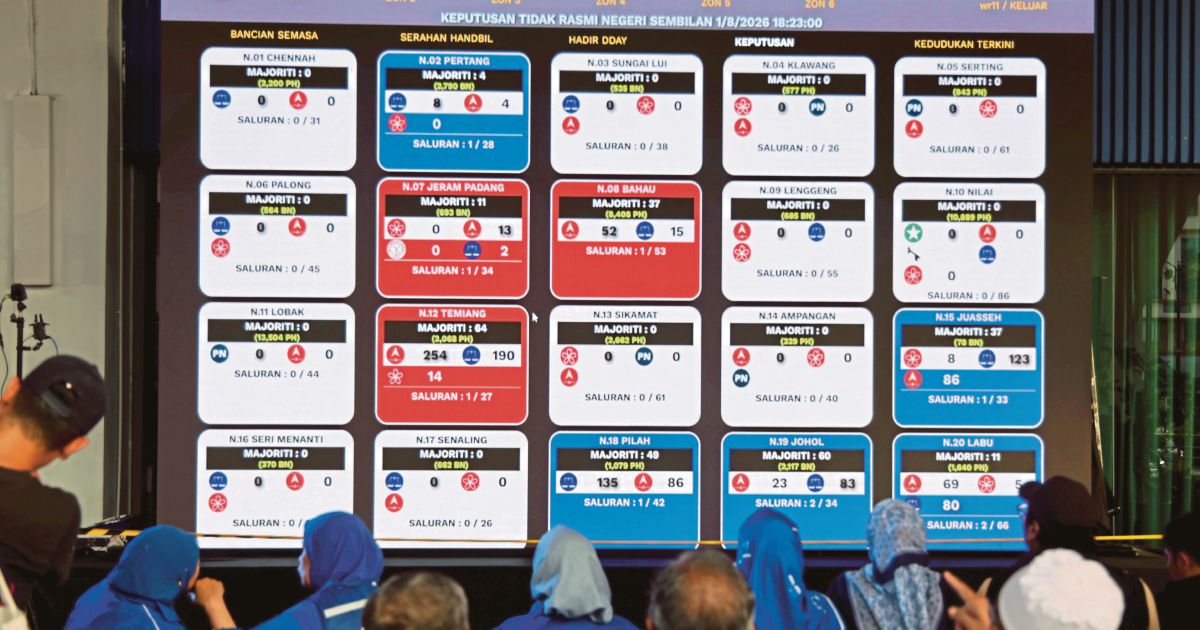
Umno's Datuk Dr Asyraf Wajdi Dusuki claimed on Tuesday that the combined Barisan Nasional and Perikatan Nasional coalition has secured 23 seats in the Negri Sembilan state assembly, a figure the party says is sufficient to govern the central Malaysian state following the recent state election.
The claim underscores ongoing political maneuvering in Negri Sembilan as coalition partners attempt to consolidate their positions in the legislature. The Negri Sembilan state assembly comprises 36 seats total, meaning a coalition would need at least 19 seats to command a simple majority and form government. If verified, the 23-seat tally would provide BN-PN with a comfortable working majority for their administration.
Negri Sembilan has been a politically significant state within Malaysia's federal landscape, often reflecting broader national political trends. The state has traditionally been a stronghold for Umno and Barisan Nasional, though recent years have seen increasing electoral competition and shifting voter preferences similar to patterns observed across the peninsula. The coalition's claim of 23 seats, if accurate, would represent the outcome Malaysian observers have anticipated given pre-election polling and historical voting patterns in the state.
The statement from Datuk Dr Asyraf Wajdi Dusuki carries weight as an Umno figure, though it remains unofficial until formal constitutional procedures are completed. In Malaysian state politics, such announcements typically precede formal swearing-in ceremonies where elected representatives declare their allegiance and the chief minister designate presents themselves to the state ruler for appointment. The timing of such claims is crucial, as they can influence fence-sitting independent candidates or representatives from smaller parties considering which coalition to align with during the critical post-election window.
The cooperation between Barisan Nasional and Perikatan Nasional in Negri Sembilan reflects the pragmatic coalition-building that has characterized Malaysian politics since the 2022 federal election. These two major coalitions have collaborated in several states to maximize their combined parliamentary or state assembly representation, though such arrangements are often fluid and subject to last-minute adjustments based on individual politician decisions and internal coalition negotiations.
For Malaysian and Southeast Asian observers, the outcome in Negri Sembilan carries implications beyond the state's borders. The state serves as a microcosm of larger political forces at play across Malaysia, and the success or failure of the BN-PN coalition in governing effectively here could influence confidence in their partnership elsewhere. State governments in Malaysia have considerable autonomy over land, local government, and resource management, making Negri Sembilan's administration consequential for residents and regional stability.
The Negri Sembilan election results also reflect broader questions about voter preferences regarding governance, development priorities, and political leadership quality. Rural constituencies in the state have historically prioritized infrastructure and agricultural support, while urban areas around Seremban and other towns focus on economic opportunity and quality-of-life improvements. The makeup of the assembly will likely determine policy priorities for the coming term.
Peerkatan Nasional's participation in state coalitions represents its strategy of expanding beyond its traditional strongholds in Kedah, Perlis, and Terengganu. By partnering with Barisan Nasional in Negri Sembilan and other states, PN aims to demonstrate governance capability and expand its claim to being a genuine alternative to established power structures, despite criticism that such alliances undermine its reformist positioning.
The claim by Datuk Dr Asyraf Wajdi Dusuki is subject to confirmation through formal processes. In Negri Sembilan's constitutional framework, the assembly speaker must be elected before the chief minister can be appointed, requiring majority support. The state also maintains a complex relationship with its traditional rulers, as Negri Sembilan features a unique monarchy system where power rotates among the district heads. This distinctive governance arrangement occasionally produces unexpected political dynamics compared to other Malaysian states.
The verification of seat allocations in Negri Sembilan will occur through official tallying by the state returning officer and subsequent constitutional procedures. Once formally confirmed, the coalition will need to select its chief minister candidate and present that individual to the Negri Sembilan ruler for appointment. The smoothness of this transition process could either strengthen or strain the BN-PN partnership depending on how contested selections become and whether all coalition members honor their agreements.
Polical analysts will be watching how the BN-PN administration performs in Negri Sembilan as a test case for state-level governance. The state faces challenges including economic diversification away from traditional sectors, infrastructure modernization, and managing rapid urbanization in certain districts while maintaining rural communities' quality of life. The coalition's ability to deliver on campaign promises and govern effectively during its tenure could influence voter behavior in future elections across multiple states.

