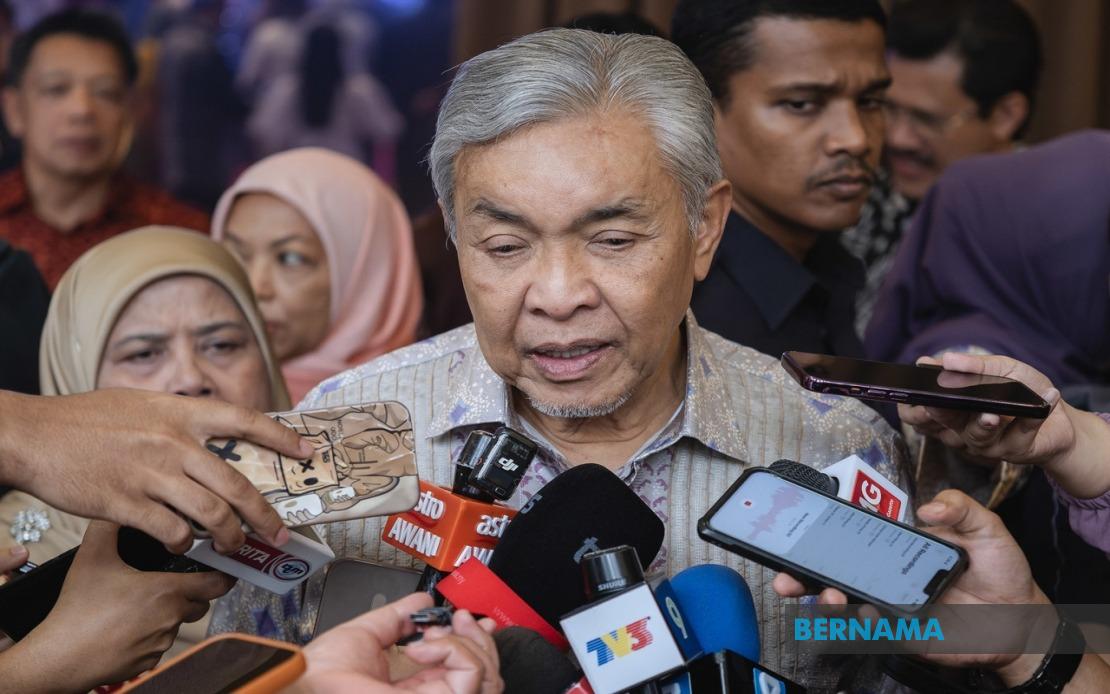
Barisan Nasional has drawn a clear boundary around its involvement in state affairs involving the Negeri Sembilan royal institution and the Council of Justice and Laws (DKU), according to Deputy Prime Minister Datuk Seri Dr Ahmad Zahid Hamidi. In a statement issued following a meeting with party leadership to coordinate preparations for the upcoming state election, Ahmad Zahid, who also leads UMNO, underscored that the coalition would maintain strict distance from any legal proceedings or decisions touching on the sultanate and its judicial mechanisms.
The pronouncement carries particular weight given the sensitive nature of royal institutions within Malaysia's constitutional framework. The royal establishment in Negeri Sembilan, as in other states, operates within carefully defined spheres of constitutional authority. Ahmad Zahid's explicit commitment to non-interference represents an effort to reassure stakeholders that electoral competition will not encroach upon institutional prerogatives or legal proceedings that fall outside the normal scope of partisan politics. Such clarity becomes especially important in a context where coalition partners may hold differing perspectives on governance priorities.
During remarks made at a Ministry of Rural and Regional Development ceremony in Kuala Lumpur, Ahmad Zahid emphasized that maintaining internal party cohesion constitutes the coalition's primary strategic focus entering the August 1 polling date. The 36-seat contest across Negeri Sembilan presents a distinctly different electoral landscape compared to the 15th state election, when BN collaborated with components of Pakatan Harapan through a cooperative arrangement. This time, the coalition will pursue victory independently, requiring unprecedented synchronization among its constituent parties and grassroots machinery across all organizational levels.
The shift toward a fully independent electoral approach marks a significant recalibration for BN in the state. Previously, the coalition had navigated the political terrain through formal partnerships with PH components, a strategy that yielded particular results but also involved complex coordination challenges and potential conflicts over resource allocation and candidate selection. The current posture suggests BN believes it can achieve stronger outcomes through unified action without requiring external partnerships, though such a calculation carries inherent risks if party discipline fractures along traditional factional lines.
Ahmad Zahid's emphasis on unity extends beyond symbolic messaging. Building consensus among leaders and members at federal, state, and district levels requires sustained organizational effort, particularly in a state where BN has faced variable electoral fortunes. The coalition must reconcile different priorities held by component parties, manage expectations regarding candidate nominations, and ensure that local leaders maintain momentum through the campaign season. This becomes especially critical given that grassroots organizations frequently operate with limited resources and must contend with persistent incumbent advantages held by rivals.
The explicit commitment to remaining outside legal and royal matters also reflects broader constitutional norms that have shaped Malaysian political practice. The separation between executive political actors and judicial institutions, while imperfect in practice, remains an aspiration embedded in the system. By articulating this position plainly, Ahmad Zahid positions the coalition as institutionally respectful, though observers should note such statements serve multiple audiences: party members requiring guidance on campaign conduct, potentially concerned civil society actors, and the royal establishment itself, which holds constitutional powers including dissolution authority.
For Negeri Sembilan specifically, the stakes surrounding these assurances carry concrete implications. The state's governance depends on effective coordination between executive and royal institutions across multiple policy domains. Any perception that electoral politics might influence or politicize legal proceedings could generate controversy, undermine institutional confidence, or create openings for opposition parties to frame BN as dismissive of constitutional proprieties. Ahmad Zahid's framing attempts to preempt such narratives by establishing clear demarcation lines before campaigning intensifies.
The decision to contest independently rather than through PH partnerships also reflects broader shifts in the national political landscape. Pakatan Harapan's own fragmentation and internal tensions have reduced the appeal of such arrangements for BN strategists. By pursuing victory through BN's own organizational strength, the coalition demonstrates confidence in its capacity to persuade voters without requiring external legitimacy. Whether this calculation proves correct will become evident through campaign dynamics and ultimately voting patterns on August 1.
Sector observers in Malaysia have grown accustomed to careful language around royal institutions and legal processes, reflecting the genuine constitutional constraints and sensitivities that structure politics in the federation. Ahmad Zahid's remarks fit within established patterns while also serving immediate tactical purposes for the Negeri Sembilan contest. The coming weeks will reveal whether such public commitments translate into sustained organizational discipline and whether party members interpret them as binding constraints or flexible guidelines subject to recalibration based on competitive pressures.
The timing of these assurances, made well in advance of polling day, suggests BN leadership anticipated potential concerns that might arise during campaigning. By establishing clear position statements beforehand, the coalition creates standards against which its conduct can be measured, while also providing talking points for party communicators should controversies emerge. This preventive approach reflects lessons learned from previous electoral cycles when inadequate clarity regarding institutional boundaries created space for criticism and undermined party narratives.
As campaigning begins in earnest across Negeri Sembilan's constituencies, the challenge for BN will involve translating these high-level commitments into consistent organizational practice. Individual candidates, district operatives, and party members must internalize the distinction between legitimate electoral advocacy and inappropriate involvement in matters properly reserved to royal institutions and legal councils. Maintaining such discipline while simultaneously pursuing aggressive campaigning requires careful messaging and sustained leadership attention throughout the campaign season.

