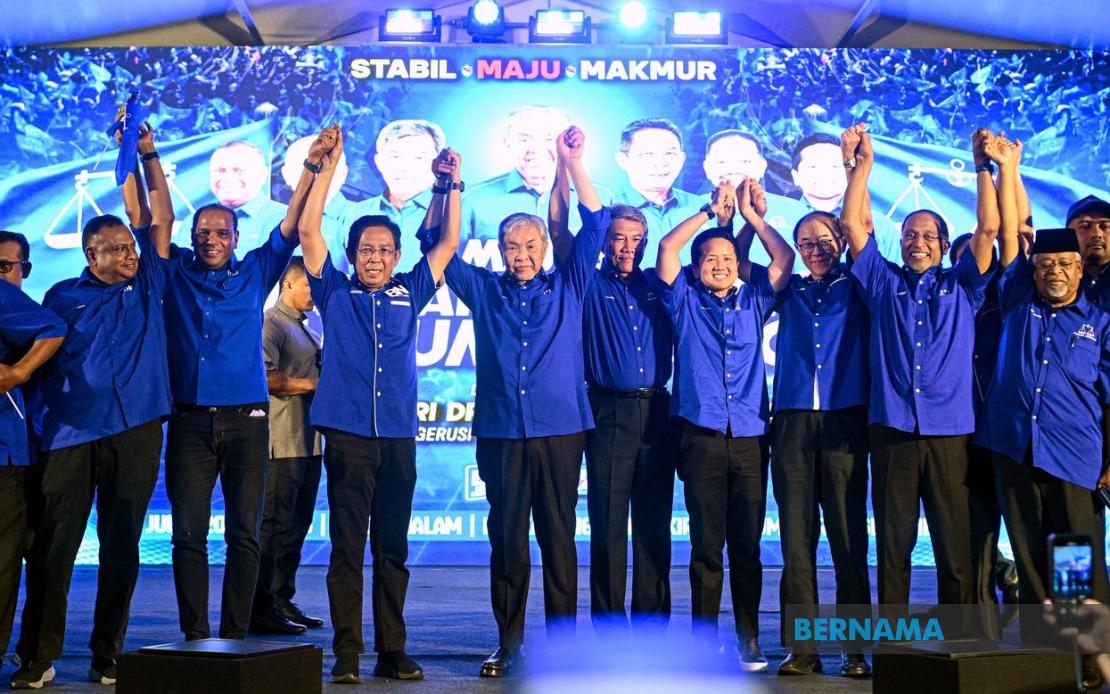
Barisan Nasional has solidified its electoral strategy for the 16th Negeri Sembilan state election by announcing a slate of 25 candidates during a campaign machinery launch held at Tuanku Abdul Rahman Stadium in Paroi. The coalition's decision to retain proven incumbents while introducing fresh blood signals confidence in its ability to maintain control of the state assembly, where the outcome will carry implications for Malaysia's broader political balance heading into the next general election cycle.
The centrepiece of BN's candidacy announcement is the retention of Negeri Sembilan BN chairman Datuk Seri Mohamad Hasan, who will contest Rantau for the ninth consecutive election since 2004. His continuous representation of the seat underscores his political resilience within the state's UMNO apparatus and his value as a stabilising figure for the coalition. The decision to reaffirm his candidacy came with explicit backing from UMNO president Datuk Seri Dr Ahmad Zahid Hamidi, demonstrating the party's commitment to maintaining its hold on constituencies where established leaders have cultivated strong grassroots networks.
Equally significant is the confirmation that Datuk Seri Jalaluddin Alias will defend Pertang, a seat he has held since 2013. In his dual capacity as Jelebu Member of Parliament and Negeri Sembilan UMNO Liaison Committee chairman, Jalaluddin represents the type of federal-state bridge-builder that UMNO values in competitive constituencies. His retention suggests BN's confidence that his federal parliamentary profile can translate into renewed support at the state level, particularly given the integrated challenges that state and federal representatives increasingly face when mobilising voters.
The coalition has also opted to retain several other tested performers at the state assembly level. Datuk Mohd Faizal Ramli will again contest Linggi, while Datuk Mustapha Nagoor seeks another term in Palong. These continuations reflect a conservative approach to candidate selection, relying on individuals who have already demonstrated their ability to win and hold office. In Malaysian state politics, where local personalities and long-standing community relationships often trump national political trends, such incumbency advantages can prove decisive.
However, the announcement revealed a significant gap in BN's electoral preparation: 11 state seats remain without confirmed candidates. These uncommitted constituencies include Klawang, Serting, Lobak, Sikamat, Ampangan, Bukit Kepayang, Mambau, Paroi, Lukut, Bagan Pinang, and Gemas. The scale of this incomplete roster—representing nearly 44 per cent of Negeri Sembilan's 26 state seats—suggests either ongoing internal negotiations among coalition partners UMNO, MCA, and MIC, or deliberate timing to announce candidates closer to the election date. This strategy could allow BN to respond to emerging political developments or address internal disputes without having candidates too long exposed to voter scrutiny.
The partial candidate slate also reflects the complex dynamics of BN's tripartite structure in Negeri Sembilan. Unlike states where UMNO dominates overwhelmingly, Negeri Sembilan has historically required careful seat allocation among coalition components. The delay in finalising all candidates may indicate ongoing discussions with MCA and MIC representatives regarding seat allocations and the relative attractiveness of different constituencies. Such internal coordination challenges, while normal in coalition politics, can sometimes create the impression of disorganisation if not carefully managed in public communications.
For Malaysian voters observing state-level politics, BN's approach in Negeri Sembilan offers broader lessons about coalition behaviour and electoral strategy. The decision to retain experienced incumbents while leaving numerous seats open demonstrates confidence balanced with caution—confidence that proven leaders can secure victory, and caution about committing candidates to seats where political fortunes may shift. In a regional context where opposition coalitions have demonstrated electoral capability, BN cannot afford complacency, yet cannot abandon the structural advantages that incumbent representatives provide.
The timing of this announcement, several months before the anticipated election date, also signals BN's intention to build momentum through extended campaigning. Early candidate announcements allow registered office-holders to begin grassroots mobilisation, attend local events, and establish campaign infrastructure. This extended runway contrasts with opposition coalitions that sometimes announce candidates closer to polling day, potentially due to their more fluid internal decision-making structures or resource constraints.
The Negeri Sembilan election carries significance beyond the state assembly itself. The 26-seat parliament represents a relatively tight political contest where performance improvements by either BN or opposition coalitions could shift the narrative heading into subsequent elections. A strong BN showing would reinforce narrative about coalition resilience, while opposition success would build momentum for future contests. Given Malaysia's delicately balanced political environment, state elections increasingly function as both genuine contests and national barometers.
As BN finalises its remaining candidates for the 11 uncommitted seats, party strategists will likely consider not only local constituency dynamics but also how their selections might influence overall political messaging. The mix of retained incumbents and pending new faces suggests the coalition is attempting to balance continuity with renewal, a perennial challenge in Malaysian politics where voter expectations for both stability and fresh leadership often coexist. How successfully BN manages this balance across all 26 constituencies may well determine whether the state remains a coalition stronghold or becomes contested terrain in Malaysia's evolving political landscape.

