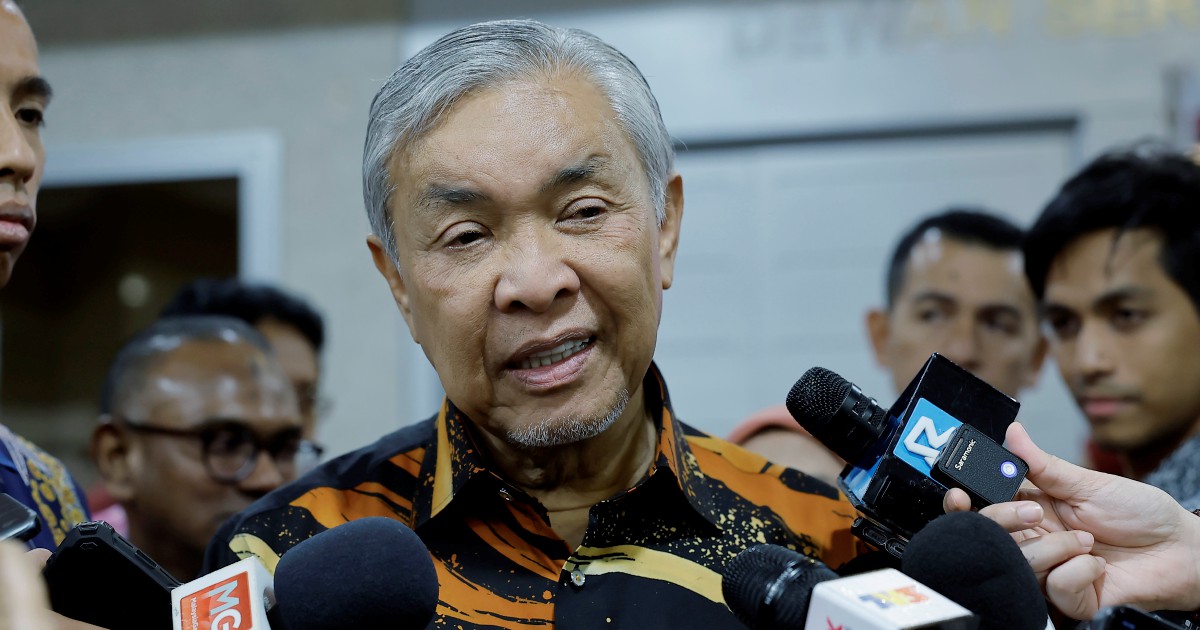
Barisan Nasional (BN) chairman Datuk Seri Dr Ahmad Zahid Hamidi has firmly pushed back against allegations that external actors influenced the recent appointment of Negri Sembilan's Menteri Besar, characterising such contentions as misguided commentary from those unfamiliar with Malaysia's political machinery. Speaking in Putrajaya, Zahid suggested that those levelling interference accusations fundamentally misunderstand the complexities and procedural realities that govern leadership selection within the coalition and its component parties.
The controversy surrounding the Menteri Besar appointment reflects deeper questions about decision-making transparency within Malaysia's ruling coalition during a period of significant political realignment. Since BN's return to federal dominance following the 2022 general election, questions about leadership changes at state level have periodically surfaced, particularly when appointments occur that appear unexpected or break from established patterns. The Negri Sembilan position, a key portfolio given the state's economic importance and strategic location within the Klang Valley's extended sphere of influence, naturally attracts scrutiny whenever transitions occur.
Zahid's rebuttal suggests that BN maintains confidence in its internal consultation mechanisms and the legitimacy of its choices. The coalition has traditionally relied on consultative processes that involve party hierarchies, state assemblymen, and federal leadership, though the exact weighting of these influences remains opaque to external observers. What BN leadership describes as standard procedure, critics sometimes characterise as top-down decision-making that marginalises the voice of grassroots party members or state-level assemblies.
The dismissal of external interference claims carries particular resonance given Malaysia's complex political landscape, where federal-state relations often involve delicate negotiations between coalition components and their respective power brokers. Zahid's position essentially asserts that the appointment process operated within BN's established framework and reflected legitimate internal dynamics rather than pressure from outside the formal party structures. This framing attempts to reorient debate away from questions of procedural propriety toward the realm of political expertise.
For Malaysian observers, the broader significance lies in understanding how BN manages leadership decisions across its constituent states while maintaining coalition stability. The coalition comprises parties with distinct grassroots bases and historical strongholds, requiring mechanisms that balance competing interests. When state-level appointments generate criticism, they often reflect tensions between these internal forces, even when dismissed as such by senior leadership.
The Negri Sembilan appointment also occurs within Malaysia's evolving political context, where both the ruling coalition and opposition blocs constantly navigate questions of legitimacy and mandate. Voters increasingly expect transparency in leadership selection processes, yet Malaysia's political conventions have traditionally vested considerable discretion in party and coalition leaders. Zahid's comments reflect a defence of this traditional model against emerging expectations for greater accountability.
Zahid's reference to those not understanding political realities hints at an insider versus outsider framing, suggesting that the coalition operates on principles and considerations invisible or incomprehensible to those outside decision-making circles. This rhetorical approach is common when leadership defends contested appointments, positioning critics as naive rather than engaging substantively with concerns about process or propriety. Whether this strategy satisfies public and internal party constituencies remains uncertain.
The state's ruling Umno division and other BN members must balance Zahid's defence of the appointment against any internal dissatisfaction with how the decision was made. If influential party figures at state level felt bypassed or insufficiently consulted, the BN chairman's remarks might entrench rather than resolve underlying tensions. The effectiveness of Zahid's dismissal depends partly on whether the appointment enjoys sufficient consensus within Negri Sembilan's political establishment.
Looking forward, such controversies underscore the importance of internal communication within BN as the coalition seeks to rebuild public confidence following its electoral loss and subsequent return to power. How leadership appointments are presented and justified becomes part of the broader narrative about whether BN operates as a modernising political force or simply perpetuates opaque decision-making from its pre-2018 era. Each state-level transition offers an opportunity to demonstrate procedural improvement or reinforce perceptions of closed-door politics.
Zahid's robust defence of the appointment process reflects BN's determination to establish its leadership choices as legitimate regardless of external questioning. For Malaysian voters and political observers, the underlying question remains whether coalition leadership will eventually embrace greater transparency in such processes or continue relying on assertions of internal expertise and proper procedure as justification for consequential decisions taken largely behind closed doors.

