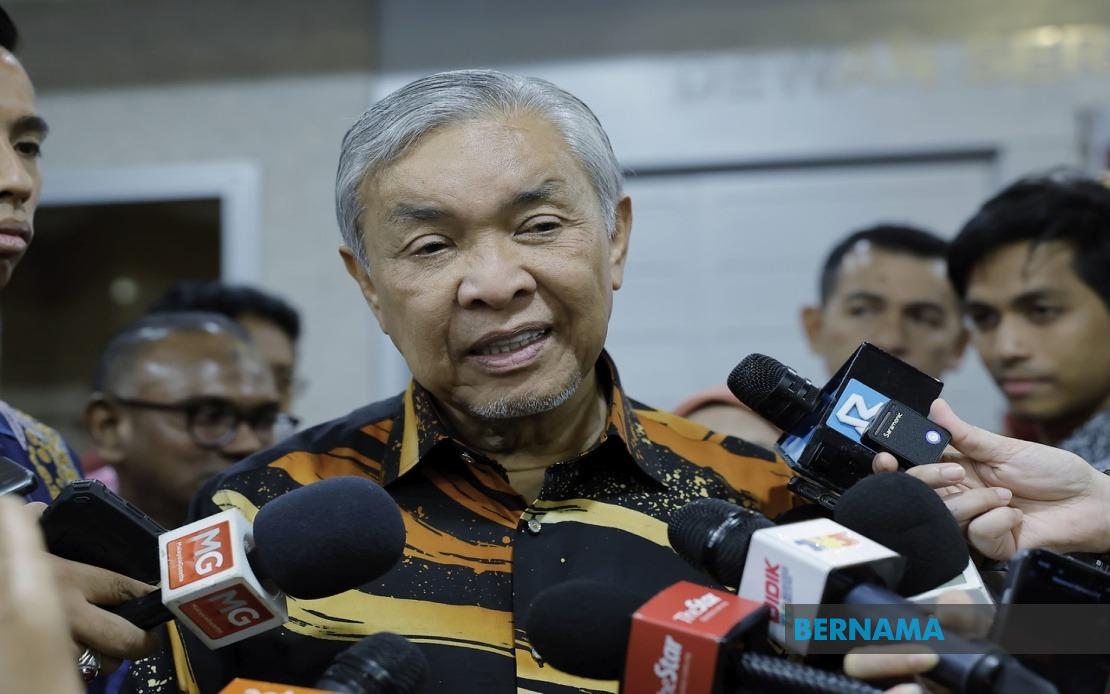
Deputy Prime Minister and Barisan Nasional chairman Datuk Seri Dr Ahmad Zahid Hamidi has drawn a firm line on governance standards within the ruling coalition's sphere, stating categorically that neither BN nor UMNO will overlook instances of misappropriation or administrative failure at Lembaga Tabung Haji. Speaking after the Rural and Regional Development Ministry's scheduled monthly meeting in Putrajaya, Ahmad Zahid emphasized that breaches of public trust demand swift and uncompromising action, signaling that the coalition intends to project an image of institutional rectitude in the wake of damaging findings about the hajj savings fund.
The statement arrives as mounting scrutiny envelops one of Malaysia's most prominent Islamic financial institutions. Ahmad Zahid underscored that individuals implicated in malfeasance or poor stewardship at government agencies and statutory bodies must face the full weight of accountability mechanisms, rejecting any notion that political considerations should soften consequences for wrongdoing. This rhetorical positioning reflects the delicate balance BN must maintain: acknowledging institutional failures whilst demonstrating commitment to reform and ethical governance, particularly important as the coalition seeks to rebuild public confidence ahead of future electoral contests.
The backdrop to these comments is the Royal Commission of Inquiry's comprehensive investigation into Tabung Haji's management spanning 2014 to 2020, a period that witnessed substantial deterioration in the fund's asset base. Released on July 29, the RCI report detailed findings of irregular transactions and systematic concealment of material information within the organization's decision-making apparatus. These revelations have prompted calls for deeper investigation into the investment choices that precipitated Tabung Haji's financial decline, raising uncomfortable questions about oversight failures at multiple institutional levels.
Parliament will convene for a special sitting on August 11 specifically dedicated to debating the RCI's conclusions and recommendations. This focused legislative attention underscores the gravity with which policymakers and the government regard the inquiry's output. The parliamentary forum will provide an opportunity for legislators from both government and opposition benches to interrogate the findings, scrutinize the evidence of problematic transactions, and explore the adequacy of existing safeguards against similar institutional failures in other statutory bodies managing public assets.
Central to the RCI's recommendations is a directive for forensic accounting expertise to be deployed in reexamining investment decisions that eroded Tabung Haji's financial position. Such forensic investigation typically involves detailed reconstruction of financial transactions, identification of decision-making chains, and determination of whether conduct met professional standards or crossed into deliberate misconduct. For Malaysian investors who have contributed to Tabung Haji throughout their working lives with the expectation of hajj financing upon retirement, forensic examination represents both a mechanism for establishing accountability and a prerequisite for meaningful remediation.
The RCI's discovery of suspicious transactions carries particular resonance in the Malaysian context, where public sector governance has periodically come under intense scrutiny. The concealment of information documented in the inquiry suggests a troubling pattern wherein institutional actors prioritized opacity over transparency, potentially obscuring deteriorating financial conditions from relevant oversight bodies and individual contributors. Such conduct, if substantiated, would constitute a fundamental betrayal of the fiduciary obligations that such institutions owe to their beneficiaries.
Ahmad Zahid's unequivocal stance serves multiple audiences. To the domestic electorate, particularly Muslim Malaysians who view Tabung Haji as custodian of their hajj aspirations, the message conveys governmental determination to rectify institutional dysfunction and punish culprits. To international observers monitoring governance standards in Southeast Asia, the coalition's rhetorical commitment to accountability offers reassurance about institutional maturity, though skeptics will note that words must be validated through concrete consequences.
The timing of Ahmad Zahid's comments and the upcoming parliamentary debate coincides with broader conversations within Malaysia about institutional reform and corruption prevention. The Tabung Haji matter illustrates how statutory bodies, despite nominally independent governance structures, remain subject to patronage networks and oversight lapses that can facilitate mismanagement. Whether the RCI process and subsequent parliamentary debate catalyze meaningful systemic reforms—stronger audit mechanisms, enhanced board independence, improved transparency protocols—will significantly influence public confidence in similar institutions managing collective assets.
For Southeast Asian observers, the Tabung Haji situation offers a cautionary case study in institutional vulnerability. Religious and cultural investment vehicles, common across Muslim-majority nations in the region, depend upon beneficiary trust and robust governance frameworks to function effectively. Malaysia's handling of this episode may influence how other regional economies approach oversight of comparable institutions, particularly those managing funds on behalf of lower-income populations with limited alternative savings mechanisms.
The parliamentary debate scheduled for August 11 will prove consequential in determining whether political rhetoric translates into substantive accountability. Legislators will face pressure to demonstrate that investigation findings yield consequences for responsible actors, that procedural failures are systematically addressed, and that institutional reforms prevent recurrence. The degree to which Parliament engages critically with RCI recommendations, rather than perfunctorily endorsing government positions, will illuminate the quality of legislative oversight in contemporary Malaysia.

