India's political establishment has become embroiled in a fresh controversy over protest tactics and consistency as Prime Minister Narendra Modi's Bharatiya Janata Party levels accusations of hypocrisy against the Cockroach Janta Party, a grassroots movement that captured national attention by forcing the resignation of Education Minister Dharmendra Pradhan just weeks ago. The BJP's salvo, delivered through party spokesperson Keya Ghosh on Tuesday, suggests deep frustration with what the ruling alliance views as selective activism that conveniently disappears when political opponents face scrutiny.
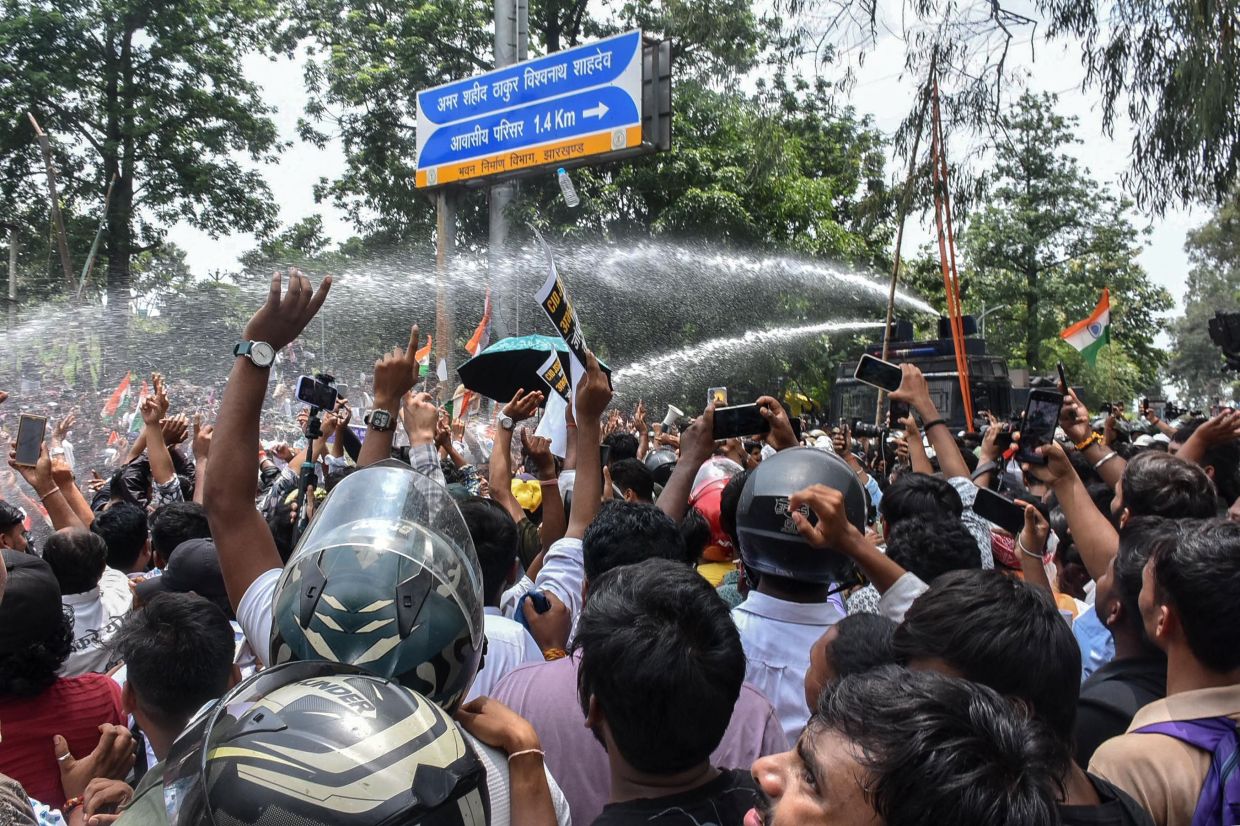
The core of the dispute centres on differing levels of activism displayed by the Cockroach Janta Party between two separate student movements separated by geography and timing. The group, which began as a satirical social media initiative before evolving into an organised pressure movement, mobilised thousands of demonstrators at Jantar Mantar in New Delhi to demand accountability following allegations of irregularities in national entrance examinations. That campaign achieved a visible victory when Minister Pradhan stepped down, and the protests subsequently wound down. Meanwhile, similar agitations have erupted in Jharkhand, the mineral-rich eastern state, where students and job seekers are pressing for a central investigation into suspected flaws in state-level recruitment examinations. Yet the Cockroach Janta Party's presence in this second theatre of protest appears considerably muted compared to its high-profile mobilisation in the capital.
Ghosh's criticism extended beyond mere observation of the group's absence, instead framing it as evidence of deeper political motivation. She argued that the New Delhi protests were fundamentally about destabilising the Modi government rather than genuine concern for educational reform and examination integrity. The spokesperson specifically challenged founder Abhijeet Dipke to demonstrate his group's commitment by visiting Jharkhand's protest sites and engaging directly with the demonstrators there. This rhetorical move attempts to expose what the BJP perceives as a contradiction between the movement's stated principles of student advocacy and its apparent selective engagement based on which government faces pressure.
However, the ground reality in Jharkhand presents a more nuanced picture than the BJP's framing suggests. Local media reports indicate that some Cockroach Janta Party members who participated in the Delhi demonstrations have indeed travelled to Jharkhand and contributed to the agitations there. Akshay Shinde, the group's national coordinator, told news agencies that the movement would remain committed to the Jharkhand protests until all student demands are resolved. This suggests that the party's lower profile may reflect the fundamentally local character of Jharkhand's protests rather than a lack of commitment to student causes generally. The Jharkhand movement appears to have been organically generated by regional students and job aspirants rather than driven by external pressure groups.
The Cockroach Janta Party has nevertheless issued statements supporting the Jharkhand students' core demands while criticising police responses to the demonstrations. Dipke himself condemned the deployment of water cannons and batons against protesters on Monday, characterising such actions as cruel and inhuman regardless of location or which administration ordered them. These public statements indicate ideological consistency on questions of police conduct and student rights, even if the group's organisational footprint has remained smaller in Jharkhand than in New Delhi.
The political geometry underlying these protests becomes sharper when examining the state administration in Jharkhand. The state is governed by a coalition led by the Jharkhand Mukti Morcha that includes the Indian National Congress, with the BJP relegated to opposition status in the state assembly. This inverts the power dynamic from New Delhi, where Modi's government holds supreme authority. The BJP's accusations against the Cockroach Janta Party gain a different colour when understood as an attempt to embarrass the opposition coalition by suggesting that left-aligned activists operate selectively based on which governments they wish to challenge. Ghosh pointedly asked where Rahul Gandhi, the Congress opposition leader, was positioned during these protests, insinuating that he had abandoned students when his own party's government faced pressure.
Gandhi's response, delivered through social media rather than physical presence at either protest site, emphasised the universal principle that students possess an inherent right to peaceful demonstration and that dialogue represents the only sustainable path toward resolving grievances. This position attempts to position the Congress leader above partisan considerations, though it notably avoids engagement with questions about differential levels of institutional support for the two separate movements. His conspicuous absence from both Jantar Mantar and Jharkhand's protest sites has become part of the political narrative, with the BJP weaponising this absence to question opposition commitment to students.
The broader significance of this controversy extends beyond immediate partisan point-scoring. The exchange highlights persistent tensions within India's civil society landscape regarding the relationship between grassroots movements and political parties. When student agitations emerge, questions inevitably arise about motivations, sustainability, and the degree to which external organisations seek to instrumentalise spontaneous public sentiment for electoral advantage. The Cockroach Janta Party's trajectory from satirical online commentary to organised pressure group demonstrates how social media-driven activism can translate into real political impact, yet it also raises legitimate questions about whether such movements maintain internal consistency or adapt their engagement based on tactical considerations.
For observers across Southeast Asia, the Indian situation offers instructive lessons about student activism in the digital age. Movements that organise rapidly through social platforms and achieve striking short-term victories can face credibility questions if their engagement appears inconsistent across different contexts or circumstances. The ability to sustain momentum and demonstrate commitment across multiple battlegrounds becomes a measure of authenticity in the eyes of sceptical publics. The BJP's attack on the Cockroach Janta Party, whether politically motivated or not, articulates a challenge that the group will need to navigate carefully if it wishes to position itself as a principled force rather than a tactically-motivated pressure group that rises and fades according to political convenience.

