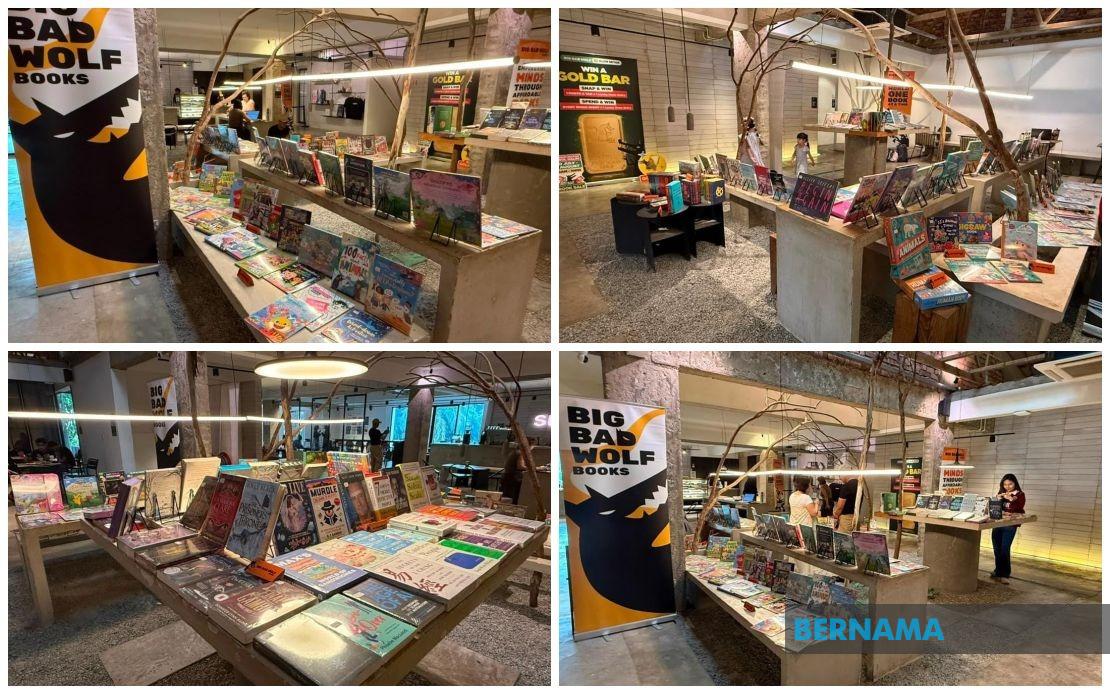
Malaysia's premier book retail event, Big Bad Wolf Books, is set to establish a foothold in Kedah's cultural landscape with its arrival in Alor Setar later this month, bringing with it a refreshed inventory designed to broaden reading options across the state. The fair will operate from July 30 through August 9 at Sultan Abdul Halim Stadium, running daily from 10 am until 10 pm with no admission charge, positioning it as an accessible community initiative rather than an exclusive commercial venture.
A significant portion of the incoming stock represents new acquisitions to the BBW catalogue, with organisers confirming that 40 per cent of titles on display will be encountering Malaysian readers for the first time. This deliberate curatorial approach underscores the company's strategy to sustain visitor engagement across multiple book fair editions held throughout the year in different regions. According to Chloe Lim Sooi Yee, a BBW representative, the decision to refresh inventory reflects the organisation's commitment to preventing repetition and monotony, particularly crucial for a state that has hosted the fair previously.
A distinctive feature of this iteration involves the introduction of 'Little Ummah' Islamic children's literature to Kedah, marking the first instance of this specialised collection appearing in the state. The curators recognise that Kedah's demographic composition and cultural values warrant tailored book selections that resonate with local sensibilities and educational priorities. This targeted approach demonstrates awareness of regional preferences and an intention to embed the book fair within community identity rather than impose a standardised offering uniformly across Malaysia.
The sheer scale of the operation underscores the logistical commitment behind such events. Organisers project approximately one million books will be available for purchase, a staggering inventory that positions this fair as a significant distribution channel for publishers seeking market penetration in smaller states. Pricing strategy remains core to BBW's business model and accessibility mandate, with entry-level books available from RM3 onwards, ensuring that financial constraints do not prohibit participation across socioeconomic strata. Beyond base pricing, promotional discounts reaching 95 per cent on select titles create opportunities for bulk purchasing or access to premium publications at dramatically reduced cost.
Educational institutions and their personnel constitute a targeted demographic within the broader fairground strategy. Schools will receive promotional visits designed to drive organised attendance, while students and educators purchasing minimum quantities of three books qualify for an additional five per cent reduction atop existing discounts. This incentive structure acknowledges the pivotal role schools play in normalising book consumption as a habitual practice among younger populations, with implications extending beyond immediate sales toward long-term cultivation of readers who sustain literary engagement into adulthood.
Gameification elements embedded within the event further enhance its appeal beyond straightforward commercial transaction. Visitors participating in designated campaigns—specifically 'spend and win' and 'snap and win' initiatives—enter a pool for gold bar prizes valued at 10 grammes each. While the mechanics of these campaigns remain partially undefined in available communications, the inclusion of aspirational rewards reflects modern retail psychology that recognises experience and entertainment value as determinants of attendance alongside product availability.
The framing of this book fair within a broader cultural mission reveals emerging recognition across Malaysian commerce of reading's instrumental value beyond individual benefit. BBW explicitly positions itself as a vehicle for fostering reading culture nationally and as a catalyst for literacy movements that serve educational and cultural objectives within communities. For Kedah specifically, the fair operates as a statement that knowledge accessibility and cultural enrichment constitute legitimate development priorities, positioning a state sometimes perceived as peripheral within Malaysian commercial circuits as a deserving participant in nationwide intellectual infrastructure.
Targeting 35,000 visitors across the 11-day period reflects both ambition and pragmatism in planning. This projection translates to approximately 3,200 daily visitors, a figure substantially higher than typical retail transactions but achievable through sustained promotional effort and the novelty value that accompanies the fair's arrival in a region. Achieving this target would represent meaningful economic activity for local commerce, with spillover effects benefiting food vendors, transportation services, and nearby retail establishments.
The narrative surrounding Big Bad Wolf Books' Alor Setar edition reveals dimensions of Malaysia's evolving relationship with reading and knowledge dissemination beyond purely commercial calculation. By strategically introducing new inventory, culturally attuned collections, and incentive structures that prioritise accessibility, the event signals that book consumption need not remain the privilege of affluent urban centres. For Kedah residents, the fair's arrival represents tangible recognition that their appetite for reading deserves accommodation within national retail planning, while for Malaysian publishing and bookselling sectors, such initiatives demonstrate capacity for creative adaptation to regional circumstances. The event ultimately functions as both marketplace and cultural statement, embedding commercial activity within broader aspirations for an informed, engaged citizenry.

