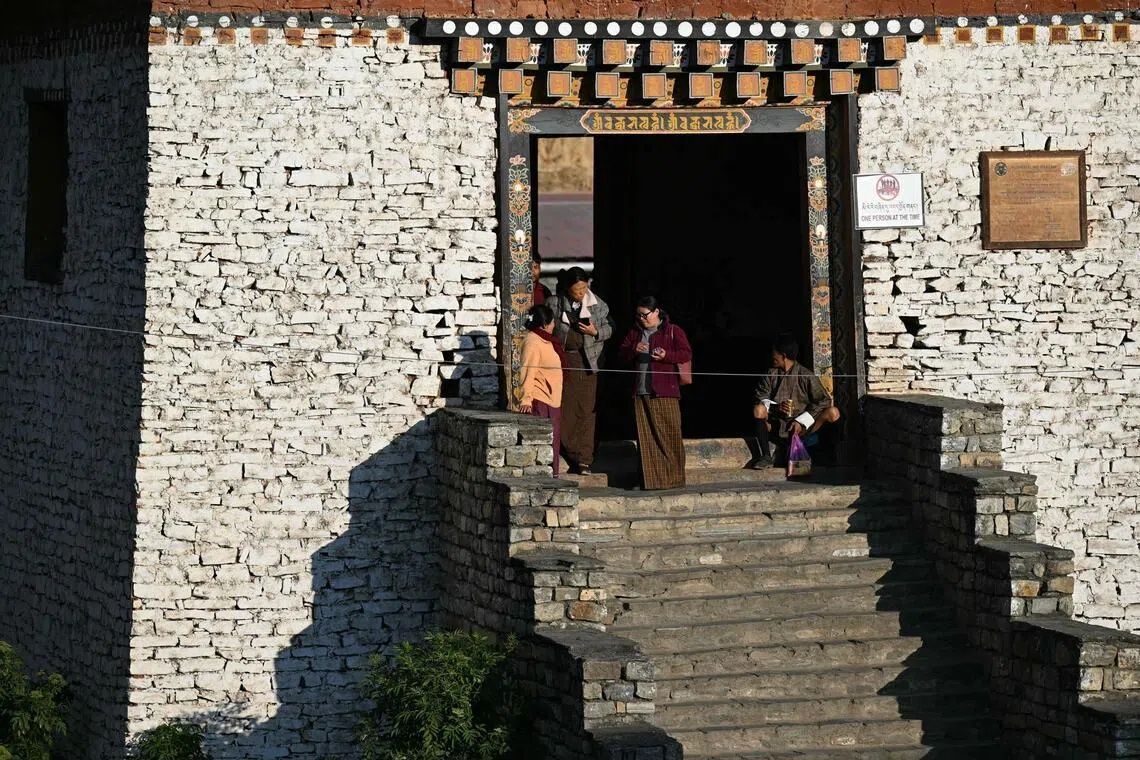
The Himalayan kingdom of Bhutan is making an unprecedented policy shift, rolling out financial incentives designed to encourage families to have more children as the nation confronts what its leadership describes as an "existential" demographic threat. Announced in June, the "Third Child Plus" programme represents a dramatic reversal of Bhutan's decades-long commitment to family planning, offering monthly payments of $105 for each third or subsequent child until the age of three. The initiative underscores deepening alarm among policymakers that the country's population trajectory has become unsustainable, driven by both plummeting fertility rates and a sustained brain drain of young people seeking livelihoods abroad.
The scale of Bhutan's demographic challenge has materialised with striking speed over a single decade. Annual births across the kingdom have contracted by more than one quarter since the early 2010s, compounding a parallel phenomenon of outward migration that has become structural to Bhutanese society. Prime Minister Tshering Tobgay has repeatedly sounded warnings about the scale of the crisis, framing the population decline not merely as a statistical concern but as an existential test of national viability. In his introduction to the Third Child Plus briefing documentation, Tobgay articulated the core anxiety: "The evidence is unambiguous -- Bhutan's fertility has declined to near or below replacement level." For a nation of fewer than 800,000 people wedged geographically between the demographic giants of India and China, maintaining population stability carries particular strategic weight and economic significance.
The demographic markers underlying Bhutan's policy response paint a picture of accelerating structural change. The fertility rate has contracted to approximately 1.8 children per woman, a figure that sits below the replacement threshold required for a population to sustain itself without immigration. Births specifically among third and subsequent children -- the focus of the government's incentive programme -- have declined by 27 percent since 2020 alone, indicating that even families with some children are increasingly reluctant to expand further. Projections from the United Nations suggest an aging society rapidly reshaping the nation's demographic profile: the proportion of people aged 65 and older is forecast to nearly triple, rising from around six percent today to 17 percent by 2050. As Tobgay noted in parliament, these are not mere statistical abstractions but rather "real and compounding pressures on Bhutan's workforce, fiscal sustainability, and the social fabric of communities across the country."
Migration patterns intensify the demographic pressure significantly. According to government data current as of May 2026, more than 71,000 Bhutanese nationals reside overseas, with Australia serving as the principal destination for nearly 55 percent of this diaspora, encompassing approximately 39,000 individuals. The outflow carries particular consequence because it concentrates heavily among working-age and reproductive-age cohorts -- precisely the demographic segments essential for maintaining both labour force vitality and natural population growth. Government briefing documents acknowledge the paradox candidly: while remittances sent home from overseas workers provide valuable foreign exchange inflows, the sustained departure of prime-age adults simultaneously constrains labour force participation rates, suppresses domestic fertility dynamics, and undermines long-term population momentum. For a small economy attempting to maintain service delivery and fund pension and healthcare commitments to an aging population, this represents a vicious cycle of demographic contraction.
The reasons underlying Bhutan's fertility decline are multifaceted and reflect broader transformations sweeping across Asia. Rising costs associated with child-rearing, including expensive childcare and housing expenses, have emerged as central obstacles to family expansion among younger Bhutanese. Khandu Wangmo, a 35-year-old civil servant, typifies the ambivalence characterising public response to the government incentive: while acknowledging the scheme's laudable intent, she highlighted the insufficiency of cash payments alone to overcome the broader structural barriers. "It is a good initiative because it encourages families to have three or more children," she observed, "However, its impact may be limited if the cost of raising children, housing, and childcare remains high." Preeti Nirola, aged 34 and currently raising a single child, articulated a similar tension, expressing desire for additional children while emphasising that financial constraints rendered such aspirations genuinely prohibitive. These testimonies suggest that targeted subsidies, while symbolically important, address only partial dimensions of the fertility puzzle.
Bhutan's contemporary demographic policies represent a striking reversal of recent historical trajectory. Throughout the 1970s and continuing into subsequent decades, the kingdom actively promoted family planning through its "Small Family, Happy Family" campaign, launched in 1974, which successfully contributed to fertility decline across the population. The campaign, grounded in development economics of the era, reflected international consensus that population growth constrained development prospects. The cumulative effect was dramatic: fertility rates plummeted from approximately 6.6 children per woman during the 1990s to current levels around 1.8. Shawn Rowlands, an anthropologist based in Thimphu, characterises this as "quite a remarkable demographic shift" occurring within an exceptionally compressed timeframe. However, this historical reversal also reveals the hazards of rapid policy swings without anticipating downstream consequences. The government now confronts the inheritance of its own past success in population control, discovering that fertility suppression, once accomplished, proves extraordinarily difficult to reverse.
Contextual complexity surrounds the appropriate interpretation of demographic decline within Bhutan's distinctive national framework. Unlike many nations where population contraction represents an unwelcome byproduct of socioeconomic development, Bhutan has positioned itself as a nation prioritising "Gross National Happiness" metrics over conventional economic growth measures, and maintains the singular status of being a carbon-negative nation. Rowlands raises a provocative question: whether a declining population should automatically be construed as a crisis within a national context explicitly valuing environmental sustainability and quality-of-life indicators beyond GDP expansion. He notes that "Higher access to education and job opportunities lead to fewer women having children," suggesting that low fertility may itself reflect successful human development outcomes rather than demographic failure. This philosophical tension between conventional demographic growth targets and alternative development paradigms remains unresolved within Bhutanese policymaking discourse.
The UN Population Fund, which provided support for the Third Child Plus initiative, has advocated for policy frameworks addressing root causes rather than merely attempting to raise birth numbers through financial inducements. The organisation emphasises expansion of genuine choices for families through provision of affordable childcare infrastructure, comprehensive social safety nets, and supportive employment policies that accommodate parental responsibilities. This approach acknowledges that sustainable fertility recovery requires addressing the underlying economic precarity and institutional barriers constraining family formation decisions, rather than relying on cash transfers to override rational individual cost-benefit calculations. The question remains whether Bhutan's political commitment extends to implementing such comprehensive structural reforms, or whether the Third Child Plus programme represents primarily a symbolic acknowledgment of demographic concerns without accompanying systemic change.
Bhutan's demographic predicament carries resonance throughout Asia, where many nations confront parallel patterns of fertility decline and youth emigration. The kingdom's specific combination of challenges -- a very small population base, extreme geographic constraints, limited economic diversification, and proximity to labour markets offering substantially higher wages -- creates conditions particularly conducive to outward migration. Tobgay has identified overseas migration itself as Bhutan's "most pressing challenge," emphasising that reversing the exodus requires not merely demographic incentives but rather fundamental economic transformation: strengthening productive sectors, generating quality employment opportunities, and materially improving living conditions. The implicit recognition embedded in this framing is that no demographic programme can succeed while the material conditions facing Bhutanese young people abroad vastly exceed opportunities available domestically. Without concurrent attention to underlying economic drivers, the Third Child Plus programme risks functioning primarily as a symptomatic gesture rather than addressing root causes of population decline. The coming years will reveal whether Bhutan's leadership possesses the political will to complement demographic incentives with the comprehensive economic and social policy reforms necessary to reverse both fertility decline and emigration pressures.

