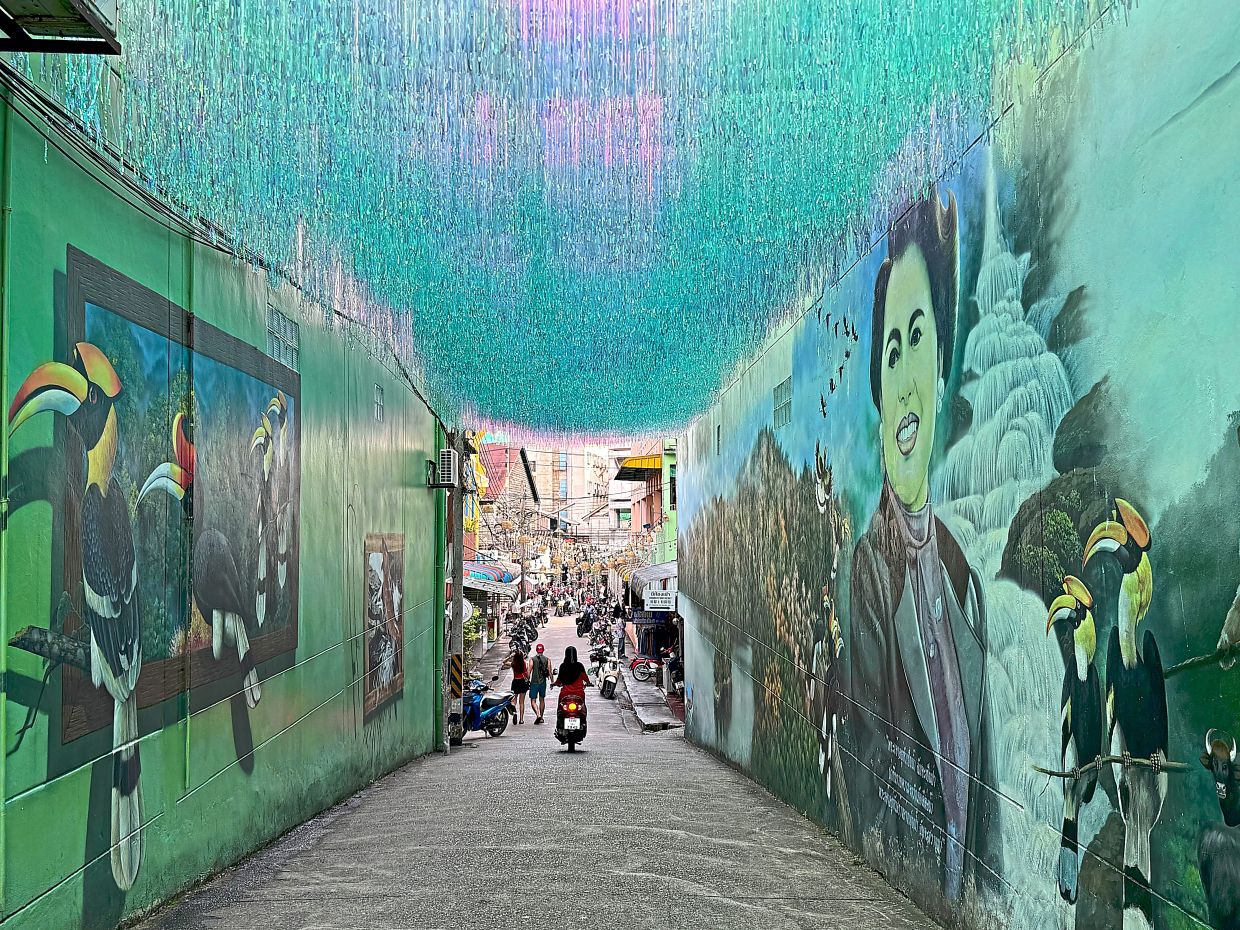
Betong, a modest town nestled close to Thailand's border with Malaysia, presents an intriguing blend of cultural heritage, culinary distinction, and unexpected attractions that reward the curious traveller willing to venture beyond mainstream tourist circuits. Located approximately 380 kilometres from Kuala Lumpur—a manageable five-hour drive—this emerging destination has begun capturing the imagination of Malaysian roadtrippers seeking authentic experiences beyond the usual commercial tourism infrastructure.
The township's most distinctive calling card is its relationship with the Betong chicken, a locally bred variety that has become so integral to regional identity that oversized statues now punctuate the streetscape. These sculptures are far more than whimsical roadside decoration; they represent a genuine source of community pride and economic significance. The agricultural heritage has naturally translated into culinary specialization, with restaurants throughout town showcasing chicken in virtually every conceivable preparation—crispy rice plates laden with golden poultry, warming bowls of chicken porridge, and countless other variations that demonstrate how a single ingredient can define a place's gastronomic character.
Beyond food tourism, Betong's infrastructure reveals layers of historical complexity that fundamentally shaped modern Southeast Asia. The Piyamit Tunnel, situated approximately 15 kilometres from the town centre, represents a sobering monument to the region's Cold War struggles. Constructed during the late 1970s, this one-kilometre passage originally served as an operational base for the Communist Party of Malaya, functioning simultaneously as an air raid shelter, supply depot, and emergency escape corridor during military operations. The tunnel's original design incorporated multiple entrances and exits distributed throughout the surrounding jungle, enabling guerrilla fighters to disperse in different directions when under attack. Today, visitors traverse this historical artefact along clearly marked pathways, passing former sleeping quarters, meeting chambers, and communication rooms that silently testify to the armed struggle's intensity.
The strategic engineering visible within Piyamit Tunnel extends to seemingly mundane infrastructure that ultimately proved militarily crucial. An outdoor cooking area features a sophisticated stove design that deliberately channelled smoke underground, preventing aerial reconnaissance from detecting the encampment's location. This small but ingenious detail encapsulates how survival during prolonged insurgency demanded constant innovation. The accompanying Piyamit Histories Museum provides archival photographs and period artefacts that contextualize the fighters' daily existence, while the Chulabhorn Phatthana Village 9, located 120 kilometres away in Mae Wat, extends this narrative arc by showcasing how former combatants rebuilt civilian lives after the conflict concluded—a poignant reminder of reintegration complexities that resonate across the region.
The Mongkollit Tunnel presents a contrasting modern chapter in Betong's infrastructure story. Thailand's first mountain tunnel, completed in 2001 by the Tourism Authority of Thailand's development initiative, initially seemed unremarkable during daylight hours. However, nocturnal transformation reveals sophisticated lighting design that bathes the entire structure in electric blue luminescence, attracting visitors who line the pedestrian walkways for photography and contemplation. This successful marriage of engineering functionality with aesthetic appeal demonstrates how infrastructure investments can simultaneously serve practical transportation needs and tourist appeal, creating additional economic activity without requiring purpose-built attractions.
For visitors prioritizing accessibility and convenience, Betong's compact geography substantially enhances the exploration experience. The historic town centre concentrates most significant sites within comfortable walking distance, reducing transportation friction and parking complications that plague many Thai destinations. A local convention—wherein black-and-white kerb markings indicate permissible parking while red-and-white prohibit it—provides straightforward guidance for motorists navigating limited space. This pedestrian-friendly arrangement transforms sightseeing from a logistically frustrating exercise into organic discovery, whereby wandering naturally leads from one attraction to adjacent points of interest.
Route 410, officially designated the Pattani-Betong Highway, has emerged as a secondary but significant draw for specific tourist demographics. This 160-kilometre mountain road traverses steep elevation changes and serpentine curves through dramatic topography, attracting motorcycle enthusiasts who constitute a growing component of regional adventure tourism. Dedicated commercial establishments like Betong Route 410 now cater explicitly to this market, merchandising specialized apparel, decals, and customized Thai-style licence plates that allow riders to commemorate their journeys. This infrastructure development illustrates how transportation corridors transform into destination experiences when properly marketed to niche communities.
Wat Phutiwhat, positioned strategically along Route 410, exemplifies how religious sites function as landscape anchors and cultural touchstones within Thai communities. The temple's entrance features an imposing bronze Buddha statue cast at monumental scale, visually dominating the surrounding townscape and providing orientation for travellers. The structure's documented housing of Buddha relics elevates its religious significance beyond typical regional temples, attracting devotional visitors alongside cultural tourists. Early morning visits prove optimal for experiencing the site's meditative atmosphere before day-trip crowds accumulate.
Perhaps Betong's most quirky distinction emerges through postal infrastructure that transcends conventional utilitarian function. While Thai mailboxes typically approximate adult human height, Betong features two dramatically oversized versions that have achieved local landmark status. The original structure, standing 3.2 metres tall and dating from 1924, formerly incorporated a government-issue loudspeaker that broadcast official announcements to townspeople. This ingenious dual-purpose design merged communication infrastructure, remaining operational for postal services while historical significance accumulated. A subsequent nine-metre replica, constructed explicitly for tourism purposes and positioned outside the City Convention Hall along Sukyang Road, demonstrates how communities can monetize quirky heritage through intentional replication and packaging for visiting audiences.
For Malaysian travellers accustomed to longer international journeys involving complex visa procedures, Betong's proximity and accessibility present compelling advantages. The border proximity allows extended day-trip exploration from Malaysian bases or overnight stays that economically integrate with regional road trip itineraries. The absence of extensive pre-trip planning requirements contrasts sharply with more distant destinations, permitting spontaneous discovery that frequently generates more authentic travel experiences than heavily choreographed tourism. Betong's capacity to surprise—whether through unexpected tunnel illumination, oversized postal monuments, or culinary chicken specialization—suggests that secondary destinations often deliver disproportionate satisfaction relative to travel investment when travellers maintain openness to local discovery.
The town ultimately represents broader Southeast Asian travel democratization, whereby improved regional connectivity and simplified border procedures enable discovery of authentic communities maintaining distinctive characteristics despite globalization pressures. Betong neither aspires to nor requires massive tourist infrastructure, yet possesses sufficient attractions and hospitality infrastructure to accommodate visiting interest. For Malaysian road travellers seeking alternatives to standardized resort destinations, Betong offers manageable distance, culinary engagement, historical education, and genuine local colour—a combination that increasingly defines sophisticated regional tourism in the 2020s.

