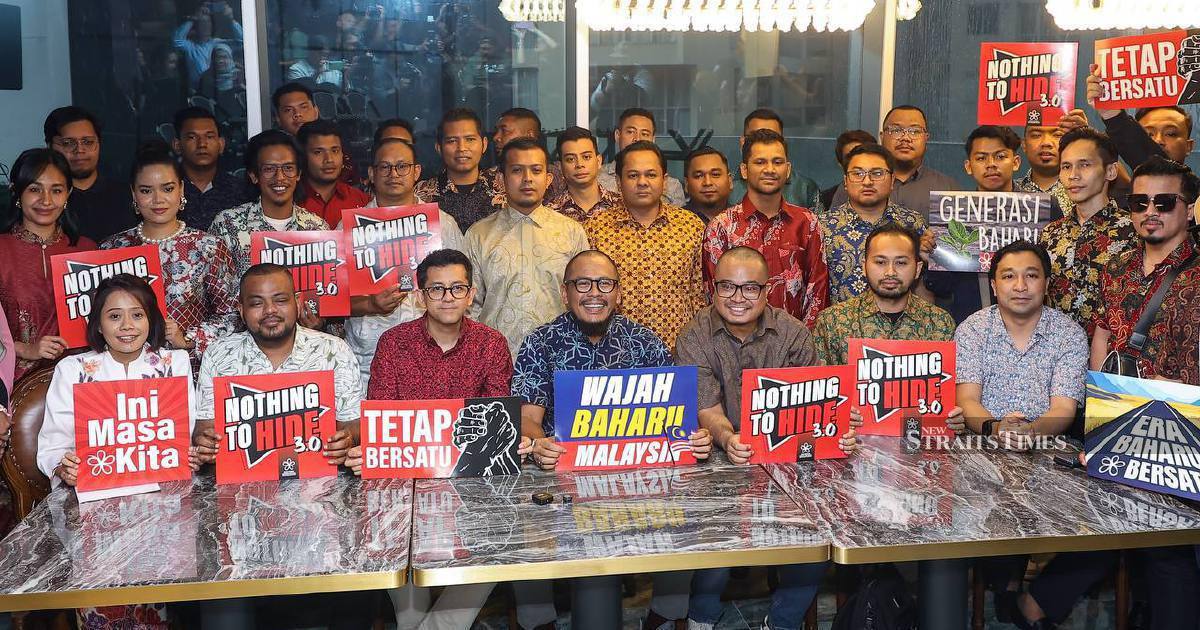
The political friction within Malaysia's Perikatan Nasional bloc shows signs of potential healing, according to Kota Siputeh assemblyman Mohd Ashraf Mustaqim Abdul Munir, who has publicly voiced confidence that the coalition can move past recent disagreements between its two heavyweight components, Bersatu and Pas. Speaking on the strained partnership, Ashraf drew a domestic analogy to characterise the current impasse, comparing the bickering between the two parties to married partners who continue inhabiting the same household despite their disputes.
The discord within PN has become increasingly visible over recent months, with both Bersatu and Pas pursuing divergent political strategies that have occasionally put them at odds on key policy decisions and electoral positioning. These tensions have raised questions about the coalition's internal cohesion and its ability to present a unified front ahead of future electoral contests. Ashraf's comments appear designed to reassure party members and supporters that such disagreements, while uncomfortable, need not be terminal for the alliance. The metaphor of a troubled marriage carries particular weight in Malaysian political discourse, suggesting that conflict and resolution are natural features of long-term political partnerships rather than signals of impending collapse.
The relationship between Bersatu and Pas forms the backbone of the Perikatan Nasional coalition, which has positioned itself as an alternative political force in Malaysian politics. Both parties share ideological common ground and have collaborated effectively at both federal and state levels, most notably in Terengganu and Kelantan where Pas holds considerable electoral influence. However, their differing strategic priorities have occasionally created friction, particularly regarding the distribution of parliamentary seats, state-level governance arrangements, and the coalition's overarching direction on matters ranging from religious policy to economic development.
Ashraf's optimistic stance reflects a deliberate effort to project stability within the PN framework, even as external observers continue to scrutinise the durability of the partnership. His comments emerge at a time when Malaysian political coalitions face mounting pressure to demonstrate organisational discipline and unity of purpose. The fragmentation of previous governing coalitions—including the rapid dissolution of Pakatan Harapan in 2020—has made Malaysian voters increasingly sceptical of multi-party arrangements that lack genuine ideological alignment or conflict-resolution mechanisms.
The comparison to domestic partnership dynamics also carries implicit acknowledgment that tension within coalitions is inevitable and manageable. Just as married couples develop strategies to navigate disagreement while maintaining their partnership, Ashraf suggests that Bersatu and Pas possess sufficient shared interest and institutional ties to weather current difficulties. This framing attempts to reframe coalition tensions not as signs of structural failure but as normal byproducts of two separate political entities attempting to coordinate actions whilst pursuing distinct party interests.
For Bersatu specifically, maintaining cordial relations with Pas remains strategically important given the smaller party's limited parliamentary representation and its dependence on coalition partners to amplify its political influence at the national level. Pas, meanwhile, benefits from Bersatu's non-Islamist moderate base, which provides the Islamic party with a pathway to broader electoral appeal beyond its traditional demographic support. This mutual dependence creates powerful incentives for both parties to resolve disputes through dialogue rather than public acrimony that could further erode coalition credibility.
The stability of PN carries implications that extend beyond the coalition itself, particularly given the complex tripartite dynamics now characterising Malaysian federal politics. With Pakatan Harapan remaining the primary alternative bloc and the possibility of other parties and independents shifting allegiances, any significant fracture within PN could reshape the broader political landscape. Ashraf's measured optimism may therefore represent an attempt to signal to potential coalition partners, swing voters, and party grassroots that PN remains a viable long-term political framework.
Recent months have witnessed increasing speculation about the durability of various Malaysian political combinations, driven partly by economic pressures, electoral uncertainties, and the complex interests of individual party leaders. Against this backdrop, senior party figures are keen to project normalcy and stability, presenting disagreements as temporary obstacles rather than existential threats. Ashraf's comments fit squarely within this pattern of damage control and confidence-building communication.
The coming months will provide clearer indication of whether Ashraf's optimism is warranted. Both Bersatu and Pas face domestic pressures from party members who have grown weary of compromises required by coalition participation. Simultaneously, the parties must maintain sufficient unity to present credible governance alternatives during potential electoral contests. Whether the PN coalition can successfully navigate these competing pressures while sustaining meaningful internal collaboration remains a critical question for Malaysia's evolving political architecture.
The broader significance of Ashraf's remarks extends to what they reveal about Malaysian political leadership's calculation that preserving existing coalitions, despite their complications, remains preferable to pursuing untested alliance configurations. This conservative approach to coalition management suggests that while PN may experience periodic turbulence, wholesale restructuring of the opposition coalition remains unlikely in the near to medium term. Whether such stability ultimately serves Malaysian democracy, however, depends significantly on whether coalition members can eventually translate their working relationships into coherent, popular policy platforms.

