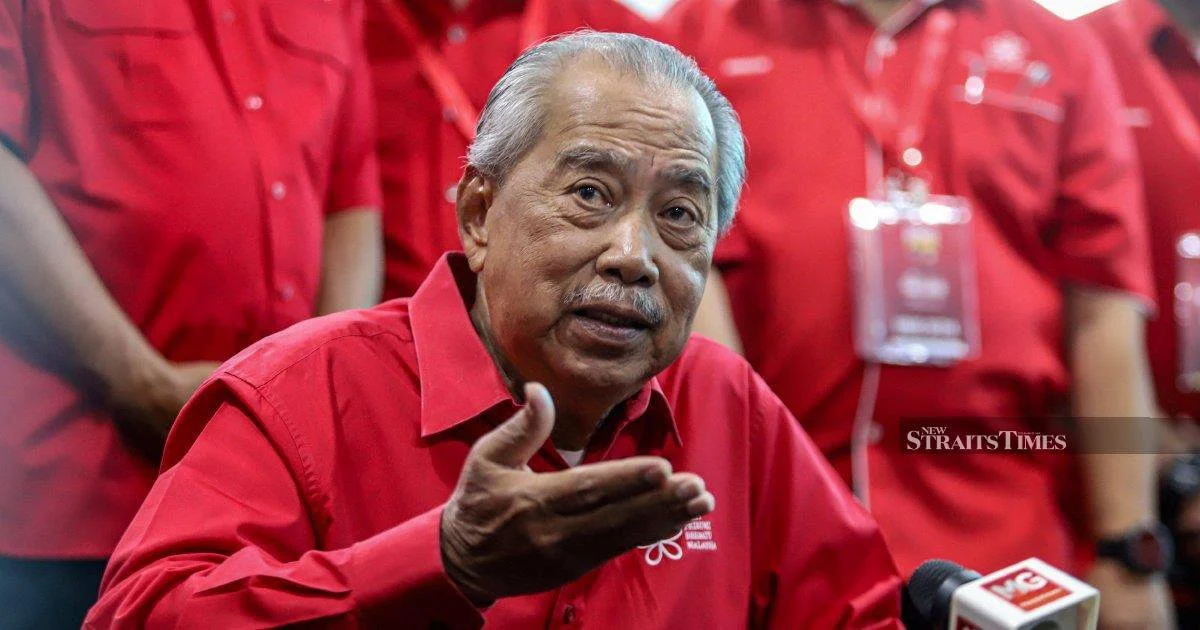
Bersatu has publicly expressed disappointment at Pas for proceeding with bilateral political discussions with Barisan Nasional without first securing agreement or participation from other members of the Perikatan Nasional coalition. The rebuke signals growing tensions within the opposition alliance as the Negri Sembilan state election approaches, threatening the fragile unity that has characterised the PN partnership since its formation.
The decision by Pas to engage in independent negotiations with BN represents a significant deviation from the collaborative approach that has historically defined PN's operations. Bersatu's objection highlights a fundamental strategic disagreement about how the coalition should approach electoral battles and political positioning. Rather than presenting a united front when engaging with rival coalitions, Pas appears to be charting its own course, creating friction among partners who have previously worked in tandem on major political moves.
This rupture comes at a particularly sensitive moment for Malaysian politics. The Negri Sembilan state election serves as a crucial test of voter sentiment and coalition strength in a state that has historically been competitive. For Bersatu, unilateral moves by any PN component undermine the coalition's negotiating position and create uncertainty about resource allocation, candidate selection, and strategic messaging. Such fragmentation invites opportunistic moves from rival coalitions seeking to exploit internal divisions.
Bersatu's stance reflects broader concerns about coalition governance and decision-making protocols. In a multiparty alliance like PN, procedural consistency and transparency are essential for maintaining trust and cohesion. When one major partner conducts separate high-level discussions without consultation, it inevitably raises questions about whether the coalition's founding principles are being respected. Bersatu's willingness to voice displeasure publicly suggests that private channels have not adequately addressed the grievance.
Pas, as the largest party within PN by parliamentary representation, enjoys considerable influence and independence. However, this position carries reciprocal obligations to maintain coalition discipline and respect the partnership's decision-making structures. The party's choice to pursue autonomous negotiations with BN arguably violates the implicit social contract that binds PN members together. This dynamic is particularly sensitive given Malaysia's complex political landscape, where coalition stability often determines which formations can command parliamentary majorities.
The timing of these tensions matters significantly for Malaysian voters and stakeholders. The Negri Sembilan election will serve as a bellwether for coalition performance in a mixed-support state. If PN enters the contest marred by internal divisions and conflicting negotiating positions with BN, campaign messaging becomes muddled. Voters may punish coalition partners for perceived disloyalty or lack of unity. Conversely, BN could exploit these fissures by offering selective deals to specific PN parties, further fracturing the coalition's cohesion.
For Bersatu specifically, the Negri Sembilan contest carries particular weight. The party has invested considerable political capital in presenting PN as a viable and stable alternative to the BN-dominated establishment. Unilateral moves by Pas complicate this narrative and suggest that PN's unity may be more tactical than ideological. This perception could cost Bersatu electoral support among voters who value consistency and principled political conduct.
The situation also reflects deeper ideological and strategic differences within PN. Pas brings an Islamic-focused political agenda, while Bersatu emphasises multiethnic representation and inclusive governance. These differing visions can create tension when navigating complex electoral mathematics and coalition negotiations. Pas's willingness to engage independently with BN may reflect calculations about protecting its core support base or securing advantageous terms for specific constituencies, priorities that may not align perfectly with PN's broader coalition strategy.
Looking forward, the Negri Sembilan election could serve as a forcing event that either strengthens or shatters PN unity. If PN components emerge from negotiations on a coherent platform with unified support for candidates and policies, the coalition emerges reinforced. Conversely, if Pas's independent dealings lead to conflicting campaign positions or electoral pacts that benefit some PN parties at others' expense, the coalition risks appearing opportunistic and unprincipled to voters.
Bersatu's public criticism also signals that the party is willing to defend coalition principles when challenged, even at the cost of public disagreement with a larger partner. This stance may resonate with supporters who value institutional integrity but could also be perceived as factional infighting by casual observers. The challenge for Bersatu is to articulate its concerns about Pas's conduct while maintaining sufficient coalition cohesion to contest the Negri Sembilan election effectively.
The episode underscores a persistent challenge in Malaysian coalition politics: balancing component parties' autonomy with the collective need for strategic coordination. As PN matures, it must develop clearer protocols for how member parties engage in external negotiations. Without such frameworks, similar disputes are likely to recur, gradually eroding the trust and predictability necessary for coalition stability. The Negri Sembilan election outcome may ultimately determine whether PN can navigate these tensions or whether the coalition risks genuine fracture.

