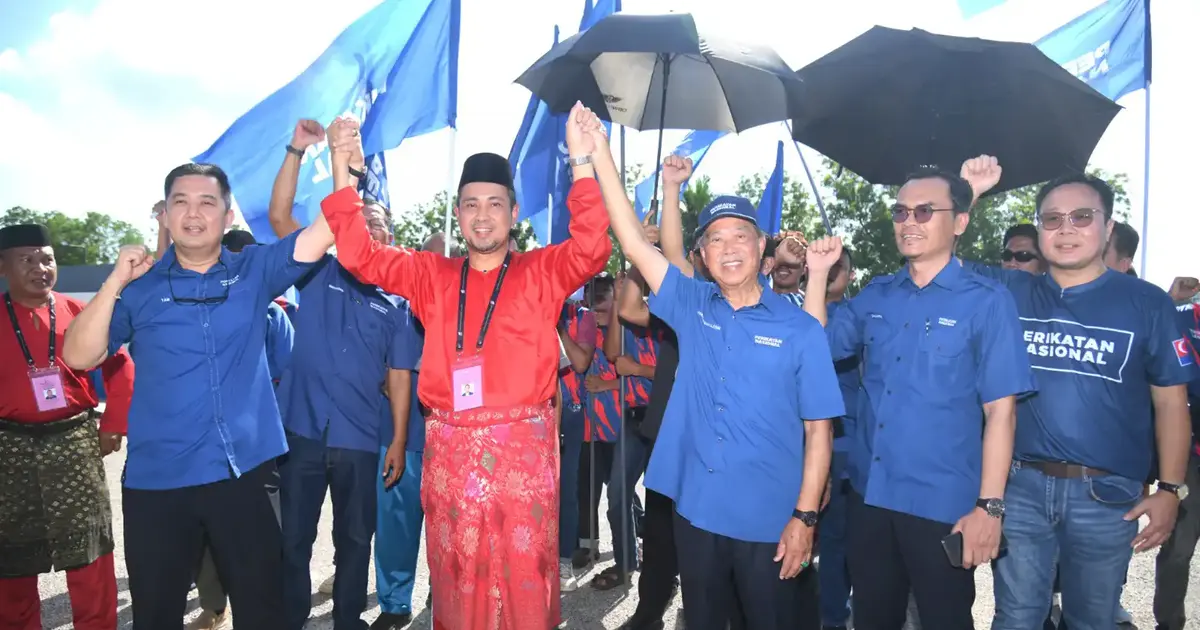
Bersatu's leadership has adopted a measured response to PAS's decision to withhold organisational resources, with party president Muhyiddin Yassin characterising the move as entirely consistent with the coalition's foundational values. Rather than viewing the rebuff as a setback, Bersatu has chosen to frame the incident as a natural expression of each partner's autonomy within the Perikatan Nasional framework.
Muhyiddin's public stance reflects a deliberate strategy to minimise friction within an already fragile political alliance. The Perikatan Nasional coalition, which brings together Bersatu, PAS, and other smaller parties, has faced recurring questions about internal cohesion since its formation. By accepting PAS's position without complaint, Bersatu's leader is attempting to demonstrate that the partnership can absorb disagreements without spiralling into public recrimination.
The underlying principle Muhyiddin emphasises—that coalition partners should not be coerced into providing support—is both a diplomatic positioning and a pragmatic acknowledgment of political reality. In Malaysian coalitions, grassroots machinery encompasses vital resources including volunteer networks, campaign logistics, and local mobilisation capacity. For PAS to decline provision of these tools suggests either reservations about priorities or calculations about resource allocation elsewhere.
Bersatu's acceptance of this stance carries implications for how Perikatan Nasional might function in future electoral contests. If parties within the coalition can selectively withhold organisational backing without triggering public disputes, the alliance risks becoming increasingly transactional. Each component party would essentially operate with flexibility to support common candidates where interests align while maintaining distance where they diverge.
The coalition itself represents an unusual arrangement in Malaysian politics. Bersatu, the splinter party formed by former Prime Minister Muhyiddin from members who left UMNO, occupies a middle position between the Islamist-focused PAS and more secular-oriented smaller partners. This ideological spectrum has always required careful management to prevent centrifugal forces from pulling the alliance apart.
PAS, as the Islamist party with the deepest grassroots networks particularly in rural areas, holds considerable leverage within Perikatan Nasional. The party's decision regarding machinery deployment reflects not merely a logistical choice but a statement about priorities and resource management. By declining to automatically mobilise organisational capacity for all Bersatu initiatives, PAS asserts its independent status and demonstrates it will pursue its own strategic interests within the broader coalition framework.
For Malaysian observers, this dynamic illustrates ongoing tension within the Perikatan Nasional arrangement. While the three-cornered contest between Perikatan Nasional, Barisan Nasional, and Pakatan Harapan has reshaped national politics, the stability of individual coalitions remains contingent on managing competing interests. Bersatu's willingness to absorb this rebuff without escalation suggests the party prioritises coalition preservation over immediate conflict resolution.
The broader electoral landscape in Malaysia has increasingly rewarded flexibility and coalition discipline. Voters in various states have demonstrated willingness to switch between different alliance configurations depending on local circumstances and personalities. This fluidity means that coalition partners cannot rely on automatic mutual support; they must continuously negotiate terms of engagement for each electoral cycle.
Muhyiddin's approach also reflects lessons from Perikatan Nasional's electoral performance. The coalition achieved surprising success in the 2022 general election despite internal tensions, winning significant representation in several states. However, subsequent developments have proven more challenging, with some member parties losing ground in by-elections and local contests. Managing coalition partners carefully becomes essential when overall momentum slackens.
Looking ahead, the machinery question will likely resurface in upcoming electoral contests. PAS's willingness to withhold organisational support in specific instances sets a precedent that other coalition partners might reference in their own negotiations. The next general election, potentially scheduled for 2025 or 2026, will test whether Perikatan Nasional can maintain sufficient unity to mount a competitive challenge against both Barisan Nasional and Pakatan Harapan.
For Malaysia's political ecosystem, this development reflects a broader maturation of coalition politics. Rather than monolithic blocs offering unconditional mutual support, modern Malaysian coalitions operate as networks of parties with overlapping but distinct interests. Bersatu's gracious acceptance of PAS's position, while maintaining public unity, demonstrates sophisticated coalition management even when underlying tensions clearly exist beneath the diplomatic surface.

