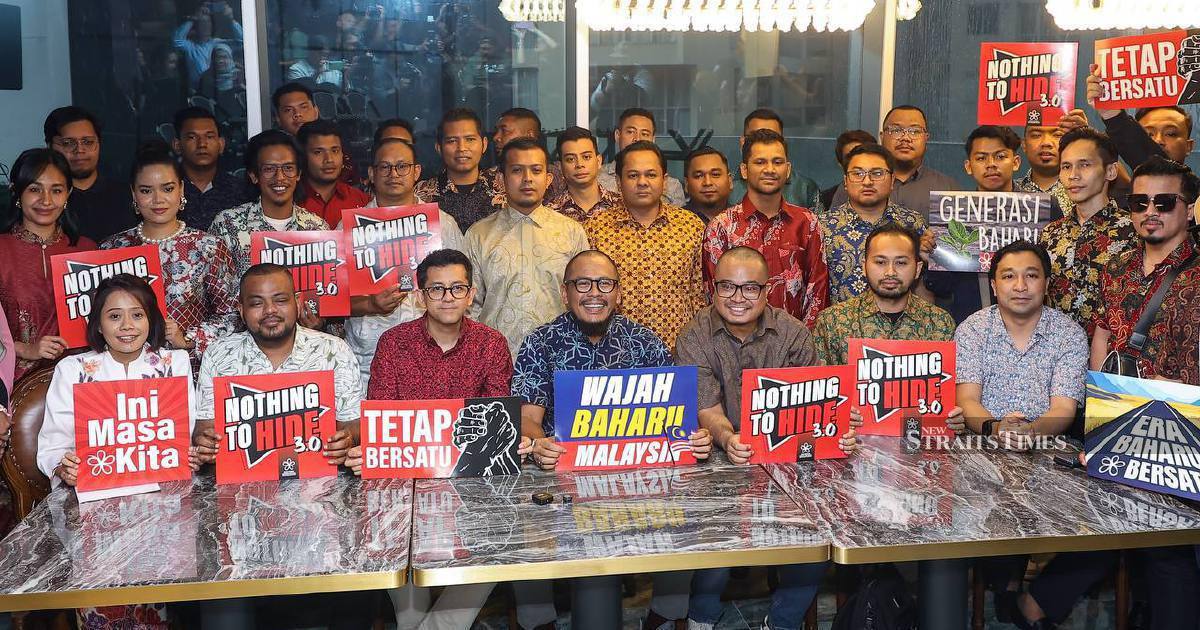
A prominent Bersatu politician has expressed optimism that the party's strained relationship with PAS can be restored, offering a candid assessment of the recent turbulence that has shaken the Perikatan Nasional (PN) coalition. Kota Siputeh assemblyman Mohd Ashraf Mustaqim Abdul Munir's comments mark an attempt by the alliance to project stability despite visible cracks in what was positioned as a unified political force.
The characterisation of the current friction as typical coalition maintenance rather than a fundamental breach suggests that Bersatu leadership views the disagreements as manageable rather than existential. By framing the tensions in terms of a marital dispute—partners bickering over household matters but remaining committed to their union—Mohd Ashraf has signalled that both parties retain sufficient common ground to weather the immediate storm. This rhetorical framing serves multiple audiences: reassuring PN supporters that the alliance remains intact, signalling flexibility to potential mediators, and indicating to the broader political class that informal negotiations continue behind closed doors.
The tension between Bersatu and PAS reflects deeper structural challenges within PN that extend beyond personality clashes or policy disagreements. Both parties compete for overlapping support bases, particularly in rural and Malay-Muslim majority constituencies where their ideological positioning creates natural friction. Bersatu, as a relative newcomer to the coalition formed around Muhyiddin Yassin's political ambitions, has struggled to establish clear differentiation from PAS's more entrenched grassroots networks. The recent disputes likely stem from negotiation over resource allocation, candidate selection for upcoming elections, and ministerial positioning rather than irreconcilable ideological divides.
For Malaysian observers, the health of the PN coalition carries significant implications for the broader political landscape. A functional PN coalition potentially constrains Pakatan Harapan's electoral dominance and forces the governing alliance to maintain performance standards and public support. Conversely, a fractured PN weakens the primary opposition force and potentially concentrates political power further within Putrajaya. The stakes extend to state-level politics, where PN controls governments in Kedah, Terengganu, and previously Kelantan, making any internal rupture consequential for regional administrations and policy implementation.
Mohd Ashraf's optimistic assessment comes at a critical juncture for PN strategy. With electoral cycles approaching and policy implementation ongoing, sustained coalition tension would undermine the alliance's ability to present coherent governance alternatives or mobilise supporters effectively. The marriage metaphor, while domesticating the dispute, also implicitly acknowledges the partnership's permanence—suggesting that divorce remains unlikely despite serious disagreements. This framing reflects both the political costs of coalition collapse and the practical necessity of maintaining the PN framework for opposition viability.
The resolution of immediate tensions will likely require concrete concessions on both sides, potentially involving leadership adjustments, portfolio redistributions, or clarified power-sharing arrangements. Bersatu's willingness to signal flexibility may indicate preliminary agreements on contentious issues, even if public reconciliation has not yet been formally announced. The party's communications strategy appears designed to allow both PN partners to claim victory while moving forward without extensive public reckoning of specific grievances.
Regional political observers should note that Southeast Asian coalition politics frequently operate through such cycles of tension and resolution, with public disagreements often masking ongoing negotiation processes. Malaysia's parliamentary system, requiring coalition formation for majority government, institutionalises these dynamics. The current PN dispute follows patterns established during Harapan's governance, when similar public tensions preceded internal accommodation. This normality in coalition management does not necessarily indicate instability, though it does reflect the structural fragility of multi-party arrangements lacking overwhelming electoral mandates.
For investors and business stakeholders monitoring Malaysian political stability, the PN alliance's durability carries economic implications. Coalition dysfunction risks policy paralysis, leadership uncertainty, and strategic drift precisely when economic challenges demand coordinated responses. Conversely, a functional opposition alliance provides institutional checks and longer-term political predictability through competitive pressure on the governing coalition to maintain performance standards. The apparent movement toward tension resolution, if sustained, should provide modest confidence that institutional mechanisms for conflict management remain operational.
The next test of PN cohesion will emerge through concrete actions: whether Bersatu and PAS jointly field candidates in upcoming elections, coordinate legislative positions consistently, and present unified policy platforms. Rhetorical gestures of reconciliation, while significant, require institutional follow-through to prove durable. Mohd Ashraf's characterisation of current disputes as manageable partnership friction suggests PN leadership believes such follow-through remains achievable, though political observers should monitor whether specific agreements materialise or whether the marriage metaphor ultimately obscures deeper incompatibilities between two parties competing for similar political space and voter support.

