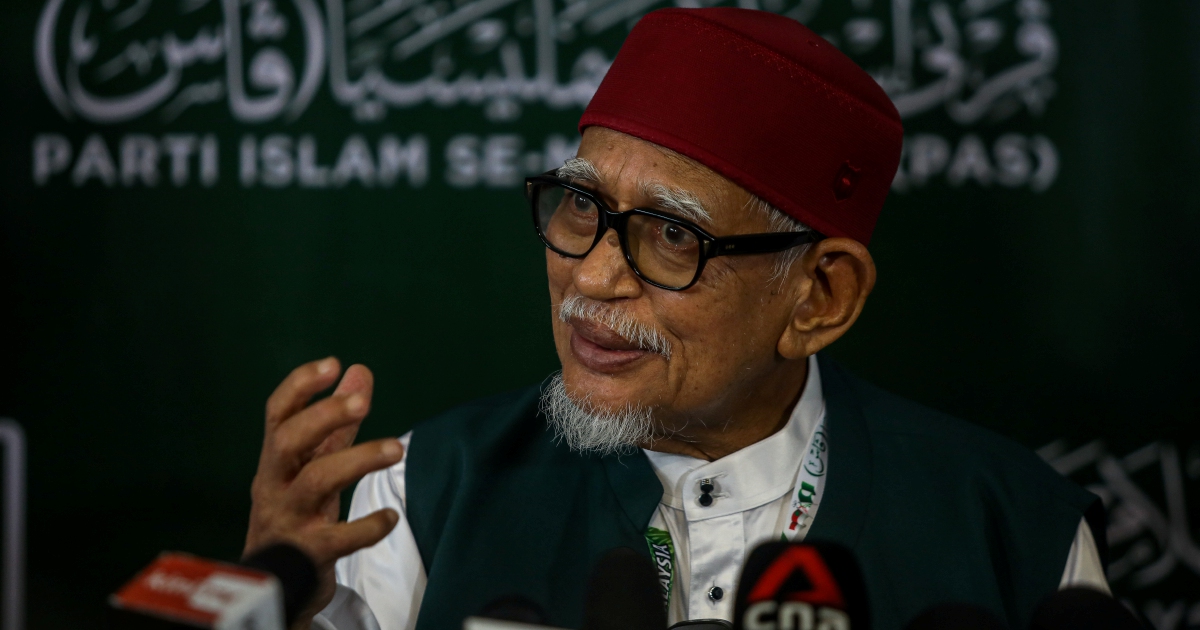
Perikatan Nasional's structural integrity has fractured decisively after Bersatu's abrupt exit, triggered by party president Tan Sri Muhyiddin Yassin's public announcement of plans to establish an alternative coalition arrangement. PAS president Tan Sri Hadi Awang confirmed in Marang that Bersatu's membership status within the three-year-old political alliance was automatically terminated following Muhyiddin's declaration, marking a significant realignment within Malaysia's opposition landscape and raising fresh questions about the viability of existing political partnerships.
The dissolution of Bersatu's membership represents a watershed moment for Perikatan Nasional, which has served as a counterweight to the Pakatan Harapan-led government since its formation in 2020. The alliance, which brought together PAS, Bersatu, and other parties under a unified platform to challenge the ruling coalition, has faced mounting internal tensions over strategic direction and resource allocation. Muhyiddin's decision to pursue coalition-building outside this framework signals a fundamental shift in his political calculations and suggests deepening divergence between the coalition's senior partners over fundamental governance questions.
The automatic revocation mechanism indicates that Perikatan Nasional's founding charter contained provisions permitting the immediate expulsion or withdrawal of members announcing unilateral coalition activities. This procedural structure reflects lessons learned from Malaysia's volatile political history, where parties historically exploited ambiguous membership terms to engage in simultaneous coalition negotiations, weakening partnerships through divided loyalties. By establishing automatic consequences for such unilateral action, the alliance attempted to enforce discipline—though Muhyiddin's move suggests he calculated the costs of breaking ranks as acceptable given his strategic objectives.
Muhyiddin's coalition initiative carries significant implications for Bersatu's parliamentary leverage and constituency. As an autonomous political entity operating outside Perikatan Nasional, the party must rebuild its positioning from scratch, competing directly against former allies for voter affiliation and legislative cooperation. This fragmentation could disadvantage opposition forces collectively, particularly if Bersatu's new coalition formation divides opposition votes rather than consolidating them against the government, effectively benefiting the ruling coalition through a divided opposition vote.
For PAS, Bersatu's departure presents both immediate challenges and longer-term opportunities. The removal of a coalition partner creates space for PAS to redefine Perikatan Nasional's identity and strategic focus, potentially strengthening the Islamic party's dominant position within the rump alliance. However, it simultaneously weakens Perikatan Nasional's overall electoral footprint and parliamentary representation, reducing its capacity to challenge government legislation or coordinate opposition activities effectively across legislative sessions.
The timing of this rupture reflects broader Malaysian political dynamics following recent electoral cycles and government transitions. Political coalitions in Malaysia have demonstrated limited durability, frequently fracturing under the weight of competing ambitions, unequal resource distribution, and disagreements over nomination patterns and policy priorities. Muhyiddin's willingness to abandon Perikatan Nasional suggests his confidence in his party's independent viability or his assessment that remaining within the alliance constrained his political options more than operating independently would.
Muhyiddin's new coalition announcement lacks specifics regarding partner parties, timeline for formal registration, and policy platforms that would distinguish it from existing arrangements. This ambiguity has generated speculation about his coalition's intended scope—whether it represents a genuine alternative force positioning itself between Pakatan Harapan and Perikatan Nasional, or whether it functions primarily as a negotiating position to extract concessions from existing coalitions. The latter interpretation suggests that Muhyiddin's coalition announcement might eventually lead to reconciliation with either Perikatan Nasional or Pakatan Harapan under restructured terms.
Regional observers monitor these developments closely, as Malaysia's coalition volatility creates unpredictability in Southeast Asian geopolitics. A fragmented opposition reduces institutional checks on executive power and complicates foreign policy coordination, potentially affecting bilateral relationships across the region. Countries engaging with Malaysia benefit from stable political coalitions that commit to consistent diplomatic and trade positions; coalition instability conversely introduces policy discontinuity and creates openings for manipulation by external actors.
Bersatu's separation from Perikatan Nasional reflects deeper patterns within Malaysian party politics, where personalities frequently supersede institutional structures and leaders maintain flexibility to reposition themselves according to shifting political circumstances. Muhyiddin's establishment of Bersatu itself represented a breakaway from the United Malays National Organization, demonstrating his willingness to sacrifice institutional tenure for political independence when he calculated such moves served his interests. His current maneuver follows this established pattern, suggesting that Malaysian political coalitions function less as permanent institutions than as temporary arrangements serving constituent leaders' individual ambitions.
The practical consequences extend beyond elite-level political maneuvering to affect ordinary Malaysians through policy implementation and legislative effectiveness. A fragmented opposition hampers scrutiny of government spending, creates uncertainty regarding legislative outcomes on key issues, and reduces institutional mechanisms through which diverse constituencies can aggregate their preferences into coherent political challenges. Voter confusion regarding coalition identities and party affiliations may furthermore depress electoral participation and weaken democratic engagement.
Moving forward, Bersatu's independent status necessitates rapid coalition formation or strategic repositioning to maintain parliamentary relevance. The party must determine whether to approach Pakatan Harapan regarding coalition participation, negotiate with remaining Perikatan Nasional partners toward reconciliation, or genuinely attempt to establish an autonomous coalition distinct from both existing frameworks. Each pathway carries distinct electoral, institutional, and policy implications that will reshape Malaysian politics for years ahead, making this separation a pivotal moment in the country's post-2018 political trajectory.

