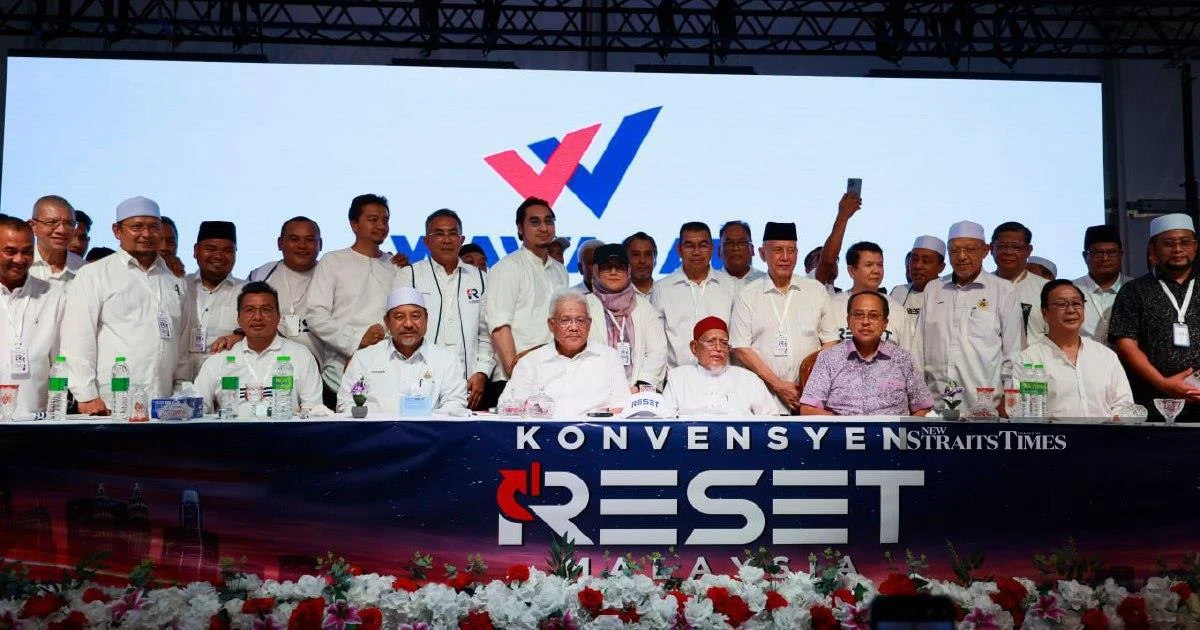
Perikatan Nasional faced a significant internal upheaval when Bersatu, one of its core component parties, publicly questioned the legitimacy of a hastily convened Supreme Council meeting that took place Monday evening. The emergency gathering, which apparently resulted in the approval of Wawasan's membership into the coalition, has become the flashpoint for mounting concerns about procedural governance within the increasingly fragile opposition alliance.
The timing and methodology of the PN chairman's decision to call an emergency session without what Bersatu characterizes as proper notice or deliberation raises fundamental questions about coalition management at a critical juncture in Malaysian politics. For a coalition supposedly built on consensus and shared decision-making, the circumvention of standard protocols signals either escalating tensions between member parties or a leadership style that prioritizes swift action over collaborative governance. Such cracks in institutional discipline could expose PN to further fragmentation if key parties feel sidelined or disrespected in strategic matters.
Bersatu's willingness to openly contest the legality of the proceedings reflects a notable shift in coalition dynamics. Historically, component parties have preferred to air grievances through back-channel negotiations rather than public confrontation, a practice that maintains coalition stability even amid disagreement. The decision to escalate this dispute into the public domain suggests that internal mechanisms for conflict resolution may have broken down or become ineffective, pointing to deeper structural problems within PN's decision-making architecture.
The Wawasan admission itself represents a significant strategic pivot for the coalition. Bringing in a new political entity presumably requires extensive vetting and consensus-building, particularly when existing members have competing interests or concerns about representation and resource distribution. The apparent acceleration of this process without sufficient consultation with coalition partners indicates either a fundamental misalignment about decision-making procedures or an attempt by the PN chairman to consolidate his authority through executive action.
For Malaysian readers observing opposition politics, this internal discord matters considerably. A cohesive opposition coalition is essential for Malaysia's political balance, serving as a meaningful counterweight to the government and holding it accountable through parliamentary scrutiny. When opposition alliances splinter through procedural disputes or leadership conflicts, the government effectively faces reduced pressure, and parliamentary oversight weakens. This dynamic has played out repeatedly in Malaysian politics, where momentary opposition unity has frequently dissolved into internecine warfare.
The legal implications that Bersatu raises deserve serious examination. Coalition frameworks typically operate under agreed constitutional procedures that govern admission of new members, resource allocation, and decision-making thresholds. If the PN Supreme Council meeting violated these provisions by failing to provide adequate notice or bypassing required approval processes, it could technically render the Wawasan admission illegitimate. Such technical defects could become leverage points for parties seeking to challenge the PN chairman's authority or reverse unfavorable decisions.
Beyond the immediate dispute, this incident illuminates the structural fragility of Malaysian political coalitions generally. Unlike formal political parties with constitutionally entrenched governance structures, coalitions operate through looser frameworks where enforcement mechanisms remain weak and member party commitment depends heavily on perceived fairness and tangible benefits. When leadership acts unilaterally, even with good intentions, it inevitably generates resentment among parties feeling marginalized or disadvantaged, creating cascading instability.
The Bersatu challenge also reflects the reality that PN itself comprises parties with distinct ideologies, regional bases, and political ambitions. Bersatu's Bumiputera-focused positioning and peninsular concentration sometimes conflicts with PAS's Islamic prioritization or other members' specific territorial interests. Managing these differences while maintaining coalition cohesion requires extraordinary diplomatic skill and absolute transparency in procedural fairness. The perception of backroom maneuvering corrodes trust rapidly.
What happens next will significantly shape PN's trajectory. If the PN chairman reverses the Wawasan admission or convenes a properly constituted meeting to reconsider it, this defuses the immediate crisis but signals that the leadership lacks sufficient authority to make binding decisions unilaterally. Conversely, if the chairman stands firm and dismisses Bersatu's concerns, this risks pushing Bersatu toward the exit, potentially fracturing the coalition at a politically critical moment. Either outcome carries consequences for Malaysia's opposition landscape.
For Southeast Asian watchers observing Malaysian politics, this drama highlights how coalition management remains as consequential as electoral strategy in determining political outcomes. Thailand, the Philippines, and Indonesia have all experienced coalition collapses driven by procedural disputes and leadership conflicts rather than ideological schisms. The PN situation suggests Malaysia may be following a similar pattern, where structural weaknesses in coalition governance become fatal vulnerabilities when tested by circumstance or ambition.

