Malaysia's National News Agency, Bernama, is doubling down on its mandate to cultivate patriotic sentiment across the nation during the lead-up to National Day celebrations. Operating under the Ministry of Communications, the agency is leveraging its broad reach and institutional platform to ensure that the spirit of kebangsaan resonates among both the public and its own workforce during the month of August.
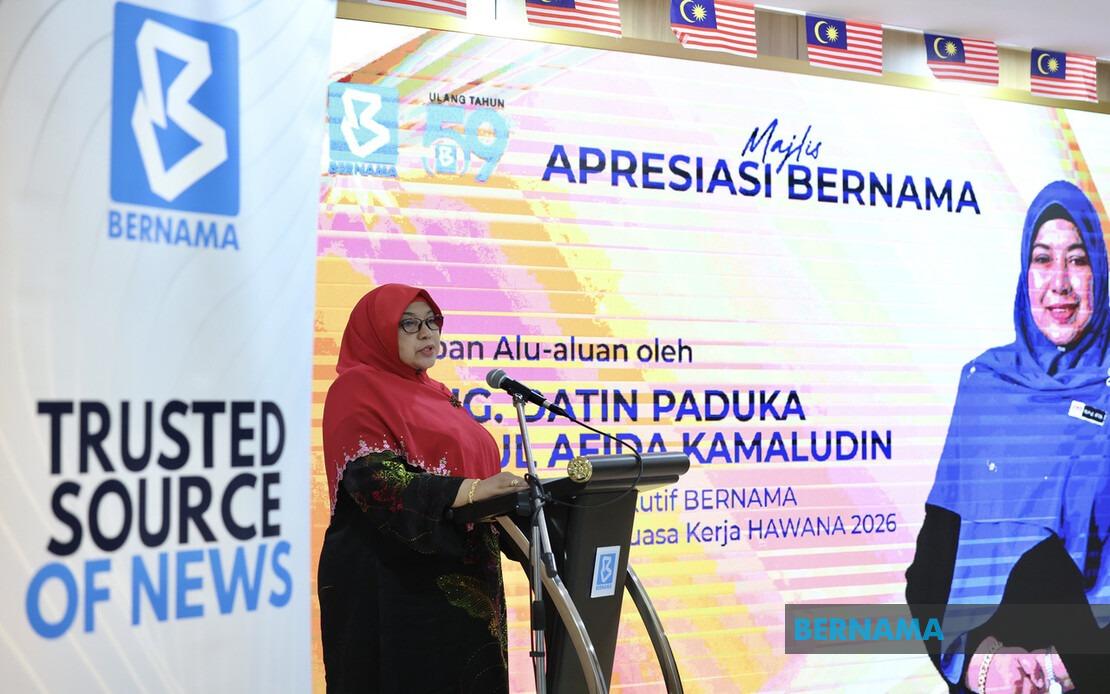
Datin Paduka Nur-ul Afida Kamaludin, who heads the agency as chief executive officer, articulated Bernama's expanded role during an internal appreciation ceremony held at its headquarters in Kuala Lumpur. Beyond its traditional function as a news disseminator, she emphasized that Bernama bears institutional responsibility for championing programmes and initiatives emanating from its parent ministry. This positions the agency not merely as a neutral news conduit but as an active participant in advancing government-endorsed national campaigns, a nuance that underscores how state media operates within Malaysia's communications ecosystem.
Central to Bernama's current initiative is the symbolic distribution of the Jalur Gemilang, the national flag, to representatives across the agency's core departments. This gesture carried deeper meaning than ceremonial display—it functioned as a tangible kickoff for National Month observances and served to energize employees around the celebration's broader messaging. The agency's leadership presented this distribution as a watershed moment for collective organisational engagement with patriotic themes.
Complementing the flag initiative is the "Satu Rumah, Satu Jalur Gemilang" (One House, One Flag) campaign, which extends the patriotic appeal beyond institutional boundaries into the domestic sphere. Bernama is actively encouraging its employees to display the flag at their homes, transforming private residential spaces into visible markers of national pride. This approach reflects a strategic understanding that patriotism operates across multiple registers—from public institutions to family homes—and that grassroots engagement amplifies the resonance of centralized messaging.
The timing of these efforts aligns with Prime Minister Anwar Ibrahim's formal launch of National Month activities in Ipoh, which catalyzed heightened patriotic programming across government agencies and state-linked organisations. Bernama seized this momentum to refresh its own premises with flag decorations and to mobilise internal enthusiasm for the month-long celebration. For a news agency, such visible commitment to national symbolism carries particular weight, as it demonstrates alignment between institutional identity and national narrative.
A notable component of the broader campaign was the introduction of a specially commissioned National Day theme song, composed by singer Faizal Tahir. This addition reflects how contemporary patriotic campaigns integrate cultural and musical dimensions alongside traditional symbol-based approaches. The song's unveiling at Bernama's internal ceremony underscores the agency's role in disseminating not just news but also cultural touchstones associated with national observance.
Nur-ul Afida acknowledged a logistical reality that many large organisations face during National Month: gathering dispersed staff for unified celebrations presents operational challenges. By consolidating multiple initiatives—the flag distribution, employee engagement activities, and cultural introductions—into a single event, Bernama achieved efficiency while amplifying the cumulative impact of its patriotic messaging. This pragmatic approach demonstrates how institutional resource constraints can be reframed as opportunities for creative programming.
The agency's emphasis on employee participation carries particular significance within Malaysia's media landscape. State news agencies occupy a distinct position between commercial journalism and government communication, and their internal culture significantly influences how they frame and disseminate national narratives. When Bernama prioritizes patriotic engagement among its own staff, it simultaneously shapes the institutional perspective from which news is gathered, edited, and distributed to the broader public.
From a regional perspective, Malaysia's sustained investment in patriotic campaigns through institutional channels reflects broader Southeast Asian patterns. Governments throughout the region maintain similar mechanisms for channelling national identity messaging through state media and coordinated public campaigns. Bernama's National Month activities fit within this regional context while reflecting Malaysia-specific sensitivities around communal harmony and national cohesion.
The initiative also underscores how state institutions in Malaysia maintain mechanisms for internal cultural alignment. By connecting employee patriotism with organisational identity, Bernama reinforces messaging consistency across hierarchical levels. This vertical integration of patriotic sentiment is particularly important for news agencies, where editorial choices and story selection significantly influence public perception of national events and identity.
Looking forward, Bernama's expanded patriotic programming suggests a sustained commitment to positioning the agency as custodian of national narrative beyond mere news reporting. The concrete actions—flag distribution, employee mobilisation, and cultural programming—translate abstract patriotic sentiment into visible institutional practices. For Malaysian readers and international observers, such actions signal how state communication structures function as vehicles for national identity reinforcement during significant calendar moments.
Ultimately, Bernama's August initiatives exemplify the multifaceted approach that Malaysian government institutions employ to cultivate national consciousness. Through symbolic gestures, employee engagement, and cultural integration, the agency orchestrates a comprehensive patriotic messaging campaign that operates simultaneously at institutional, individual, and public levels. This layered strategy reflects institutional sophistication in understanding how patriotism functions as both emotional commitment and organised social practice.

