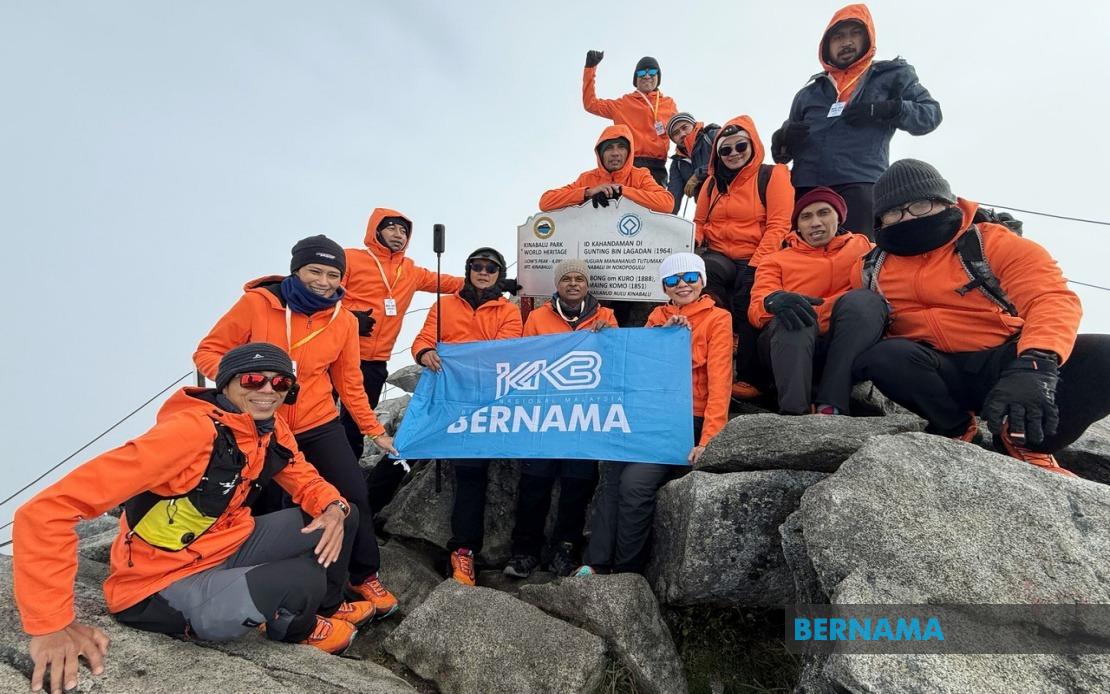
The Malaysian National News Agency (Bernama) achieved a significant milestone on July 1 when twenty-three of its staff members successfully reached the summit of Mount Kinabalu, Southeast Asia's highest peak at 4,095.2 metres, during a specially organised expedition marking the National Journalists' Day (HAWANA) 2026 celebrations. The climbing effort represents the first major institutional expedition of its kind undertaken by the organisation and showcases how Malaysia's premier news agency is leveraging major national events to build institutional identity and camaraderie amongst its workforce. The expedition's design reflects broader trends in Malaysian corporate culture where major anniversaries and national observances become catalysts for employee engagement initiatives that extend well beyond traditional office-based celebrations.
Leading the expedition was Bernama Editor-in-Chief Arul Rajoo Durar Raj, who made his own historic contribution by becoming the first editor-in-chief in the agency's history to successfully climb Mount Kinabalu. Beyond the personal achievement, Arul Rajoo framed the expedition as a strategic platform for pursuing two distinct Malaysia Book of Records entries: recognition as the largest group of media practitioners from a single organisation to scale Mount Kinabalu, and acknowledgment as the first media organisation to produce news reports simultaneously in four languages from the mountain's summit. These dual record aspirations transform what might otherwise be a team-building exercise into a competitive achievement with potential national recognition, thereby elevating the expedition's significance within Malaysia's media landscape and providing measurable benchmarks for institutional success.
The climbing party comprised a deliberately cross-functional composition that drew personnel from across the agency's operational structure. Reporters, photographers, sub-editors, television crew members, and administrative staff all participated, reflecting an institutional commitment to including contributors from all professional levels in the achievement. This democratic approach to team composition contrasts with expeditions that might focus exclusively on senior management or specific departments, instead positioning the climb as a collective expression of organisational values. The deliberate inclusion of support staff and technical personnel underscores how modern Malaysian newsrooms increasingly emphasise organisational unity across hierarchical divides, particularly during publicly visible initiatives that generate internal and external goodwill.
The physical challenge of the climb itself tested participants' endurance and resolve. The expedition commenced at Timpohon Gate at 10 am on June 30, with the climbing party ascending to Panalaban camp where they spent the night acclimatising to the altitude before recommencing their ascent at 2:30 am on July 1. The team ultimately summited at approximately 7:20 am, having navigated demanding weather conditions characterised by heavy rainfall, dense mist, and severe winds that are typical of Kinabalu's unpredictable equatorial mountain climate. These environmental obstacles transformed the expedition from a straightforward logistical achievement into a genuine test of participant determination, with the early morning ascent in poor visibility conditions presenting particular navigational and physical challenges that require substantial training and mental fortitude to overcome.
The expedition organisers positioned the climb explicitly as serving multiple institutional objectives beyond the record-pursuit component. The Bernama Staff Club (KKB), acting as the primary organising entity, framed the expedition as an instrument for celebrating HAWANA 2026 while simultaneously addressing organisational development priorities including enhanced teamwork, strengthened physical and mental resilience, and promotion of healthier lifestyle practices across the agency's workforce. This multidimensional framing reflects how Malaysian organisations increasingly structure major events to deliver quantifiable outcomes spanning employee wellness, team cohesion, and organisational visibility simultaneously, creating maximum institutional return on the significant time and resource investment required for such undertakings.
The expedition secured support from a diverse array of commercial and governmental partners that facilitated the logistical complexity of transporting and supplying nearly two dozen participants through a challenging mountain environment. International sportswear brand BMAI, budget airline Batik Air, and beverage company 100PLUS provided strategic sponsorship, while EHH Food Industry Sdn Bhd, Saloma Bistro, Malaysia Airports, Malaysia Insight, UFL, Sabah Parks, and Marathon Baker contributed essential support services ranging from food provision to airport coordination and park management. This sponsorship ecosystem demonstrates how signature corporate initiatives increasingly function as vehicles for brand alignment and partnership cultivation, enabling sponsor organisations to associate themselves with newsworthy achievements while providing participating organisations with critical resource support that would otherwise strain operational budgets.
Mount Kinabalu's geographical and cultural significance extends well beyond its status as a climbing destination. Towering at 4,095.2 metres and located within the 754-square-kilometre Kinabalu Park, the mountain holds protected status as a UNESCO World Heritage Site and forms part of the Kinabalu UNESCO Global Geopark (KUGGp). This designations position the mountain as a landscape of international geological and environmental importance, transforming Bernama's expedition from merely a physical challenge into an engagement with one of Malaysia's most significant natural heritage sites. For Malaysian media professionals operating in Southeast Asia's regional context, summiting Kinabalu carries symbolic resonance as an assertion of Malaysian environmental stewardship and connection to the country's distinctive natural patrimony.
The expedition demonstrates how Malaysian institutional media continues to evolve its public positioning and internal culture during a period of significant transformation across the global news industry. By anchoring a major expedition to HAWANA 2026 celebrations, Bernama signals institutional pride in the journalism profession itself while creating a memorable shared experience that transcends the quotidian pressures of newsroom operations. The deliberate pursuit of Malaysia Book of Records recognition suggests organisational ambition to document and celebrate achievements that might otherwise remain internally celebrated, positioning institutional accomplishments within broader narratives of Malaysian excellence and innovation that resonate with national aspirations.
For Malaysian journalists and media observers, the expedition carries implications regarding how institutions like Bernama understand their role and identity within contemporary Malaysian society. Rather than positioning itself exclusively as a news-gathering entity, Bernama through this expedition demonstrates institutional willingness to participate in broader national celebrations while simultaneously building internal institutional culture and pursuing quantifiable recognition benchmarks. This approach reflects broader trends whereby major Malaysian organisations increasingly leverage signature events to simultaneously serve employee engagement objectives, pursue national recognition, cultivate corporate partnerships, and demonstrate alignment with broader national celebrations and values.
The successful summiting of Mount Kinabalu by the Bernama delegation also carries symbolic significance regarding representation and visibility within Malaysia's media landscape. The deliberate composition of the climbing party to include diverse organisational roles and professional backgrounds sends implicit messages about inclusive institutional culture and collective commitment to major organisational achievements. In an industry context where hierarchical structures and competitive pressures sometimes create divisions between different professional categories, the expedition's explicit emphasis on cross-functional participation through careful party composition offers a counter-narrative emphasising organisational coherence and shared purpose.
Looking forward, the expedition's pursuit of Malaysia Book of Records recognition will require documentation and formal verification processes that may extend beyond the immediate climbing achievement. The four-language news reporting component particularly suggests an ambitious multimedia documentation strategy that transforms the climb from a physical feat into a content production exercise, with journalists simultaneously fulfilling their professional roles while participating as expedition members. This dual-track approach exemplifies how contemporary media institutions leverage major events to generate both institutional achievement and publishable content assets, maximising return on significant organisational investments through multifunctional event design.
The expedition ultimately represents a moment of institutional reflection and celebration for Bernama during HAWANA 2026, demonstrating how national observances occasion major undertakings that extend beyond ceremonial acknowledgment into transformative institutional experiences. The successful summit achievement, combined with the pursuit of record recognition and the comprehensive documentation efforts underway, positions this expedition as a defining moment in contemporary Bernama institutional history. For the broader Malaysian media landscape, the expedition signals how news organisations continue to assert institutional relevance and cultural significance by participating visibly in major national celebrations while simultaneously investing in internal institutional culture and pursuing measurable benchmarks of organisational achievement.

