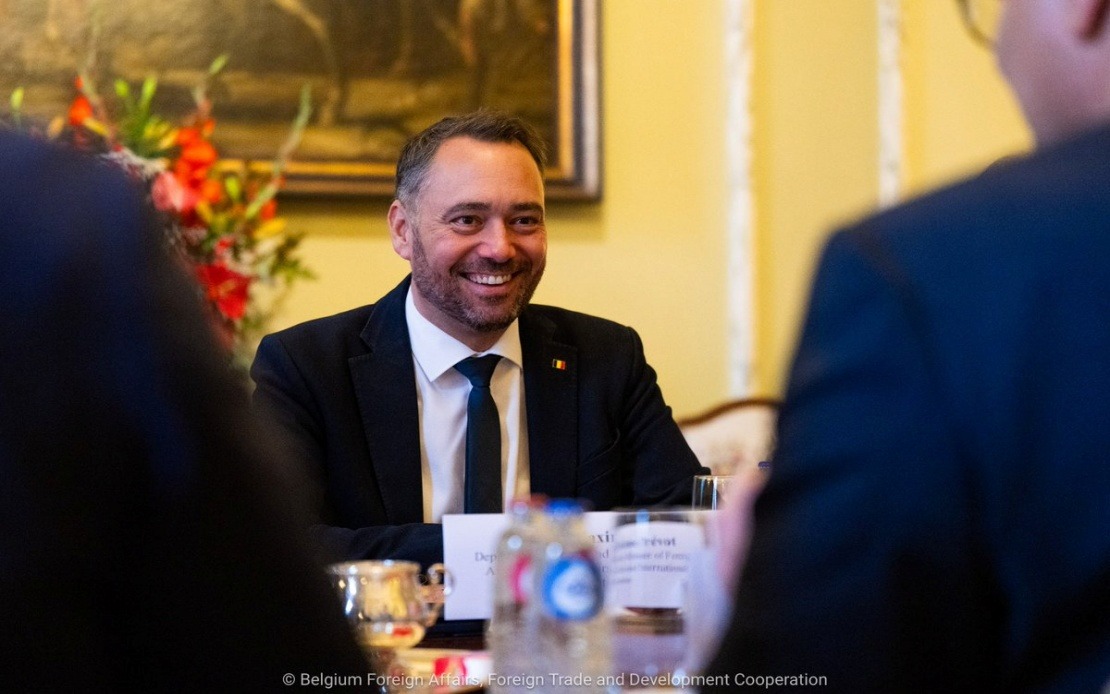
Belgium's Deputy Prime Minister and Foreign Minister Maxime Prévot touches down in Malaysia on Thursday for a two-day working visit that reflects deepening engagement between the two countries on strategic sectors including renewable energy, critical mineral processing, and halal commerce. The visit, which carries particular significance as his first to Malaysia since taking office in February 2025, signals Europe's intensifying interest in Southeast Asian energy transition partnerships and supply chain diversification amid global geopolitical shifts.
The Belgian minister will meet with Deputy Prime Minister Datuk Seri Fadillah Yusof on Wednesday, July 2, for substantive discussions aimed at charting new terrain in bilateral cooperation. Fadillah's concurrent responsibility for Energy Transition and Water Transformation places him in an ideal position to align Belgium's renewable energy ambitions with Malaysia's own energy transition roadmap, a critical consideration given Malaysia's renewable energy targets and its strategic position in the global clean technology supply chain.
According to the Malaysian Foreign Ministry statement released on Wednesday, the bilateral agenda extends well beyond renewable energy alone. Rare earth elements represent a particularly urgent dimension of these talks, given mounting international competition for these minerals essential to green technology manufacturing and defence applications. Malaysia's established rare earth processing capabilities and mineral resources make it an attractive partner for Europe, which faces supply vulnerabilities and seeks to reduce dependency on single-source suppliers. The discussions will likely explore investment frameworks, technology partnerships, and regulatory harmonisation that could position both nations as preferred trading partners in the critical minerals sector.
The halal industry component of these talks reflects an intriguing intersection of commercial opportunity and cultural exchange. As a predominantly Muslim nation with globally recognised halal certification standards and a sophisticated halal manufacturing ecosystem, Malaysia offers European businesses pathways into the rapidly expanding halal market across Asia, Africa, and the Middle East. Belgium's pharmaceutical, food processing, and chemical industries may find opportunities to align their operations with Malaysia's stringent halal requirements while simultaneously accessing lucrative export markets where such certification commands premium positioning.
Beyond the bilateral dimension, Prévot's visit encompasses the broader Malaysia-European Union relationship framework. The talks will necessarily address how individual member state priorities integrate within the EU's strategic approach to Indo-Pacific engagement and trade architecture. This becomes increasingly significant as Europe recognises the region's economic weight and seeks to balance growing Asian interdependencies with its own strategic autonomy objectives. Malaysia, as a long-standing ASEAN member and voice for the Global South, often articulates regional perspectives that help Europe calibrate its Asia-Pacific policies.
The minister's participation in the 39th Asia-Pacific Roundtable organised by the Institute of Strategic and International Studies Malaysia adds a multilateral dimension to his visit. This platform allows Prévot to engage not merely with bilateral counterparts but with a broader constellation of policymakers, academics, and strategic thinkers across the region. His ministerial address will likely articulate European positioning on regional security architecture, economic cooperation, and the green energy transition—topics where Malaysia and Southeast Asia maintain keen interest in understanding European perspectives.
The planned audience with the Sultan of Perak, Sultan Nazrin Muizzuddin Shah, carries ceremonial and substantive weight. Royal engagements underscore the importance both nations place on the relationship and provide informal channels for senior-level discussion outside formal negotiating structures. Perak's significance as a resource-rich state with substantial mineral and energy assets may also factor into these discussions, particularly regarding rare earth processing and renewable energy projects.
Bilateral trade figures contexualise the economic foundation upon which these political discussions rest. Total trade reaching RM9.74 billion in 2025, with Malaysian exports at RM6.85 billion substantially exceeding imports at RM2.89 billion, indicates Malaysia's strong export competitiveness with Belgium. The trade surplus suggests Malaysia supplies value-added products, chemicals, or minerals that Belgium incorporates into its manufacturing and exports. This asymmetry justifies Belgium's interest in deeper collaboration on sectors like rare earths, where Malaysia's processing capabilities add strategic value.
The investment profile further illuminates bilateral economic engagement. Sixty-seven approved projects involving Belgian participation have generated RM5.1 billion in committed investments and projected employment creation of 4,605 jobs across Malaysia's economy. These figures, while modest compared to investments from larger trading partners, demonstrate consistent European engagement and suggest a growing pipeline of opportunities. The relatively steady Belgian presence indicates trust and institutional knowledge that newer investors might lack, potentially positioning Belgium as a reliable technology partner for Malaysia's energy transition agenda.
From Malaysia's perspective, the timing of this visit aligns with the country's accelerating renewable energy ambitions and its positioning as a critical minerals hub. Securing European investment and technology partnerships for solar manufacturing, wind energy systems, and battery storage technologies directly supports Malaysia's carbon neutrality commitments. Simultaneously, exploring rare earth cooperation opportunities addresses Malaysia's desire to move beyond raw material extraction toward higher-value processing and manufacturing, creating more substantial economic returns and employment.
For Belgium and the broader European Union, this engagement represents strategic hedging in an increasingly multipolar world. As Asia's economic and technological significance grows, European nations require diversified supply chains and trusted partnerships that reduce vulnerability to geopolitical disruption. Malaysia, with its democratic governance, sophisticated regulatory frameworks, and established relationships with Western institutions, offers a comparatively low-risk entry point for European capital and technology seeking expansion in Southeast Asia.
The visit ultimately signals that bilateral relationships between European nations and Southeast Asian countries increasingly revolve around concrete economic cooperation in strategic sectors rather than traditional diplomatic courtesies alone. Renewable energy, rare earths, and halal industry development represent tangible value propositions that benefit both partners. As this visit unfolds, observers will watch for specific commitments on investment frameworks, technology cooperation, and regulatory coordination that might emerge from these high-level discussions.

