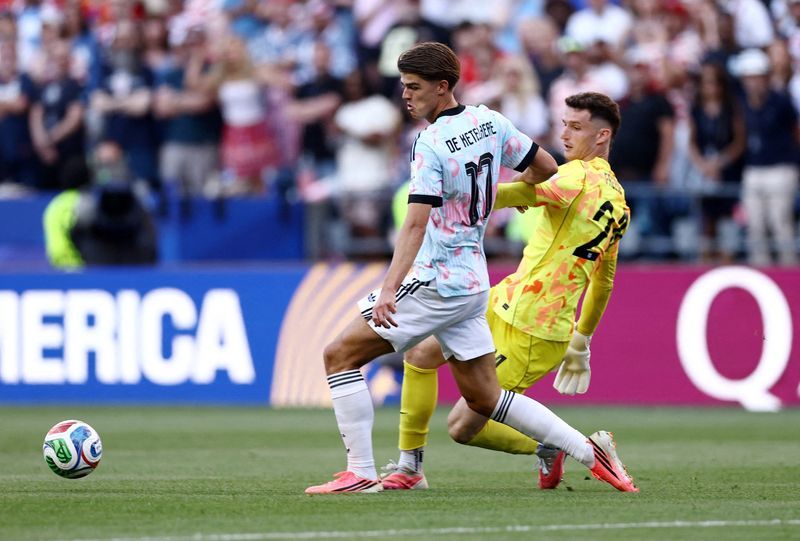
Belgium coach Rudi Garcia's willingness to drop his biggest names has produced immediate and spectacular results, with the Belgian side demolishing their American hosts 4-1 in a World Cup round-of-16 clash that suggested the team may have finally discovered their optimal tactical formula. The victory in Atlanta on July 7 came after Garcia orchestrated sweeping changes to the starting lineup, decisions that appeared vindicated when Charles De Ketelaere struck twice in the opening half to set Belgium on a convincing path to the quarter-finals.
The strategic gambit represented a calculated risk by Garcia, who benched several of Belgium's most decorated players—Kevin De Bruyne, Jeremy Doku, and Romelu Lukaku all found themselves on the sidelines, with De Bruyne not even featuring in the squad for the Seattle fixture. Such moves in a knockout competition typically invite fierce scrutiny from the home press and supporters alike, yet the tactical recalibration proved so effective that it silenced potential critics instantly. In place of the established stars, Garcia introduced Nicolas Raskin, Amadou Onana, and Dodi Lukebakio into the midfield and attacking setup, while De Ketelaere shifted into a central forward position that proved considerably more productive than previous deployments.
Belgium's journey to this turning point had been far from smooth. The group stage saw them draw their opening two matches before a dominant 5-1 demolition of New Zealand allowed them to top their pool, though the victory papered over significant underlying concerns about their cohesion and creative spark. More alarming still was their knockout-round encounter against Senegal, where they found themselves trailing by two goals with barely five minutes of regulation play remaining. Only through their opponents' defensive breakdown and a late extra-time penalty did Belgium escape what would have been an embarrassing early elimination, survival that appeared to trigger Garcia's reassessment of the squad's composition and strategic approach.
The tactical blueprint employed against the Americans centered on aggressive midfield pressing and swift ball recovery, with captain Youri Tielemans playing a more advanced role that repeatedly allowed Belgium to win contested second balls and regain possession in dangerous areas. This represented a marked departure from the static, creativity-dependent setup that had characterized their earlier matches, replacing individual brilliance with structured collective pressure. The midfield dominance created significant space for Belgium's wingers to exploit, which they did with ruthless efficiency against a United States defense that appeared simultaneously overextended and lethargic throughout the encounter. The Americans looked bewildered by the intensity and coordinated nature of Belgium's approach, never establishing the kind of defensive solidity required to contain such purposeful attacking waves.
Garcia's pre-match confidence in the tactical scheme proved well-placed, though he had remained uncertain of his final team selection until the hours immediately before kickoff. When asked about his rationale for the changes, the coach emphasized that his decisions reflected both current training form and the specific demands of the tactical approach he intended to implement. His pragmatism became apparent in the execution, as evidenced by his willingness to keep De Bruyne—universally regarded as Belgium's most influential player—on the bench even when opportunities arose to deploy him as a substitute. This restraint suggested genuine conviction in the alternative setup rather than cosmetic tinkering.
The loss of Amadou Onana to a knee injury midway through the first half could have destabilized the carefully constructed tactical arrangement, yet Belgium's transition to Plan B proved seamless. Hans Vanaken, the veteran midfielder, assumed Onana's defensive responsibilities in front of the three-man rearguard, and his performance warranted particular praise from Garcia. At 33 years old, Vanaken's goal demonstrated the value of including experienced players willing to adopt unglamorous roles, while his presence also illustrated how squad depth and tactical flexibility can compensate for setbacks. Garcia's evident satisfaction with Vanaken's contribution spoke to the coach's appreciation for players who prioritize team function over individual recognition.
The significance of this victory extends beyond the immediate scoreline, particularly given the intense domestic scrutiny Garcia had faced during Belgium's erratic group-stage performances. The Belgian press and supporters had questioned his selection decisions, his tactical acumen, and his ability to extract cohesive performances from a roster of world-class individual talents. The convincing nature of the American triumph suggested that Garcia's apparent lack of orthodoxy—his reluctance to simply field all available stars regardless of form or tactical fit—reflected a more nuanced understanding of team dynamics. Belgium's football in Atlanta represented their most flowing, controlled display of the tournament to date, built not on individual moments of genius but on tactical discipline and collective understanding.
With Spain awaiting Belgium in the quarter-final in Los Angeles on Friday, Garcia's squad now faces a considerably more challenging opponent that demands a more refined version of the tactical principles demonstrated against the Americans. Spain's technical sophistication and passing precision will test whether Belgium's aggressive pressing can be maintained at higher levels of resistance, yet the confidence generated by dismantling a previously organized United States team should provide psychological momentum. Belgium's transformation from near-elimination candidates to serious tournament contenders within the span of 90 minutes underscores the often-underestimated importance of tactical flexibility and selection courage in knockout competitions, where the margin between elimination and progression frequently hinges on decisions made in the days preceding crucial matches.

