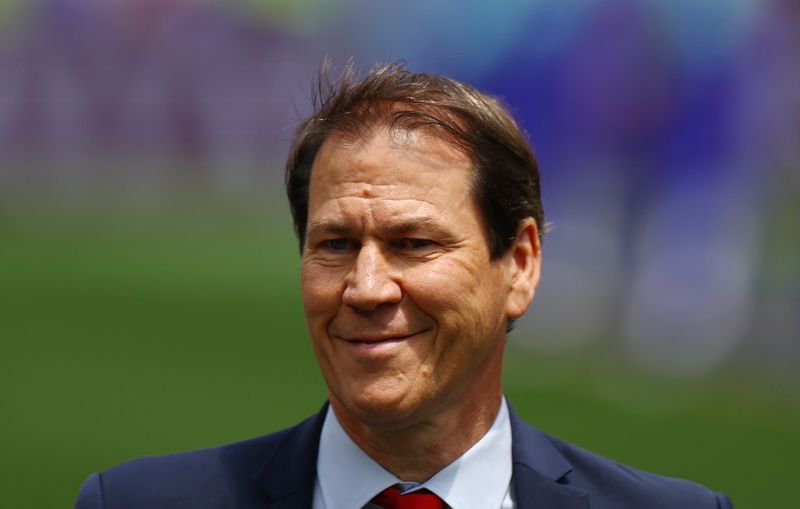
Rudi Garcia's tenure as Belgium coach will conclude at the end of July, with both the French tactician and the Belgian Football Association announcing on Monday that they have chosen not to extend their working relationship. The decision comes roughly a week after the Red Devils' campaign at the World Cup ended in disappointment when they fell to eventual tournament champions Spain in the last eight. While Garcia's departure represents the end of a challenging 18-month assignment, it underscores the mounting pressure international football managers face when delivering results at the sport's grandest stage.
Belgium's World Cup journey embodied contradictions that ultimately defined Garcia's time at the helm. The team produced moments of genuine quality, most notably a dominant 4-1 victory over hosts United States that drew widespread praise for tactical acumen and player selection. Yet these performances were interspersed with unconvincing displays that drew scathing criticism from Belgian media outlets. In their opening group matches, Garcia's side managed only draws against Egypt and Iran—results that initially prompted questions about whether the coach possessed the tactical flexibility to navigate the tournament's demands. The opening-round struggles proved significant enough that Garcia felt compelled to address the Belgian press directly, articulating his strategic rationale in an effort to quell mounting doubts.
The team's path to the quarter-finals was littered with moments of fortune and controversy that reflected the tournament's unpredictable nature. Against Senegal in the Round of 32, Belgium recovered from a two-goal deficit in circumstances that hardly reflected coaching brilliance. The comeback was aided considerably by a goalkeeping error that allowed the Red Devils to restart their campaign, then sealed by a contentious VAR penalty decision in extra time as Belgium prevailed 3-2. Such fortune proved fleeting, however, as Spain's superior technical quality proved too much in the knockout stage, terminating Belgium's campaign and clouding assessments of Garcia's overall contribution.
The circumstances surrounding Garcia's departure carry particular significance given the substitute goalkeeper decision that preceded the Spanish elimination. Garcia's choice to remove Thibaut Courtois from the field in crucial moments appeared questionable to many observers and fuelled speculation that the Belgian Federation would move to terminate his contract. However, both parties chose to characterise the separation as mutually agreed, suggesting Garcia retained sufficient standing to depart with dignity intact. At 62 years old, the experienced Frenchman cited the opportunity to shepherd a "generational transition" he had helped establish, a diplomatic framing that reflects the complexity of evaluating his impact on a squad in flux.
Vincent Mannaert, the Belgian Federation's sports director, offered measured acknowledgement of Garcia's achievements despite the World Cup's disappointing conclusion. Mannaert noted that Garcia inherited a "challenging sporting and financial context" when appointed and credited the coach's experience with restoring team cohesion following turbulent circumstances. The federation's public statement carefully balanced recognition of genuine accomplishments—notably the World Cup quarter-final appearance itself—against unstated frustrations with consistency and performance quality. This measured tone suggests that while Garcia's World Cup campaign failed to satisfy Belgian expectations, his foundational work rebuilding squad morale and stability retained sufficient value to warrant respectful acknowledgement.
Garcia's departure places responsibility squarely upon Mannaert's shoulders to identify and appoint a successor capable of capitalising on the generational rebuild. Belgium faces immediate competitive demands despite the coaching transition, with Nations League fixtures against Italy in Rome and a home encounter with France scheduled for September. These prestigious matchups represent early tests for whoever assumes the coaching role, as the international calendar provides little respite for reconstruction or adaptation. The compressed timeline for recruitment and appointment means Mannaert must act decisively to minimise disruption during this critical transitional period.
The departure underscores a broader trend visible across multiple World Cup-participating nations. Fourteen countries have already cycled through coaching changes during or immediately following the tournament, including established footballing nations such as France, Germany, and the Netherlands alongside emerging programmes. This churn reflects the intensified scrutiny applied to national team managers when performing before global audiences under compressed timeframes. The World Cup's winner-take-all structure leaves little room for narrative rehabilitation or second chances, compelling federations to make decisive personnel shifts when results disappoint expectations.
For Malaysian and Southeast Asian observers, Garcia's experience carries broader implications regarding the pressures facing international football programmes. Although Malaysia and its regional peers do not regularly compete at World Cup tournaments, the expectations placed upon national team coaches to deliver immediate results resonate across football cultures. Garcia's departure despite reaching the quarter-finals demonstrates that mere progression to later stages provides insufficient justification for retention when performances appear unconvincing or inconsistent. This standard has profound consequences for coaches throughout Asia, where federation leadership frequently prioritises short-term tournament success over longer-term tactical development or player integration.
The transition also reflects evolving expectations within Belgian football regarding the style and substance of international competition. The Belgian Football Association's emphasis on Garcia's role in generational transition suggests the federation views the current cycle as developmental rather than trophy-focused. This philosophy contrasts with the winning-is-everything mentality that often dominates football administration in more established World Cup nations. However, the decision not to extend Garcia's contract despite this developmental framework indicates that patience has limits, even when substantial foundational work has been completed.
Garcia's next destination remains undetermined, though his profile and experience ensure opportunities will emerge within European club football or international coaching circles. His World Cup quarter-final achievement, despite tournament circumstances that complicated assessments of his tactical capabilities, maintains sufficient credibility to attract interest from clubs or federations seeking experienced leadership. The Belgian situation exemplifies how international football's relentless calendar and binary success-failure metrics create recurring management instability, particularly at the World Cup stage where entire coaching tenures can be defined by a single tournament's outcome.

