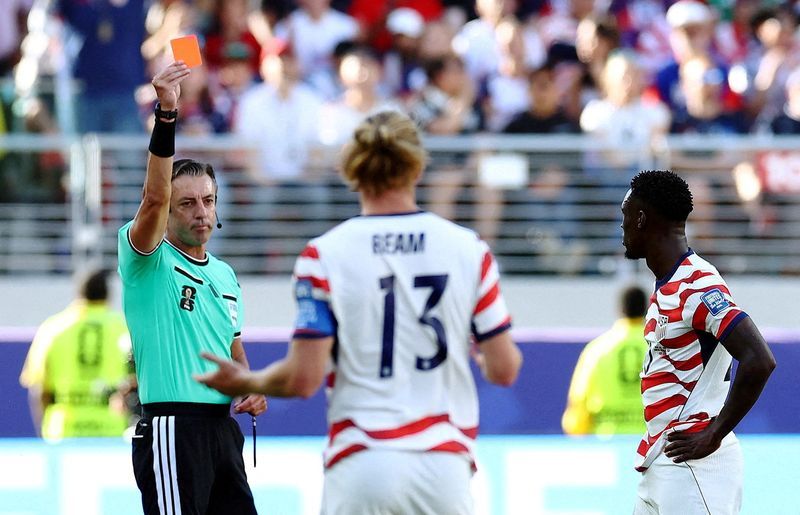
The World Cup has become entangled in diplomatic controversy after FIFA lifted a suspension on a United States striker following a direct appeal from President Donald Trump to FIFA President Gianni Infantino. The decision has triggered widespread outrage in Belgium, where citizens and government officials view the reversal as an unprecedented breach of sporting integrity ahead of Monday's last-16 encounter between the two nations in Seattle.
The case centres on Folarin Balogun, whose red-card ban was suspended by FIFA, enabling him to participate in the upcoming fixture. The intervention represents a striking departure from established disciplinary procedures and has raised uncomfortable questions about the influence of political pressure on international sporting governance. For many Belgian observers, the decision undermines the fundamental concept of fair play that underpins competitive sport at the highest level.
In interviews across Brussels, ordinary citizens expressed deep frustration with the apparent politicisation of FIFA's rules. Therese Kpooubie, a resident of the Belgian capital, articulated the widespread bewilderment surrounding the reversal. She questioned how a player whose conduct had been deemed serious enough to warrant a red card could suddenly be cleared to play, asking whether the original referee's judgement had been flawed. For Kpooubie and others like her, the suspension lift represents not merely a technical adjustment but a fundamental distortion of the sport's disciplinary framework. Her comments reflect broader concern that political connections might now supersede established sporting norms.
Belgian Deputy Prime Minister Maxime Prevot escalated the criticism to the governmental level, issuing a formal statement questioning the legitimacy of the process. Prevot warned that if Trump's intervention had indeed influenced FIFA's decision, it would represent a flagrant violation of basic sporting principles. The statement carries significant political weight, signalling that Belgium views the matter not as an isolated sporting controversy but as a challenge to the credibility of international sports administration itself.
Despite the heated criticism, some Belgian voices have urged their national team to channel anger into competitive determination. Bastien Noel, another Brussels resident, acknowledged the apparent injustice while arguing that Belgium should respond through superior performance on the pitch. His perspective suggests that some Belgians are willing to move past the controversy to focus on the sporting contest itself, believing that the Red Devils can overcome any perceived advantage gained through the suspension reversal.
The United States has sought to defuse tension through diplomatic channels. Bill White, the US Ambassador to Belgium, issued a statement on Instagram categorically denying any improper interference by Trump in FIFA's decision-making processes. According to White's account, Trump merely thanked FIFA after the decision had already been made, positioning the US president as an observer rather than an architect of the reversal. This characterisation stands in marked contrast to reports suggesting Trump directly contacted Infantino to urge reconsideration of the ban.
The incident exposes ongoing vulnerabilities within FIFA's governance structure, where decisions on disciplinary matters remain susceptible to external political pressure. The organisation has faced repeated criticism over the years regarding transparency and consistency in enforcement, and this episode provides fresh ammunition for those questioning whether FIFA possesses sufficient independence from powerful football-playing nations. For Southeast Asian observers of international sport, the episode offers a cautionary reminder about the need for robust institutional safeguards against political interference in athletic governance.
Belgian supporters have shown remarkable resilience in the face of the controversy. Kpooubie, displaying the patriotic colours of her nation, called on the Red Devils to maintain focus and demonstrate their quality regardless of external circumstances. Her passionate appeal—"You'll always be the Devils for me, forever"—captures the sentiment that Belgium's reputation rests not on FIFA's administrative decisions but on the team's performance and character when the match begins.
The timing of this controversy, arriving just days before a crucial World Cup knockout fixture, adds another layer of complexity to the sporting narrative. Both teams will take the field with heightened emotional stakes, and Belgium enters with a legitimate grievance that could serve either as additional motivation or as a distraction. The match between Belgium and the United States now carries implications extending well beyond the sport itself, touching on questions of institutional fairness, political influence, and the integrity of international competition.
For Malaysian and Southeast Asian football enthusiasts, this episode underscores the reality that World Cup football operates within a geopolitical context where power dynamics occasionally intrude upon the sporting domain. The incident highlights the importance of transparent governance in international sports bodies and raises questions about whether smaller football nations can expect equal treatment when competing against teams with stronger political backing. As Belgium prepares for battle in Seattle, the controversy surrounding FIFA's decision will linger in the background, a potent reminder that modern sport remains intertwined with questions of power and influence.

