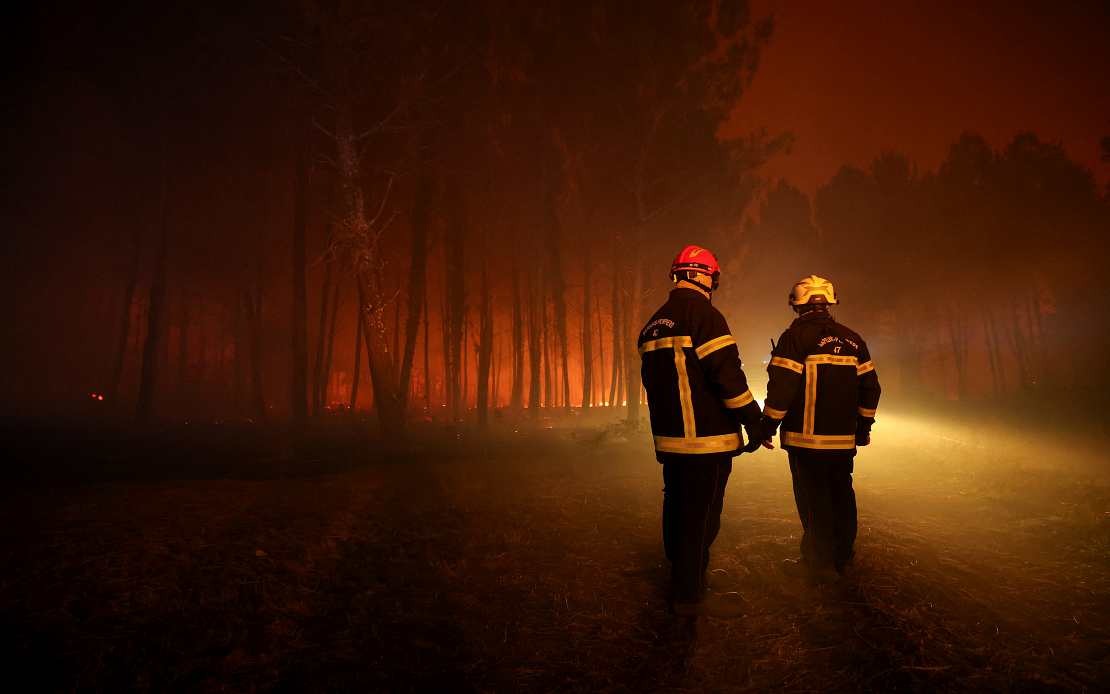
Eastern Belgium confronted an unprecedented environmental crisis on the weekend as a sprawling wildfire engulfed the High Fens region, ultimately consuming approximately 2,700 hectares by Saturday evening. The scale of destruction shattered Belgium's historical wildfire records, surpassing the previous benchmark set in 2011 when nearly 1,400 hectares burned. Local authorities in Liege province confirmed the blaze's magnitude, while the affected area dramatically expanded from roughly 1,600 hectares earlier on Saturday, underscoring the fire's volatile trajectory and the challenging conditions firefighters faced throughout the operation.
The conflagration ignited around 2 pm on Friday within the High Fens nature reserve, a protected wilderness area adjacent to Belgium's border with Germany. Firefighting operations persisted through Saturday as emergency crews struggled against mounting obstacles. The incident necessitated the evacuation of approximately 600 residents from surrounding communities, while summer camps and tourism operations in the vicinity hastily relocated guests to safety. Wind patterns proved particularly treacherous, constantly shifting and threatening to propel flames toward populated areas while simultaneously complicating aerial and ground-based suppression efforts.
The geographical challenges posed by the High Fens reserve substantially hampered conventional firefighting approaches. Emergency responders confronted rugged, challenging terrain that prevented teams from engaging the blaze at close quarters using standard equipment and methodologies. Combined with erratic winds and dense smoke clouds obscuring visibility, these natural obstacles transformed what might otherwise be a manageable emergency into an evolving crisis requiring unprecedented international coordination and resource mobilisation.
Recognising the emergency's magnitude, Belgium activated the European Union Civil Protection Mechanism, triggering a rapid multinational response. The Czech Republic, Sweden, and the Netherlands immediately deployed specialised firefighting aircraft to supplement domestic capabilities. This cross-border cooperation reflected the severity of conditions that had overwhelmed Belgium's own firefighting infrastructure and underscored the critical importance of EU-wide disaster response frameworks in addressing environmental crises transcending national boundaries.
Beyond aviation support, ground operations involved an expansive coalition of personnel from across Belgium, alongside firefighters from neighbouring Germany and Luxembourg. The Belgian military mobilised personnel to bolster suppression efforts, while local farming communities contributed equipment and manpower. This multifaceted response demonstrated how truly catastrophic incidents necessitate comprehensive resource deployment extending across government institutions, military services, and civilian volunteers.
Meteorological conditions substantially contributed to the disaster's intensity and rapid spread. Belgium endured an exceptional heat episode during the preceding week, with temperatures peaking at 37 degrees Celsius in certain regions on Friday. These elevated temperatures, combined with persistent dry conditions, created ideal circumstances for rapid fire propagation and rendered vegetation particularly flammable. Such meteorological extremes have become increasingly characteristic of European summers, reflecting broader climate patterns that experts associate with long-term environmental change.
The timing proved particularly significant for Southeast Asian observers monitoring European climate developments. While Malaysia and other tropical nations experience different fire dynamics typically associated with peatland degradation and agricultural practices, the underlying pattern—extreme heat enabling rapid ecosystem destruction—resonates across continents. Belgium's wildfire underscores how climate vulnerability transcends geography, affecting both temperate and tropical regions through intensified weather phenomena.
The High Fens region's ecological value amplified concerns surrounding the disaster's environmental consequences. As a protected nature reserve, the area harbours distinctive flora and fauna adapted to specific environmental conditions. The fire's unprecedented scale raises serious questions regarding habitat restoration, wildlife displacement, and the reserve's capacity for natural recovery. European biodiversity conservation frameworks will likely scrutinise both immediate ecological damage assessments and long-term restoration strategies.
Belgium's experience illustrates the cascading vulnerabilities embedded within modern European societies confronting climate-related emergencies. Even well-resourced, administratively sophisticated nations struggle to contain wildfires when environmental conditions align unfavourably. The incident prompted broader discussions regarding wildfire preparedness, preventative land management, and the adequacy of emergency response infrastructure. For Malaysian policymakers observing European climate developments, such incidents provide valuable lessons regarding the necessity of comprehensive disaster preparedness frameworks and cross-border cooperation mechanisms.
The activation of EU Civil Protection Mechanism mechanisms demonstrated how institutional frameworks facilitate rapid resource sharing during emergencies. This coordination model potentially holds relevance for Southeast Asian nations considering comparable regional disaster response architecture. ASEAN member states, facing comparable climatic vulnerabilities and cross-border environmental risks, might reference Belgium's mobilisation approach when evaluating regional cooperation mechanisms for managing wildfires, flooding, and other climate-related emergencies.
The economic implications extended beyond immediate firefighting expenses. Environmental cleanup, tourism disruption, agricultural impacts, and infrastructure damage would strain local economies throughout recovery periods. Property damage assessments, displaced resident compensation, and ecosystem restoration expenditures would accumulate substantially. For developing economies where climate-related disasters already strain limited government resources, such unfolding scenarios in wealthier nations underscore the profound fiscal burdens that climate impacts impose globally.
As investigations progressed into the fire's precise causes and progression, Belgian authorities remained focused on containing remaining hotspots and protecting adjacent communities. The incident reinforced uncomfortable realities regarding climate change's tangible consequences and the challenges confronting even advanced societies attempting to manage increasingly severe environmental hazards. International observers recognised Belgium's record wildfire as symptomatic of broader climate vulnerabilities affecting Europe and, by extension, all regions globally dependent upon predictable environmental conditions for economic and social stability.

