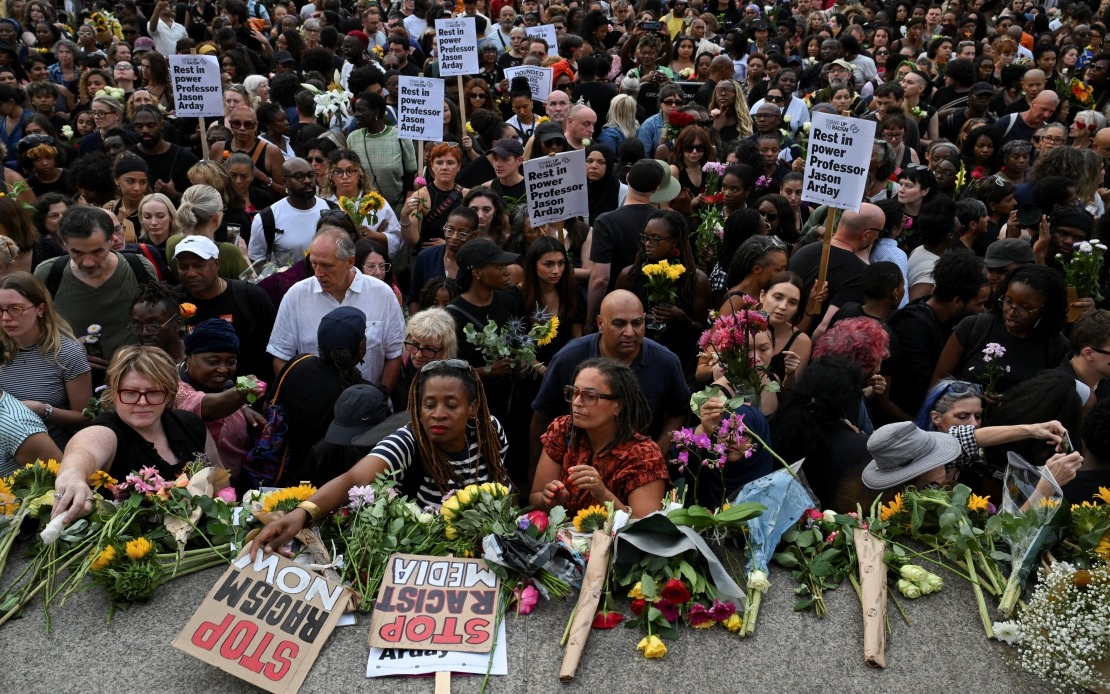
The suspension of Nathan Cofnas by Ghent University marks an escalation in a controversy that has engulfed academic circles across Europe, raising thorny questions about the intersection of academic freedom, professional responsibility, and institutional accountability. Cofnas, a postdoctoral researcher in the university's philosophy and moral sciences department, had publicly levelled plagiarism allegations against Jason Arday, the late University of Cambridge professor who resigned from his position in August following mounting scrutiny over his academic record and personal background.
Arday's trajectory represented a significant milestone for racial diversity in elite British academia. When appointed professor of sociology of education at Cambridge in 2023, he became the university's youngest Black professor, a position that carried profound symbolic weight given persistent underrepresentation in senior academic roles across UK institutions. His rise from a working-class south London family with Ghanaian immigrant parents, compounded by his openness about autism and learning difficulties—including not learning to read and write until age eighteen—had made him a prominent figure in conversations about meritocracy and institutional inclusion.
Yet this narrative unravelled dramatically when plagiarism allegations emerged in July, accompanied by broader questions about aspects of his academic record and personal story. The scrutiny intensified rapidly, forcing Arday to resign from Cambridge on August 5th. In his resignation statement, he cautioned observers not to interpret his departure as acceptance of "the narratives that have surrounded" him, suggesting he viewed the accusations as incomplete or distorted accounts of his circumstances. Cambridge subsequently announced plans to investigate the circumstances of his appointment, signalling institutional disquiet about how thoroughly the university had scrutinised his background during the hiring process.
The situation took a tragic turn nine days later when Arday was discovered deceased at his south London residence. Police classified the death as unexpected but not suspicious, bringing the immediate controversy to a sobering conclusion and transforming the plagiarism allegations from a career crisis into a matter of historical record overshadowed by personal tragedy.
Cofnas, the researcher who initiated the plagiarism accusations, has emerged as a controversial figure in his own right, complicating the narrative considerably. He identifies as an advocate for "race realism," a contested intellectual position that critics associate with scientific racism. In 2024, while holding a research fellowship at Emmanuel College Cambridge, he had published a blog post arguing that Black people possess lower average intelligence than white people and that a genuine meritocracy would contain "close to zero" Black professors at Harvard. Following this publication, Cambridge terminated his research associate role, demonstrating institutional rejection of his views.
Thus Cofnas now faces suspension from Ghent University precisely at the moment when his allegations against Arday have become impossible to fully resolve through conventional academic channels. This creates a complex institutional situation: Cofnas claims he is under investigation for discriminating against Arday, and he anticipates dismissal from his current position. The timing and circumstances suggest that universities are grappling with fundamental questions about whether researchers whose public statements advocate racialised theories of intelligence can be permitted to continue in academic roles, particularly when those researchers have levelled serious allegations against colleagues from minority backgrounds.
Ghent University's leadership has attempted to navigate this minefield carefully. In a joint statement, rector Petra De Sutter and vice-rector Herwig Reynaert reaffirmed institutional commitment to academic freedom and open debate, even when positions prove controversial. Yet they simultaneously emphasised that such freedom "is not unlimited" and must be balanced against "responsibility" and protection of others' rights. This formulation attempts to distinguish between permissible intellectual disagreement and harmful discriminatory expression, though the practical boundaries remain contested in contemporary academia.
The university stated it was treating Cofnas's recent public statements "very seriously" and had taken "appropriate action within its powers and the applicable framework," though it declined to specify what further measures might follow, explicitly avoiding prejudging potential future decisions. This cautious language reflects awareness that any institution's response will face scrutiny from multiple directions—those concerned about protecting marginalised academics from harassment and those concerned about restrictions on intellectual freedom.
The broader significance of this case extends beyond individual personalities or institutions. It illustrates how universities worldwide are wrestling with the relationship between academic discourse and institutional values in an era of heightened sensitivity to discrimination. The timing of Arday's death casts particular gravity over these institutional deliberations, as Ghent University noted in its statement that his passing "should prompt reflection." This suggests recognition that institutional processes, peer review mechanisms, and decision-making about plagiarism allegations carry weight beyond technical academic questions when they involve careers, reputations, and ultimately individual welfare.
For Malaysian and Southeast Asian observers, this case illuminates challenges that higher education institutions across the region increasingly confront. As universities worldwide expand efforts to recruit and advance academics from underrepresented backgrounds, questions naturally arise about how thoroughly candidates are vetted, how allegations against minority scholars are handled, and whether discriminatory intellectual frameworks have legitimate space within academic institutions. The case demonstrates that even prestigious universities like Cambridge and Ghent struggle to manage these tensions coherently.
The suspension also raises practical questions about academic accountability that resonate internationally. When a researcher makes serious allegations against a colleague, particularly allegations concerning research integrity, institutional responsibility extends beyond simply documenting the claims. Universities must consider whether the accuser's own intellectual frameworks and public statements might introduce bias, whether those statements fall outside acceptable academic bounds, and how to protect institutional credibility when handling sensitive matters. Ghent's approach suggests these calculations cannot be resolved through simple rules but require contextual judgment informed by institutional values.
Ultimately, the Cofnas suspension represents neither clear vindication of academic freedom absolutism nor simple institutional censorship, but rather an attempt—however imperfectly—to maintain professional standards while acknowledging that some discourse may damage vulnerable individuals and institutional legitimacy. For universities across Southeast Asia and globally, the challenge remains developing processes that can simultaneously protect academic freedom, ensure research integrity, combat discrimination, and treat all parties fairly when controversies inevitably emerge.

