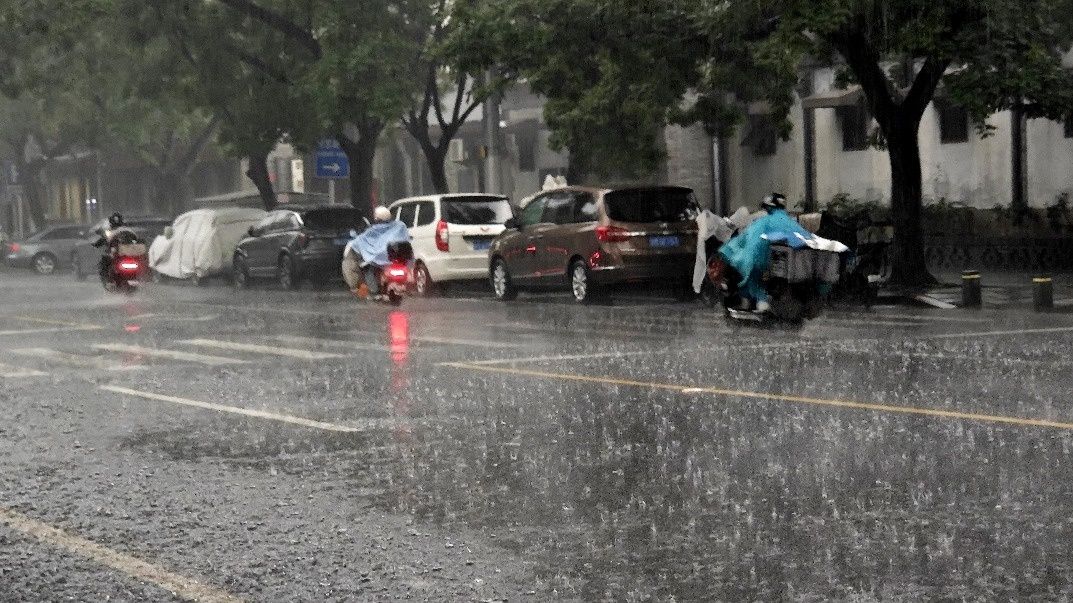
Beijing's meteorological authorities have triggered the first orange-level rainstorm alert of the 2026 flood season, marking a significant escalation in weather precautions as the city braces for a severe weather system. The alert, released at 1.30 pm on Thursday, prompted the Beijing flood control office to simultaneously activate a Level-II flood control emergency response, indicating coordinated preparation across multiple government agencies for potential widespread impacts on the capital's infrastructure and daily life.
Forecasters predict an extended period of intense precipitation will affect the municipality from 2.00 pm on Friday through 8.00 am on Sunday, with particular concentration in vulnerable districts. Huairou, Miyun, Pinggu, Shunyi and Fangshan are identified as zones facing torrential rainfall, which meteorologists expect will deliver hourly precipitation rates exceeding 70 millimetres in certain locations. The cumulative effect over a 24-hour period could surpass 150 millimetres, volumes that typically trigger significant flooding and infrastructure strain in urban and rural settings alike.
The warning emphasises heightened meteorological risk in Beijing's mountainous and hilly terrain, where steep slopes increase vulnerability to landslides and flash flooding. Simultaneously, low-lying urban and peri-urban areas face acute waterlogging hazards as drainage systems become overwhelmed by rapid runoff from higher elevations. This dual threat—geological instability in upland regions coupled with surface water accumulation in depression zones—represents the classic hydrological challenge that confronts major Chinese cities during monsoon-influenced rainfall events.
Public authorities have recommended that residents minimise unnecessary outdoor exposure and maintain continuous awareness of updated meteorological guidance. The emphasis on public transportation use reflects official strategy to reduce individual vehicle movement, which not only diminishes traffic congestion during adverse weather but also reduces accident risks on wet, slippery road surfaces. This guidance represents standard protocol in Chinese cities managing severe weather events, where coordinated behavioural adjustment across millions of residents proves essential to minimising casualties and property damage.
Employers and institutional leaders across Beijing have been encouraged to implement flexible work schedules and staggered departure times, measures designed to spread commuter flows across extended periods and prevent dangerous congestion during peak rainfall hours. Educational institutions face explicit direction to suspend classroom instruction, organised training sessions and outdoor field activities based on evolving conditions, a precautionary measure that prioritises student safety while acknowledging the unpredictability inherent in severe weather systems that can intensify or shift track with limited warning.
The alert singles out particular high-risk venues for public avoidance, specifically mountainous scenic areas and waterfront recreational zones where the combination of terrain vulnerability and concentrated visitor populations creates compounded hazards. Underground commercial complexes face specific mention, as their enclosed nature and limited egress routes present particular dangers during flooding scenarios when basement areas and ground-level sections can fill rapidly with water. Geological hazard zones—areas with known histories of landslides, subsidence or unstable slopes—similarly warrant strict avoidance during periods of elevated precipitation that destabilise soil structures.
China's four-tier weather warning framework provides context for understanding the severity of an orange-level alert. The system positions red warnings as the highest-risk category, reserved for catastrophic weather threats with extreme impacts. Orange warnings, the second tier, indicate serious danger requiring substantial public precaution and institutional response. Yellow and blue warnings, by contrast, signal moderate and lower-level threats respectively. An orange-level rainstorm alert therefore represents a substantial escalation beyond routine weather reporting, triggering emergency protocols across government, business and educational sectors.
The issuance of this alert during the early stages of Beijing's 2026 flood season suggests that meteorological conditions are already developing significant intensity as spring transitions toward summer. The timing highlights how climate patterns and seasonal transitions create periods of elevated vulnerability in the Beijing region, where monsoonal influences and localized atmospheric dynamics can concentrate extraordinary rainfall volumes within relatively brief timeframes. Historical flood events in the city demonstrate the destructive potential when such concentrations occur over vulnerable areas lacking adequate drainage capacity.
For residents and businesses in Beijing, the alert represents both a direct operational disruption and a reminder of the city's underlying vulnerability to extreme precipitation despite its status as a major modern capital. The coordinated activation of emergency protocols across multiple government levels illustrates the seriousness with which Chinese authorities approach severe weather management. Compliance with advisory guidance—reducing outdoor activity, utilising public transport, adjusting work schedules—offers practical means by which individuals can contribute to collective safety during periods when environmental conditions exceed the normal envelope of urban functionality.

