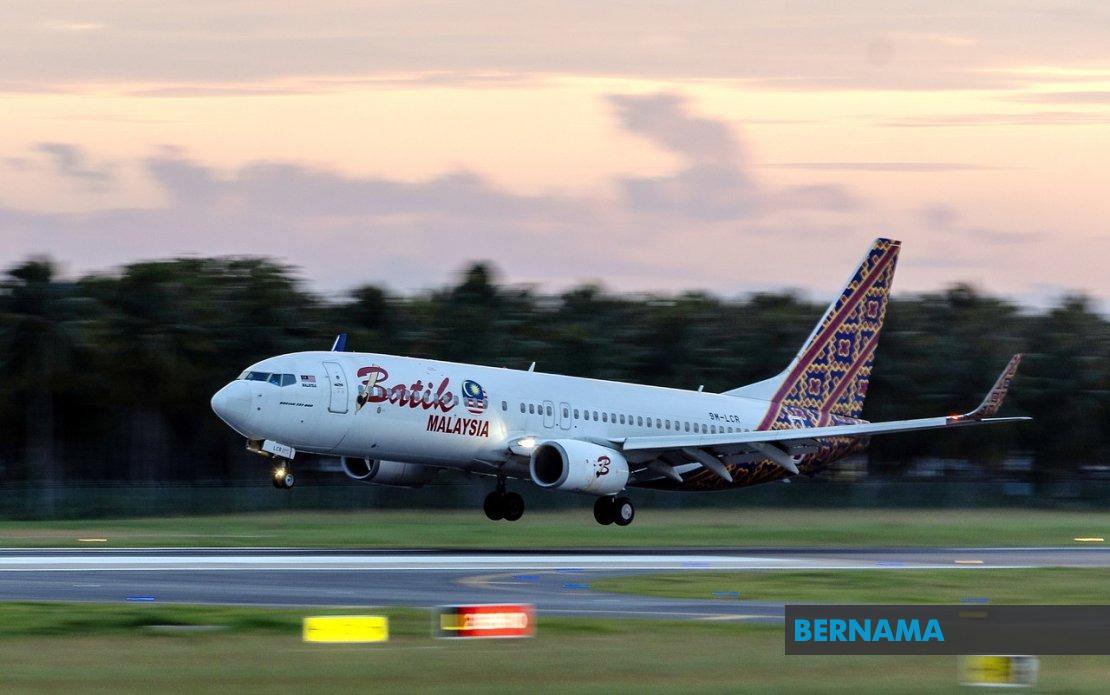
Batik Air is set to enhance connectivity between Sarawak's Bintulu region and the capital by doubling its daily flight frequency from July 20, marking a significant expansion in the airline's regional operations. The decision comes after sustained engagement between the government and the carrier to tackle longstanding complaints about service gaps and escalating airfare costs. Tourism, Arts and Culture Minister Datuk Seri Tiong King Sing announced the development, framing it as a response to mounting pressure from business travellers, students, patients seeking medical care, and tourism stakeholders who have grown frustrated with inconsistent scheduling and unaffordable ticket prices.
The frequency increase represents a partial victory for advocates pushing for enhanced air connectivity in Sarawak's interior regions. While Tiong had initially campaigned for three daily flights, negotiations resulted in Batik Air committing to one additional service as an immediate measure, with the possibility of further expansion contingent on passenger demand growth. This phased approach reflects the airline's cautious assessment of market viability, though it signals management's confidence in the route's revenue potential. The minister's willingness to settle for an interim solution suggests recognition that sustainable aviation growth requires balancing service expansion with commercial realities that airlines face when deploying aircraft to less densely populated markets.
Under the new timetable, passengers departing Kuala Lumpur for Bintulu can choose between morning and afternoon departure times—10 am and 2:30 pm—while the return service operates at 1:10 pm and 5:40 pm. This schedule architecture aims to accommodate both leisure and business travel patterns, reducing the risk that a single daily flight creates when circumstances force cancellations or delays. The broader two-hour spacing between departures theoretically provides greater flexibility for travellers whose plans shift, though the practical utility depends on whether fares remain competitive across both services or whether pricing strategies create incentives to concentrate bookings on one flight.
Bintulu's economic trajectory has catalysed demand for improved air links to Peninsula Malaysia and other domestic destinations. The town's steady development across industrial, commercial, and service sectors has expanded the range of reasons people need to travel, from regular business meetings in Kuala Lumpur to specialist medical appointments and educational pursuits. Enhanced flight availability directly addresses this diversifying travel base, potentially unlocking latent demand from individuals and businesses previously deterred by scheduling constraints. For Bintulu's professional class and entrepreneurial community, reliable air access to the administrative and financial capitals of Malaysia is essential infrastructure.
Tiong emphasised that his discussions with Batik Air extended beyond mere frequency negotiations to encompass fare sustainability and operational reliability. He explicitly urged the airline to maintain reasonable pricing aligned with market conditions, acknowledging that premature fare reductions might jeopardise service continuity. The minister articulated a sophisticated understanding of aviation economics, recognising that passenger volume growth depends partly on affordability, yet stable operations require pricing discipline. His public statement that affordable fares would ultimately benefit both passengers and the airline signals an attempt to build consensus around price moderation as aligned self-interest rather than imposed sacrifice.
The episode illuminates tensions within Malaysian regional aviation. Previous capacity reductions and fare spikes triggered sufficient public discontent that a government minister felt compelled to personally negotiate with a commercial carrier, a signal that either market mechanisms alone had failed to deliver acceptable service levels or political pressure had accumulated beyond the point where conventional airline planning could ignore it. For Malaysian policymakers, the Bintulu case exemplifies the challenge of ensuring adequate aviation infrastructure in less densely populated regions where market demand may be insufficient to sustain service without subsidy or regulatory encouragement.
Bintulu's aviation needs also reflect broader Southeast Asian patterns of regional hub development. As Malaysian towns outside the Klang Valley and Penang develop economically, their connectivity requirements grow, yet airlines remain reluctant to deploy capacity unless consistent load factors justify the investment. The twice-daily frequency represents a pragmatic middle ground where Batik Air demonstrates commitment to market growth while limiting exposure to demand shortfalls. Whether this service level adequately meets Bintulu's medium-term needs remains uncertain, but the willingness to expand suggests confidence that recent fare complaints and scheduling problems represented temporary disruptions rather than fundamental market weakness.
The minister's suggestion that three daily flights could eventually materialise if demand grows indicates that this July 20 schedule adjustment is positioned as a foundation rather than a ceiling. For Bintulu residents and businesses, this framing provides optimism that continued growth in travel demand could trigger further improvements. However, the implicit message also suggests that airlines ultimately determine frequency based on commercial viability, and that passenger growth remains the primary lever for securing additional capacity. This dynamic creates pressure for Bintulu's economic and institutional leaders to actively promote the region's attractions and opportunities to justify and sustain aviation investment.
Operational consistency emerges as a concern parallel to frequency and affordability. Tiong explicitly raised the problem of last-minute cancellations and schedule changes that plague passengers' confidence in air travel. For business passengers making connections, sudden flight alterations can cascade into downstream disruptions affecting meetings and commitments. By implying that frequency increases should accompany operational improvements rather than merely adding flights to an undependable baseline system, the minister signals awareness that service quality encompasses reliability, not only capacity. Whether Batik Air's expanded operations will maintain punctuality and schedule adherence remains to be demonstrated.
The government's role in facilitating this expansion underscores the reality that aviation development in regional Malaysia often requires policy alignment and constructive dialogue rather than purely market-driven outcomes. Tourism, Arts and Culture Ministry engagement, combined with whatever regulatory or political mechanisms exist beyond the public narrative, translated passenger complaints into airline action. This pattern suggests that Malaysian regional aviation stakeholders—business groups, local government, academic institutions—might benefit from more systematic engagement with airlines and federal authorities to ensure that connectivity growth anticipates rather than merely responds to demand. The Bintulu precedent thus carries implications for how other Malaysian regions might advocate for enhanced air services.
Looking ahead, July 20 marks a tangible expansion of regional aviation capacity, relieving immediate constraints while leaving uncertainty about whether two daily frequencies ultimately match Bintulu's travel needs. The schedule's success will likely hinge on whether fares stabilise at levels allowing regular travellers to maintain frequency, and whether Batik Air's operational performance proves reliable enough to justify passenger confidence. For Malaysian aviation observers, the case illustrates how regional development and air connectivity remain intertwined, with aviation both responding to economic growth and potentially enabling future expansion through improved access.

