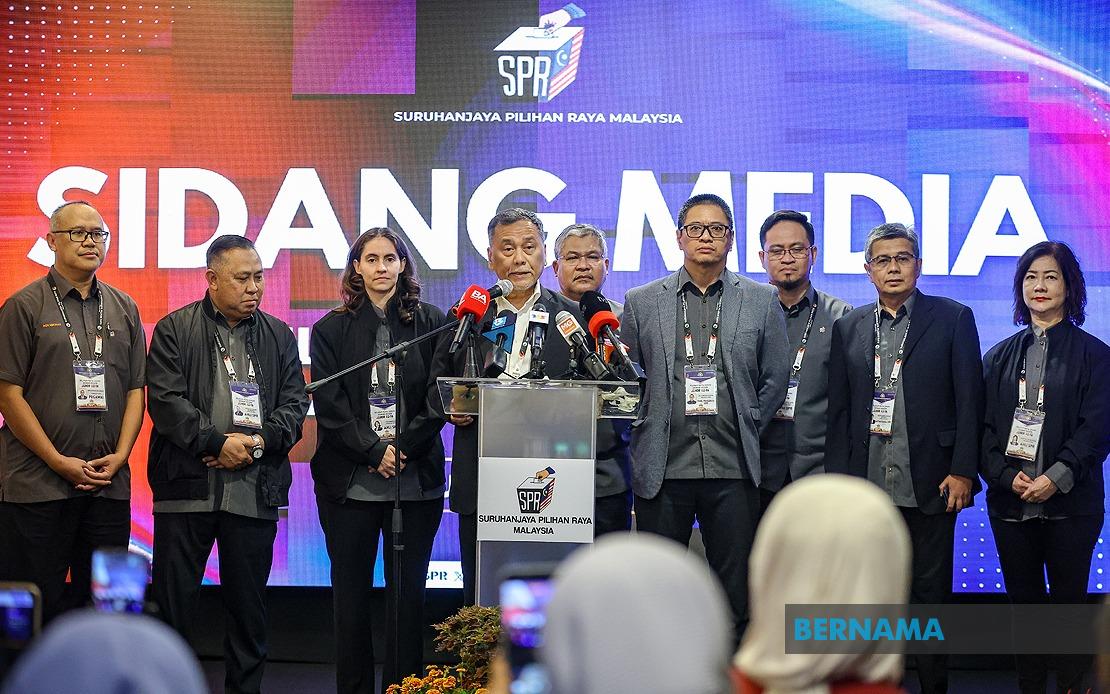
Barisan Nasional has strengthened its political stranglehold on Johor following decisive wins in the 16th state election, claiming 48 of the 56 contested assembly seats to establish an enlarged two-thirds supermajority in the state legislature. The opposition Pakatan Harapan managed to secure only eight seats, with smaller parties and independent candidates entirely shut out of parliament. The Election Commission confirmed the final results early on July 12, marking a significant reversal of fortune for BN, which had narrowly lost ground in the 2022 elections but has now reclaimed and substantially expanded its mandate.
The coalition's triumph represents a meaningful gain compared to the previous state election in 2022, when BN secured 40 seats from the same 56-seat chamber. By adding eight additional seats, the coalition has transformed its parliamentary position from merely comfortable to overwhelmingly dominant, providing the state government with substantial legislative room to pursue policy initiatives without meaningful constraint. Within the BN alliance, Umno delivered the backbone of this success by winning 36 seats, while its Chinese-majority coalition partner MCA captured eight, and the Malaysian Indian Congress secured a perfect sweep of four seats it contested.
Pakatan Harapan's parliamentary presence has been substantially diminished. The Democratic Action Party, which fielded 17 candidates, suffered a particularly severe blow by losing 11 of those contests, including four seats it had previously held—Johor Jaya, Tangkak, Jementah, and Perling—which were claimed by MCA and MIC. The coalition's remaining eight seats were distributed unevenly: DAP retained six seats concentrated in urban areas including Skudai, Mengkibol, Bentayan, Senai, Penggaram, and Stulang, while Pakatan's other component parties salvaged just two seats between them. The People's Justice Party won Puteri Wangsa with former Health Minister Dr Maszlee Malik, whilst the National Amanah Mandate Party secured Simpang Jeram.
Perikatan Nasional experienced a complete parliamentary eclipse, failing to retain any of the three seats it had won in 2022. The coalition's most high-profile casualty was former Johor Menteri Besar Dr Sahruddin Jamal, whose loss of the Bukit Kepong seat symbolised PN's collapse in the state. Bersama Malaysia, which invested heavily in the contest by fielding 15 candidates, suffered the ignominy of losing its deposit in every single constituency, whilst neither the Malaysian United Democratic Alliance nor Parti Sosialis Malaysia succeeded in translating their candidacies into parliamentary representation.
The MCA's clean sweep of all eight contested seats represents a resurgence for the party within Johor's political structure. Party representatives secured victories across a geographically diverse range of constituencies: Ling Tiang Soon captured Yong Peng; Lee Ting Han won Paloh; Tan Chong secured Bekok; Tan Eng Meng claimed Pekan Nanas; Chua Jian Boon won Layang-Layang; Haw Chin Teck secured Tangkak; See Ann Giap captured Jementah; and Chan San San won Johor Jaya. This universal success for MCA's slate suggests that urban and suburban voters, particularly within the Chinese-majority communities, rewarded the party for its coalition partnership with Umno.
MIC's performance proved equally impressive, with all four candidates successfully claiming their respective seats. K. Raven Kumar won Kemelah, V. Rugendran claimed Kahang, P. Pannir Selvam secured Perling, and R. Kumaran captured Bukit Batu. The party's perfect record in Johor reflects sustained support within the Indian-majority communities and demonstrates the effectiveness of the longstanding BN partnership structure in channelling minority support.
Johor Barisan Nasional chairman Datuk Onn Hafiz Ghazi characterised the outcome as an overwhelming mandate from voters to persist with the coalition's agenda of engaging communities and addressing local grievances. Speaking at BN headquarters, Ghazi emphasised that the party accepted its expanded responsibility with both gratitude and humility, framing the election primarily as validation of BN's approach to governance rather than rejection of political opponents. Onn Hafiz himself demonstrated electoral resilience by substantially increasing his margin in Machap, where he faced PKR's Nur Hafiz Roslan in a straight contest, securing 20,382 votes for a majority exceeding 15,000.
The election also witnessed significant casualties among opposition parliamentary figures. Two Members of Parliament contesting in the state polls were defeated by BN candidates: Onn Abu Bakar lost in Senggarang whilst Suhaizan Kayat fell to BN in Larkin, suggesting that federal parliamentary incumbency provided limited electoral advantage in state-level contests. Conversely, all nine state executive councillors who sought renomination retained their seats, demonstrating strong voter support for the incumbent administration's ministerial team.
For Pakatan Harapan, the outcome necessitates substantial strategic recalibration in Malaysia's most economically significant state. PKR election director Datuk Seri Amirudin Shari attempted to reframe the defeat as providing opportunity for the coalition to strengthen its role as constructive opposition, emphasising the party's commitment to amplifying grassroots concerns and proposing alternative solutions to persistent state-level challenges. This rhetoric acknowledges the magnitude of the defeat whilst positioning the party for longer-term recovery, though the severely diminished parliamentary presence will substantially constrain opposition capacity to scrutinise government policy and implementation.
Perikatan Nasional's strategic position has been profoundly weakened. The coalition's complete elimination from the state parliament represents a dramatic reversal from 2022, when it won three seats and briefly appeared to be an emerging force in Johor politics. Johor PAS issued a statement indicating acceptance of the results as a democratic expression of voter preference, employing language that suggested philosophical reconciliation with defeat rather than combative opposition to the outcome. The development signals PN's diminished credibility in Johor and complicates the coalition's broader Malaysian political strategy.
The 2024 Johor election attracted 172 candidates competing across the 56-seat chamber, with approximately 2.7 million registered voters participating in the electoral process. The scale of the contest and the decisive nature of BN's victory underscores the coalition's dominant position within Johor's political economy. The state's significance as Malaysia's industrial and commercial hub means that BN's expanded parliamentary control carries implications extending well beyond Johor's boundaries, influencing resource allocation, infrastructure development, and business-friendly regulation across the region.

