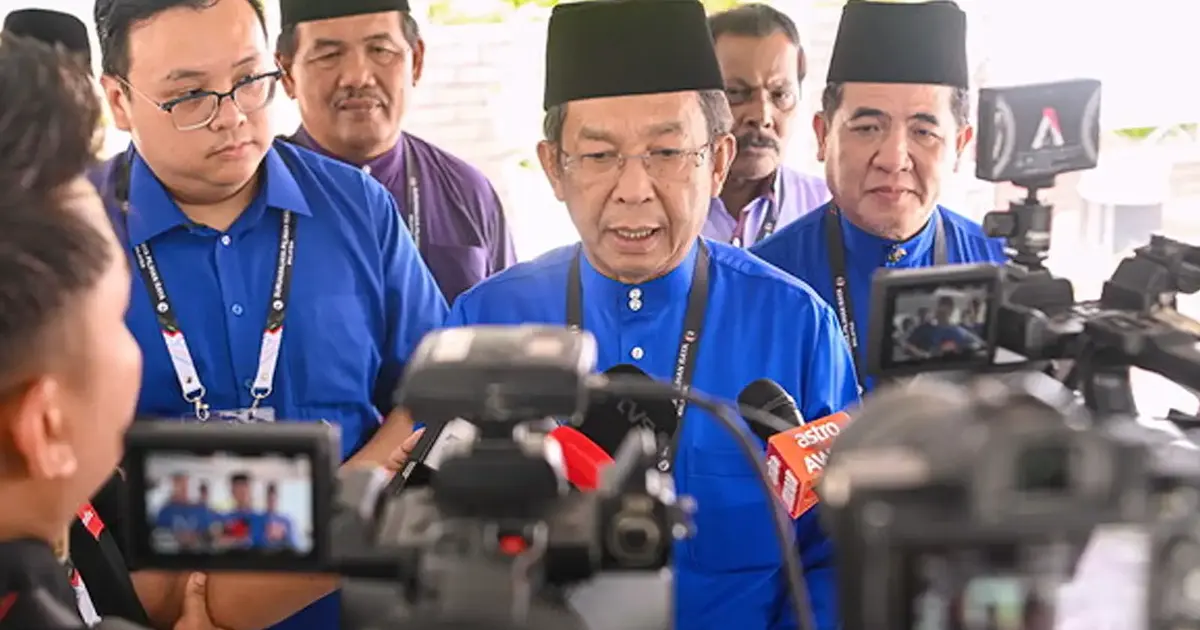
Barisan Nasional will reserve the decision on who becomes Negeri Sembilan's next Menteri Besar until after securing an election victory, according to the coalition's state leadership. Jalaluddin Alias, who heads Umno operations in the state, has indicated that naming a successor remains contingent on the electoral outcome rather than being predetermined before voters cast their ballots.
This approach reflects a common political strategy in Malaysian state and federal elections, where coalitions often defer key administrative appointments until they have confirmed their mandate at the ballot box. The statement from Jalaluddin underscores that Barisan Nasional is treating the forthcoming Negeri Sembilan contest as an open competition that will determine not only the composition of the state assembly but also the identity of its chief minister.
The deferral of the MB decision comes amid broader political dynamics in Negeri Sembilan, a state that has alternated between different political coalitions over recent election cycles. By maintaining flexibility on the top administrative post, Barisan Nasional appears to be keeping its options open and potentially signalling unity within its component parties as it prepares for the campaign.
According to Jalaluddin, the coalition has several potential candidates who possess the necessary qualities and experience to lead the state administration. This plurality of choices suggests that internal discussions within Barisan Nasional are ongoing, with different factions or parties within the coalition potentially advocating for their preferred candidates. The approach allows the coalition to project confidence in multiple leaders while avoiding premature commitments that might alienate any faction before the election.
In Malaysian politics, the practice of announcing MB or Chief Minister candidates before an election carries strategic risks. Early declarations can create internal rifts if certain camps feel overlooked or undervalued, and they also provide opposition coalitions with a clear target for criticism during campaigning. Barisan Nasional's decision to hold back mirrors patterns seen in previous state elections, where such announcements often come only after victory is confirmed.
The timing of such declarations typically becomes significant once a coalition secures sufficient seats to form a government. At that juncture, negotiations between component parties must resolve which party gets the MB position and which individual fills the role. In multi-party coalitions like Barisan Nasional, these decisions involve balancing power-sharing agreements, factional interests, and considerations about which candidate might best stabilise the government.
For Negeri Sembilan specifically, the identity of the MB carries particular weight given the state's historical significance in Malaysian politics and its economic importance as a central location with substantial manufacturing and services sectors. The incoming administration will face pressures related to infrastructure development, attracting investment, and managing the state's relationship with federal authorities.
The existence of multiple qualified candidates within Barisan Nasional could be viewed as a strength, indicating deep benches of experienced leaders. However, it also hints at potential complexities in the coalition's internal structure. Different candidates may represent different factions, ethnic communities, or regional interests within the component parties, and the final selection will inevitably signal which group has gained ascendancy within the coalition's leadership hierarchy.
Negeri Sembilan voters should understand that their electoral choices will directly influence not only which coalition governs but also which individual leads the state government. This interplay between voter preference and post-election negotiations means that the MB ultimately becomes a product of both electoral mathematics and backroom settlements. The state's electorate will thus be selecting not just a party or coalition, but effectively determining the pool from which the next chief executive will emerge.
For the broader Malaysian political landscape, Barisan Nasional's approach in Negeri Sembilan reflects the coalition's attempts to rebuild after significant electoral setbacks in recent decades. By emphasising multiple capable leaders rather than rallying behind a single pre-chosen figure, the coalition is attempting to project strength and flexibility. This strategy acknowledges both the unpredictability of electoral outcomes and the complexity of managing consensus within a multi-party structure that includes Umno, MCA, MIC, and various other component parties.
The deliberate ambiguity around the MB position also allows Barisan Nasional to campaign on policy and performance rather than becoming overly personalised around a single leader. This approach can sometimes prove more durable in contested elections where candidate popularity might shift during the campaign. By keeping the door open to multiple candidates, the coalition maintains flexibility to pivot its messaging or adjust its strategy based on how the campaign develops.
The coming weeks will be crucial in determining whether Barisan Nasional's confidence in its prospects proves justified. If the coalition secures victory, negotiations will swiftly commence to finalise the MB appointment. The identity of whoever ultimately assumes the role will tell observers much about the balance of power within Barisan Nasional and which factions have gained influence within the coalition's decision-making structures.

