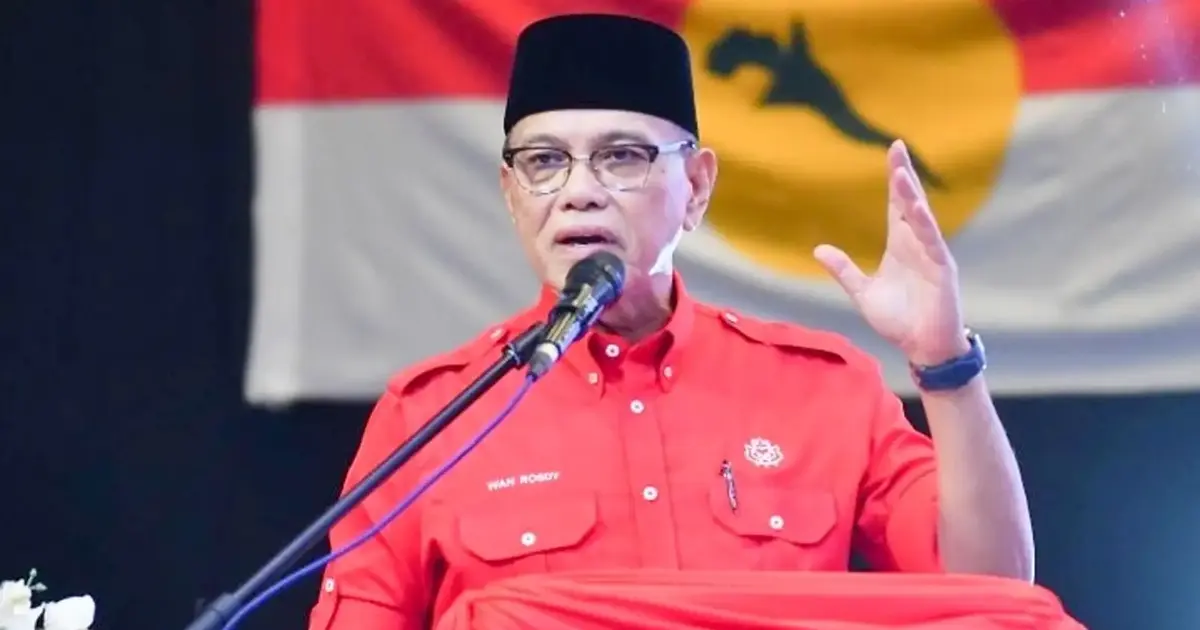
Any formal coordination between Barisan Nasional and Perikatan Nasional for Malaysia's next general election remains dormant for now, according to Umno vice-president Wan Rosdy Wan Ismail, who emphasised that the two coalitions are currently prioritising other matters. The remarks come as speculation mounts about potential electoral alliances in the lead-up to GE16, with political observers scrutinising whether the two major non-Pakatan Harapan groupings might forge a joint strategy.
Wan Rosdy's statement carries particular significance given Umno's central position within Barisan Nasional and its pivotal role in any serious negotiation regarding a broader anti-Harapan coalition. His emphasis on the absence of preliminary talks suggests that despite occasional media reports hinting at backroom discussions, no substantive dialogue has yet materialised between the two camps. This measured approach reflects the complexities involved in reconciling the organisational interests and political philosophies of two distinct coalitions that have previously competed fiercely for federal and state influence.
The immediate focus of political energy, Wan Rosdy indicated, centres on consolidating governance structures in Negeri Sembilan following recent political shifts in that state. The newly constituted government in the state requires stabilisation, proper administrative integration, and the establishment of effective working relationships among coalition partners at the state level. This localised concern underscores how Malaysian politics frequently operates on multiple temporal scales, with short-term state-level consolidation sometimes taking precedence over longer-term federal coalition planning.
Negeri Sembilan has experienced considerable political volatility in recent years, with shifts in governmental control creating uncertainty among investors, civil servants, and local stakeholders. Ensuring that the current state administration functions smoothly, delivers basic services, and maintains fiscal stability demands considerable attention from senior party figures. Wan Rosdy's prioritisation reflects the understanding that premature or high-profile federal-level coalition negotiations could destabilise the fragile political consensus required for effective state governance.
The delay in BN-PN discussions also reflects broader uncertainties within Malaysian politics. Both coalitions contain multiple factions with differing views on electoral strategy, resource distribution, and policy direction. Within Barisan Nasional, younger elements increasingly question the coalition's future relevance, whilst within Perikatan Nasional, tensions persist between its Islamic and non-Islamic components. These internal dynamics make it difficult for either coalition to approach inter-coalition negotiations from a position of unified strength and clarity.
From a regional perspective, the absence of preliminary BN-PN talks has implications for Southeast Asia's largest Muslim-majority democracy's political trajectory. Malaysia's electoral system and coalition dynamics significantly influence policy directions on economic development, religious affairs, and social cohesion. A potential BN-PN alignment might reshape the nation's political landscape, whilst continued separation preserves the current tripartite competition between Barisan Nasional, Perikatan Nasional, and Pakatan Harapan that has characterised Malaysian politics since 2018.
Observers note that Malaysian political alliances typically form closer to election cycles rather than years in advance. The absence of talks at this stage should not be interpreted as permanent distance between Barisan Nasional and Perikatan Nasional. Historical precedent demonstrates that coalitions can form surprisingly rapidly when electoral calculations suggest mutual advantage. Both groupings contain pragmatists who understand that fractured opposition to Pakatan Harapan during GE16 could prove strategically disadvantageous.
Wan Rosdy's statement also carries implications for intra-coalition relationships within Barisan Nasional itself. By emphasising immediate state-level priorities, he subtly reassured component parties that Umno remains focused on consolidating power at all governance levels before entertaining dramatic coalition reorganisations. This approach builds confidence among Barisan partners who might harbour concerns about being sidelined in any future BN-PN arrangement.
The political landscape between now and GE16 will inevitably shift as new issues emerge, electoral boundaries are potentially redrawn, and demographic changes alter voting patterns. Perikatan Nasional's recent growth in particular states, combined with its strong performance in previous electoral contests, makes it a force that Barisan Nasional cannot indefinitely ignore when contemplating general election strategy. Yet Wan Rosdy's comments suggest that moving from tactical independence to formal alliance requires political catalysts that have not yet sufficiently materialised.
Looking ahead, Malaysian politics observers will watch for signals indicating whether preliminary discussions might commence. Such signals could include senior leadership meetings, strategic policy convergences, or public statements softening previous criticisms. The current holding pattern, whilst dominated by state-level concerns, provides both coalitions time to assess their respective strengths, clarify internal positions, and develop negotiating parameters should more formal discussions eventually commence toward GE16.

