The landscape of corporate lending in Malaysia is undergoing a fundamental shift. Banks and other financial institutions are no longer treating sustainability reporting as an optional corporate amenity but rather as a core requirement for companies seeking access to credit. This evolution reflects a broader global trend where financial gatekeepers view environmental, social and governance performance as integral to assessing lending risk and opportunity. For Malaysian businesses—whether multinational corporations or family-run enterprises—navigating this new reality has become unavoidable.
According to Prathab V, principal consultant at ESGright Sdn Bhd, this institutional demand for sustainability documentation creates both opportunity and risk. Companies demonstrating robust ESG credentials gain preferential access to capital and what he terms "smart capital," while those lagging behind face competitive disadvantages that compound over time. The message from the financial sector is clear: sustainability is no longer peripheral to business strategy but central to it. For Malaysian firms operating in regional and global supply chains, this pressure flows both downward from their bankers and outward from international customers and partners increasingly scrutinizing their environmental footprint and social practices.
The regulatory framework supporting this shift in Malaysia remains somewhat segmented. Listed companies operating on Bursa Malaysia face mandatory sustainability statement requirements, yet unlisted firms—which comprise the vast majority of Malaysian businesses—currently face no such obligation. However, this regulatory distinction increasingly matters less in practice. The voluntary nature of reporting for unlisted companies masks a practical reality: access to financing is becoming contingent on disclosure. Financial institutions, responding to their own investor demands and risk management protocols, are effectively making sustainability reporting mandatory through their lending criteria, regardless of a company's listing status.
The Malaysian government has recognised this market dynamic and is actively supporting capacity-building in the sustainability field. Various industry regulators and official guidelines encourage businesses to undertake comprehensive sustainability reporting, viewing it as essential infrastructure for long-term competitiveness. This policy posture reflects an understanding that Malaysia's position in regional and global markets depends on businesses being able to meet international standards. The government's commitment to this agenda is evidenced by Malaysia maintaining one of the highest concentrations of Global Reporting Initiative professionals in the ASEAN region, a metric that speaks to both institutional preparation and strategic ambition.
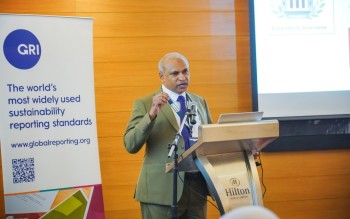
A recent dialogue convened by ESGright and the Global Reporting Initiative brought together approximately forty senior corporate sustainability leaders representing combined market capitalisation exceeding RM380 billion. The significance of this gathering lies not merely in the numbers but in what it signals: Malaysia's largest corporations are actively engaging with sustainability reporting frameworks and viewing them as strategically important. These industry leaders collectively recognise that embedding ESG considerations into their operations enhances their ability to compete internationally, access global capital markets, and meet the expectations of multinational partners and customers.
The role of global standards organisations is reshaping how Malaysian companies approach disclosure. ESGright has grown to become the fifth largest trainer of GRI professionals globally and the third largest in the Asia-Pacific region, a position reflecting increased demand from Malaysian firms seeking to align with internationally recognised standards. More recently, the International Financial Reporting Standards Foundation appointed ESGright as Malaysia's first approved education partner for sustainability-related financial disclosures aligned with International Sustainability Standards Board standards. This certification infrastructure matters because it signals to international investors and partners that Malaysian professionals and companies are acquiring recognised credentials in an increasingly specialised field.
Small and medium enterprises present a particular challenge within this evolving landscape. Robin Hodess, chief executive officer of the Global Reporting Initiative, acknowledges that SMEs face fundamentally different constraints than large corporations, particularly regarding resource capacity and technical expertise. Many suppliers to larger Malaysian firms now encounter expectations to adopt sustainability practices despite having limited budgets and personnel to manage complex reporting frameworks. However, this pressure also creates opportunity: suppliers who embrace sustainability reporting can access supply chain opportunities with major corporations, generating a powerful incentive for adoption. For SMEs, sustainability reporting becomes not merely a compliance burden but a gateway to competitive advantage within their immediate business ecosystems.
Hodess points out that many leading Malaysian companies, particularly those listed on Bursa Malaysia, were early adopters of ESG practices well before disclosure became mandatory. These firms recognised that international markets increasingly expect sustainability reporting from suppliers and partners. By embedding GRI Standards into their reporting well ahead of regulatory requirements, they positioned themselves to export products and compete in markets where ESG considerations influence purchasing decisions. This early-mover advantage underscores how market forces—not regulation alone—are driving sustainability adoption across Malaysian business.
The proliferation of reporting frameworks creates its own complexity. As ESG reporting has matured globally, the number of disclosure standards, guidelines, and specific requirements has expanded dramatically. Companies now navigate multiple overlapping frameworks, each with distinct methodologies and reporting requirements. Prathab V identifies "compliance fatigue" as one of the most significant challenges facing Malaysian businesses, particularly those operating across multiple jurisdictions or within complex supply chains. The cumulative burden of satisfying various reporting obligations can overwhelm organisations struggling to balance sustainability investment with profit generation for shareholders.
Navigating this complexity requires strategic focus rather than comprehensive perfection. Prathab advocates that companies identify the areas—whether environmental, social, or governance—where they can make the most meaningful contribution and develop expertise there rather than attempting to excel across all dimensions simultaneously. This approach acknowledges resource constraints while channelling effort toward authentic impact. A manufacturing firm might prioritise water conservation and circular economy principles, while a financial services company might focus on governance transparency and responsible lending practices. Targeted excellence creates more substantial impact than diluted attempts at universal compliance.
For Malaysia and the broader Southeast Asian region, the shift toward bank-mandated sustainability reporting signals maturation of capital markets and increasing alignment with global investor expectations. The trend reflects confidence that Malaysian institutions and businesses can compete on sustainability metrics, not merely on cost or traditional efficiency measures. This institutional evolution also positions Malaysia competitively within ASEAN, where sustainability practices increasingly differentiate regional economies in attracting international investment and trade relationships. The challenge ahead involves ensuring that smaller enterprises receive adequate support and guidance to adopt these practices without being overwhelmed, while maintaining the momentum that has established Malaysia as a regional leader in sustainability professionalism and implementation.

