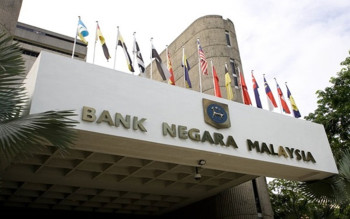
Bank Negara Malaysia had formally cautioned Tabung Haji on five separate occasions regarding a widening gap between its assets and liabilities, Religious Affairs Minister Dr Zulkifli Hasan disclosed during a parliamentary briefing on the institution's financial crisis. The central bank's repeated warnings, directed at both TH's chairman and the religious affairs ministry, came amid concerns that the pilgrim fund's deteriorating position posed a systemic risk to Malaysia's broader financial stability. Despite the severity of these interventions, TH's board and management failed to act with appropriate urgency to address the underlying problems.
Zulkifli emphasised that BNM had stressed the critical nature of the situation, making clear that immediate corrective action was essential to prevent TH from continuing to breach regulatory requirements. The minister's revelation during the special parliamentary sitting underscores how warnings from the country's financial regulator were disregarded during a period when the institution should have been implementing comprehensive reforms. The repeated warnings suggest that BNM escalated its supervisory approach through formal correspondence, a step regulators typically take only when voluntary compliance measures have failed.
Following BNM's formal warnings, Malaysia's Auditor-General added to the chorus of official concern by issuing a reprimand in the 2017 Financial Statements Report. The auditor identified questionable changes to TH's impairment accounting policies, which were modified twice within the same calendar year. These successive policy shifts appeared designed to inflate reported profits for 2017, raising serious questions about the accuracy and integrity of the financial statements presented to members and stakeholders during that period.
The pattern of regulatory warnings and accounting irregularities eventually prompted TH's reconstituted board to engage PricewaterhouseCoopers, a leading international audit firm, in 2018 to conduct an independent assessment of the fund's true financial condition. PwC's subsequent investigation confirmed what regulators and auditors had suspected: TH's financial position was far weaker than officially reported. The firm's damning finding revealed that of the RM4.6 billion in total assets claimed by TH, only RM556 million had been professionally valued according to proper accounting standards. This meant that approximately 88 per cent of stated assets lacked professional valuation, suggesting either poor governance in asset management or, more troublingly, significant overvaluation.
The Royal Commission of Inquiry into TH's affairs, established in 2021 and formally appointed in January 2022, delivered its 211-page report on July 29, documenting systemic failures across the institution's management and operational frameworks. The investigation period of 2014 to 2020 captured years of accumulating problems, institutional drift, and inadequate oversight. The RCI identified 25 specific areas requiring improvement, addressing everything from governance structures to financial controls and transparency mechanisms.
Measuring progress against these recommendations, TH had implemented 75 per cent of the RCI's proposals by late July, indicating a more responsive posture under new leadership compared to the period when central bank warnings were ignored. This implementation rate suggests that TH's current board recognises the severity of the crisis and the necessity of fundamental institutional reform. However, the fact that one-quarter of recommendations remained unimplemented by that point raised questions about resource constraints, complexity of certain reforms, or whether some measures require legislative changes beyond the fund's independent authority.
The timeline of events reveals a concerning pattern of regulatory forbearance followed by crisis. BNM's five warning letters represented formal supervisory action, yet they appear to have generated limited response from TH's leadership during the period when remedial action would have been less costly and disruptive. By the time the RCI report was released in 2022, the fund had already accumulated substantial hidden losses and damaged the trust of millions of Malaysian pilgrims whose savings were entrusted to it. The gap between regulatory warnings and institutional response highlights the importance of more forceful corrective mechanisms in Malaysia's financial oversight framework.
For Malaysian pilgrims and their families, the revelations carry profound implications. Tabung Haji manages the savings of approximately three million members who have contributed to the scheme with the expectation that their funds would be safeguarded and appropriately invested. The discovery that nearly 90 per cent of claimed assets lacked professional validation means that past financial statements provided to members were misleading at best. Many pilgrims may have made financial decisions based on statements of account that did not accurately reflect their funds' real value or security.
The crisis also raises broader questions about oversight mechanisms for Malaysia's major financial institutions serving vulnerable populations. Tabung Haji operates at the intersection of religious obligation, government policy, and financial regulation, making it a unique institution. The RCI report's recommendations and their ongoing implementation will be closely watched as a test case for whether Malaysia's financial supervisory architecture can ensure adequate protection for ordinary savers in institutions holding national significance. The minister's parliamentary disclosure of BNM's multiple warnings serves as a public record of the warning signs that should have triggered earlier, more decisive action.
Moving forward, the fund faces the dual challenge of restoring financial stability and rebuilding member confidence. The 75 per cent implementation rate of RCI recommendations suggests momentum, but completing the remaining reforms will be critical. Additionally, TH must develop stronger internal controls, improve transparency in financial reporting, and ensure that board oversight prevents future deviations from accounting standards. Zulkifli's transparency in Parliament about how warnings were ignored represents an important acknowledgment of past governance failures and signals the government's commitment to ensuring such lapses do not recur in institutions entrusted with public savings.

