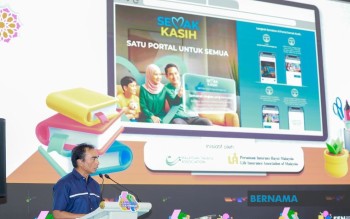
Bank Negara Malaysia has unveiled a new digital initiative designed to reunite thousands of Malaysian families with unclaimed insurance and takaful benefits that have been sitting dormant for years. The 'Semak Kasih' portal, launched in Kuala Terengganu, addresses a persistent problem within Malaysia's financial protection sector: beneficiaries often remain unaware that their loved ones purchased coverage that could provide crucial financial support during times of hardship. This portal represents a significant step toward ensuring that financial safety nets actually reach those who need them most.
The initiative tackles a surprisingly large problem. Industry estimates from the Life Insurance Association of Malaysia (LIAM) and the Malaysian Takaful Association (MTA) suggest that roughly 50,000 insurance policies and takaful certificates involving death benefits remain unclaimed by eligible beneficiaries. These unclaimed benefits represent real financial resources that could help families manage medical expenses, funeral costs, home repairs from fires or accidents, and other unforeseen emergencies. The fact that such substantial protection lies dormant reflects a broader challenge in Malaysia's financial ecosystem: the disconnect between policy purchase and beneficiary awareness.
Bank Negara Deputy Governor Adnan Zaylani Mohamad Zahid emphasised during the portal's launch that insurance and takaful protection serve a critical social function beyond mere commercial transactions. When families face catastrophic events—sudden illness, workplace accidents, or property disasters—these benefits can mean the difference between financial stability and crisis. Yet many Malaysian families do not realise their deceased relatives arranged such protections specifically to safeguard their welfare, suggesting a communication gap between insurers, policyholders, and beneficiaries that has persisted despite industry efforts.
The portal addresses this gap through straightforward functionality. Beneficiaries can now access a centralised system to verify whether they have insurance or takaful coverage available to them and then contact the relevant provider to initiate claims. This digital solution builds on previous attempts by insurance and takaful companies to locate beneficiaries, including direct mail campaigns and agent outreach, but offers a more efficient and accessible approach. The portal eliminates the need for families to navigate multiple insurance companies or worry about where their relative's coverage was held.
The launch reflects broader concerns about financial literacy and protection in Malaysia. Bank Negara's initiatives extend beyond merely helping people find unclaimed benefits. The central bank has simultaneously been emphasising the importance of strengthening financial protection mechanisms generally, recognising that many Malaysian households remain inadequately insured against common risks. Financial protection through insurance or takaful functions as a foundational element of household financial security, yet adoption and awareness rates remain below optimal levels across many demographic groups.
Beyond the insurance portal, Bank Negara outlined complementary support for Malaysia's economic resilience. The central bank has allocated RM5 billion under the SME Stabilisation Relief Facility to assist businesses affected by regional conflicts, providing working capital financing of up to RM750,000 without requiring collateral or guarantors. This reflects recognition that external shocks—geopolitical tensions affecting supply chains and investment flows—create immediate pressures on Malaysian enterprises, particularly smaller operations with limited financial buffers. The decision to expand financing without stringent collateral requirements acknowledges that creditworthy small businesses often face traditional banking constraints despite having viable operations.
Microfinance remains another critical pillar of Bank Negara's support architecture. The availability of microfinancing up to RM100,000 without guarantor or collateral requirements has proven instrumental in supporting Malaysia's substantial MSME sector, which generates substantial employment and economic activity. The iTekad initiative has already benefited more than 14,000 participants nationwide, including approximately 600 in Terengganu, demonstrating measurable impact on income levels and living standards among participating entrepreneurs. These programmes recognise that access to capital, particularly for first-time entrepreneurs and marginalised groups, remains a binding constraint on economic participation and wealth creation.
Financial education forms the long-term strategic component of Bank Negara's approach. The Financial Education Forum (FEN) initiative aims to build inclusive financial literacy across all society segments, including persons with disabilities, through a new comprehensive website serving as a one-stop financial education centre. This reflects research showing that approximately 37 per cent of Malaysians engage in impulsive online purchasing, while 26 per cent report unsustainable debt burdens. These statistics point to a systemic challenge: digital financial access has expanded rapidly, but financial decision-making capacity has not kept pace, creating vulnerabilities to overspending and problematic debt accumulation.
The central bank is particularly focused on building financial foundations early in life. Initiatives such as the MyDuitStory competition and the FEN Proaktif 2.0 Programme, developed in collaboration with Universiti Malaysia Terengganu, aim to equip students with robust financial management knowledge before entering the workforce. Research consistently demonstrates that financial habits formed during early adulthood shape lifetime patterns of saving, investing, and risk management. By introducing disciplined saving practices and prudent spending principles at educational institutions, Bank Negara seeks to build generational shifts in financial behaviour that compound into long-term economic security and wealth accumulation across Malaysian society.
The overarching message from Bank Negara emphasises personal financial agency within a supportive institutional environment. While external factors—global economic conditions, technological disruption, regional instability—remain beyond individual control, daily financial decisions regarding spending, saving, and protection accumulation remain within personal power. The combination of the Semak Kasih portal, expanded financing schemes, and enhanced financial education programming creates a comprehensive ecosystem supporting Malaysians across different life stages and economic circumstances. For families still unaware of protection their relatives arranged, the portal offers an immediate practical benefit. For younger Malaysians building financial foundations, enhanced literacy programmes provide essential knowledge. For struggling MSMEs, expanded financing access offers survival mechanisms during challenging periods. Collectively, these initiatives attempt to strengthen Malaysia's overall financial resilience and individual household economic security.
As Malaysia navigates persistent inflation, regional economic uncertainties, and rapid technological change, the demand for accessible financial protection and education will likely increase. The Semak Kasih portal and supporting initiatives represent Bank Negara's recognition that financial security cannot be assumed but requires proactive government facilitation, industry cooperation, and individual financial discipline. The focus on unclaimed benefits reflects a pragmatic reality: existing protection mechanisms are underutilised, suggesting that expanding awareness and access to these mechanisms may yield greater social benefit than introducing entirely new products. For Malaysian families and businesses navigating economic pressures, these combined initiatives offer tangible support mechanisms and long-term capability building.

