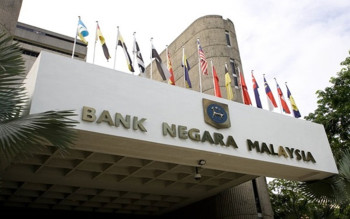
Bank Negara Malaysia has moved to clarify the legal and operational basis for its advisory relationship with the Lembaga Tabung Haji, positioning the central bank's involvement as a core component of its statutory financial stability mandate rather than overreach into a non-regulated institution. The central bank's explanation comes amid ongoing scrutiny from a Royal Commission of Inquiry into the pilgrimage fund, which has raised questions about the extent and nature of regulatory oversight provided to TH.
The cornerstone of BNM's position rests on the Central Bank of Malaysia Act 2009, which grants the institution explicit authority to monitor and assess risks that could threaten the broader financial system's integrity. This preventive orientation reflects modern central banking philosophy, which recognises that instability in major non-bank financial institutions can cascade through interconnected markets and undermine systemic resilience. For Malaysian policymakers and observers, this interpretation represents a deliberate expansion of macro-prudential oversight beyond traditional banking supervision.
TH's significance within Malaysia's financial architecture derives from its role as custodian of pilgrim savings and its substantial asset base, which creates meaningful linkages with banks, investment markets, and other financial entities. Should TH experience acute financial distress, the consequences could reverberate across multiple segments of the financial sector, potentially affecting ordinary Malaysians' savings and investment returns. This systemic dimension provides the intellectual foundation for BNM's claimed authority to offer counsel without formal regulatory jurisdiction.
The establishment of the Financial Stability Executive Committee under the same 2009 legislation institutionalised BNM's capacity to undertake broader surveillance activities and issue advisory guidance. The FSEC operates as a coordinating body, allowing the central bank to share intelligence with other authorities and provide recommendations aimed at preventing financial stress before it materialises. Within this framework, TH occupies a particular position: large enough to matter systemically, yet administratively housed outside BNM's traditional supervisory perimeter.
BNM's characterisation of its role as preventative rather than corrective illuminates an important distinction in financial regulation. The central bank asserts it sought to provide early warnings about TH's asset-liability mismatches through five warning letters addressed to the fund's chairman and the Minister of Religious Affairs, positioning these communications as precautionary measures rather than formal enforcement actions. This softer intervention strategy relies on persuasion and institutional goodwill rather than regulatory compulsion.
The content of those warnings proved substantive and prescient. BNM flagged growing gaps between TH's obligations to pilgrims and its accumulated assets, concerns that gained corroboration when the Auditor-General's office issued its own reprimand in the 2017 Financial Statements Report. This convergence of warning signals from two independent oversight bodies suggests the underlying financial problems were genuine and identifiable through standard analytical methods.
The Royal Commission of Inquiry's establishment in 2021, with members appointed on January 20, 2022, represented the government's decision to investigate TH's management comprehensively after mounting public concern. The subsequent presentation of the RCI's report to the Yang di-Pertuan Agong on August 30, 2022, marked a critical juncture in accountability processes, offering the opportunity to examine what went wrong and whether existing oversight mechanisms functioned adequately. Against this backdrop, BNM's clarification appears partly defensive, emphasising that the central bank had in fact raised red flags despite lacking direct supervisory authority.
For Malaysian stakeholders, particularly the millions of Tabung Haji members whose savings depend on the institution's viability, BNM's explanation carries important implications regarding the adequacy of financial safeguards. If BNM could only advise rather than mandate remedial action, the question arises whether advisory capacity proved sufficient to prevent institutional deterioration. The central bank's current framing suggests it did everything within its statutory remit, yet TH's difficulties persisted, pointing potentially to gaps in the regulatory architecture itself.
The episode also resonates across Southeast Asia, where many regional authorities grapple with similar challenges regarding oversight of large non-bank financial institutions. Malaysia's experience with TH demonstrates that size and systemic importance do not automatically confer supervisory authority upon central banks, creating potential blind spots in crisis prevention. Neighbouring regulators monitoring BNM's clarification may draw lessons about the necessity of explicit statutory clarity regarding macro-prudential oversight of systemically important non-bank institutions.
BNM's emphasis on its surveillance capabilities under the 2009 Act reflects a broader global trend toward expanded central bank mandates encompassing financial stability beyond traditional banking. This evolution recognises that modern financial systems involve complex interdependencies that microeconomic regulation of individual institutions cannot fully address. The Malaysian central bank's articulation of this rationale contributes to ongoing international discourse about the optimal scope and limits of central banking in interconnected financial systems.
Looking forward, the clarification underscores tension between BNM's aspirational role and actual powers. The central bank can monitor, analyse, and advise; it cannot ultimately compel institutional change without legislative amendment. This distinction matters enormously for TH members and the public, as it determines whether BNM functions as genuine safeguard or merely as early warning system. The RCI's ultimate findings and recommendations will likely shape whether Malaysia strengthens BNM's formal authority over systemically important non-bank institutions or maintains the current advisory approach.
The central bank's defence of its TH engagement also reflects broader debates about institutional autonomy and accountability in financial governance. BNM positions itself as a neutral technical advisor, implementing an objective statutory mandate, yet critics might contend that reliance on advisory influence without enforcement mechanisms amounts to passing responsibility without authority. Malaysian policymakers must ultimately decide whether this balance serves the financial system adequately or requires recalibration through legislative action.

