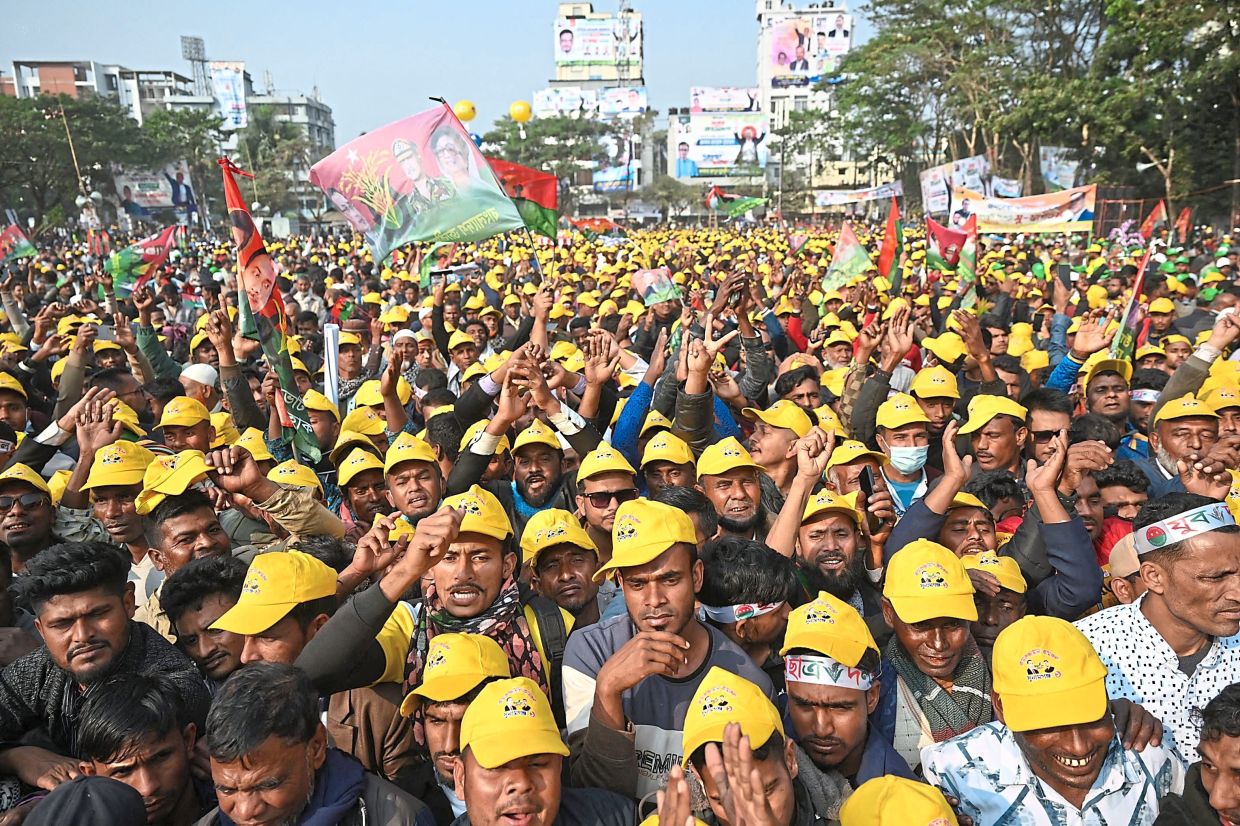
Bangladesh's parliament is expected to elect Mirza Fakhrul Islam Alamgir as the country's 23rd president in a parliamentary vote scheduled for Thursday, August 20. The 78-year-old secretary general of the Bangladesh Nationalist Party (BNP) and local government minister is widely anticipated to win the largely ceremonial position for a five-year term, representing a significant moment for the BNP-led government that swept to power following Bangladesh's transformative 2024 revolution.
Alamgir's ascension to the presidency represents a remarkable trajectory for a politician who has weathered decades of political turbulence in Bangladesh. Speaking to reporters on Tuesday, he expressed surprise at the development, stating through the state news agency BSS: "I never thought that I would become the president -- it is the infinite grace of the party and almighty Allah." He emphasised his commitment to public service even in the ceremonial role, declaring his intention to "remain beside the people and serve them" despite assuming the presidency. This humble tone contrasts sharply with the polarised political environment that has characterised Bangladesh politics in recent years.
The BNP's political momentum has been extraordinary since its landslide victory in February's parliamentary elections, the first democratic polling held since the revolution that toppled former Prime Minister Sheikh Hasina's government. That electoral success under Prime Minister Tarique Rahman has fundamentally reshaped Bangladesh's political landscape, ending over a decade of what critics characterised as authoritarian governance. The party now holds sufficient parliamentary strength to elect its preferred candidate to the presidency without significant difficulty, with Alamgir's victory appearing assured.
Alamgir's election follows the resignation in July of the previous president, Mohammed Shahabuddin, 76, who had served since 2023 but maintained close ties to the Hasina administration. Shahabuddin's departure from office, officially attributed to ill health and coming well before the end of his intended five-year mandate in 2028, signalled the broader political realignment that has occurred since the revolution. His exit represented a symbolic break from the institutional structures associated with Hasina's regime, allowing space for new leadership that reflects the political will of the BNP-dominated parliament.
Hasina herself remains in hiding in India, having refused to return to Bangladesh to face trial on charges of crimes against humanity. In November, she was convicted in absentia and sentenced to death, reflecting the legal accountability mechanisms that the new government has pursued against officials from the previous administration. Rights groups had extensively documented allegations of serious abuses under her tenure, including extrajudicial killings of political opponents, systematic suppression of opposition parties, judicial manipulation, and electoral fraud. Her flight from Bangladesh and refusal to participate in legal proceedings have become emblematic of the political rupture that the 2024 revolution represented.
While Alamgir's victory appears certain, he faces one other candidate, Oli Ahmed, who has been nominated by the 11-party opposition alliance led by Jamaat-e-Islami. The parliamentary voting process, expected to commence around 2pm local time, will formally confirm the composition of Bangladesh's executive branch under the new political order. The outcome will further consolidate BNP control over state institutions during this critical period of democratic reconstruction following the revolutionary transition.
Alamgir's personal political journey reflects the resilience required to survive Bangladesh's volatile political environment. Born on January 26, 1948, he first entered the political arena as a student activist during the tumultuous 1969 uprising against military rule imposed by Pakistan. That movement served as a precursor to the independence struggle that culminated in Bangladesh's emergence as a sovereign nation in 1971, establishing Alamgir as part of the generation that fought for national autonomy. His early activism demonstrated the conviction and political consciousness that would define his subsequent career.
Following his university years at Dhaka University, where he studied economics, Alamgir pursued an academic career before transitioning to government service and electoral politics. He held ministerial portfolios spanning diverse sectors including agriculture, aviation, and tourism, accumulating administrative experience across multiple policy domains. However, his most consequential period came during Hasina's lengthy governance, when BNP party chief Khaleda Zia faced imprisonment and her son Tarique Rahman operated in exile. During this challenging era, Alamgir emerged as a prominent opposition figure and became instrumental in maintaining BNP organisational cohesion.
Almgir's resilience during Hasina's administration tested his political mettle considerably. He endured multiple arrests and faced dozens of charges that he and the BNP characterised as politically motivated prosecutions designed to weaken the opposition. State media reports credited him with "keeping the BNP organised and maintaining the party's political presence during difficult times," a recognition of his role in preserving institutional continuity when the party faced sustained governmental pressure. This stewardship of party infrastructure during adversity has earned him considerable respect among BNP members and supporters.
On a personal level, Alamgir is married to Rahat Ara Begum, a retired financial official, and the couple have two daughters. This relatively modest public profile and emphasis on family stability have contributed to an image of steadiness that appeals to the BNP constituency. His background as an educator and government administrator, combined with his opposition credentials and demonstrated loyalty to the party through challenging periods, positions him as an institutional figure capable of commanding respect across multiple segments of Bangladesh's political establishment.
The presidency in Bangladesh's constitutional framework carries largely ceremonial and representative functions rather than executive authority, which resides with the prime minister. Nonetheless, the position carries significant symbolic weight as the embodiment of state authority and national representation. Alamgir's elevation to the presidency underscores the BNP's determination to align state institutions with the mandate delivered through the February elections, consolidating control over executive, legislative, and nominally ceremonial arms of government.
The timing of Alamgir's election occurs as Bangladesh continues navigating the complex transition from the Hasina era to a new political dispensation. The incoming president will represent the state at ceremonial functions, undertake diplomatic engagements with international leaders, and serve as a figurehead for national identity during a period when Bangladesh is actively reconstructing its institutional framework. His election reflects not merely a change of occupant in a particular office, but rather the maturation of the broader political transformation that began with the 2024 revolution and accelerated through the February 2025 electoral process.
For regional observers monitoring Bangladesh's democratic trajectory, Alamgir's presidency symbolises the consolidation of post-revolutionary political outcomes and the formalisation of the BNP's return to power after years in opposition. His path from student activist to opposition leader to presidential incumbent encapsulates much of Bangladesh's modern political history, making his election a significant marker in the country's ongoing democratic evolution.

